

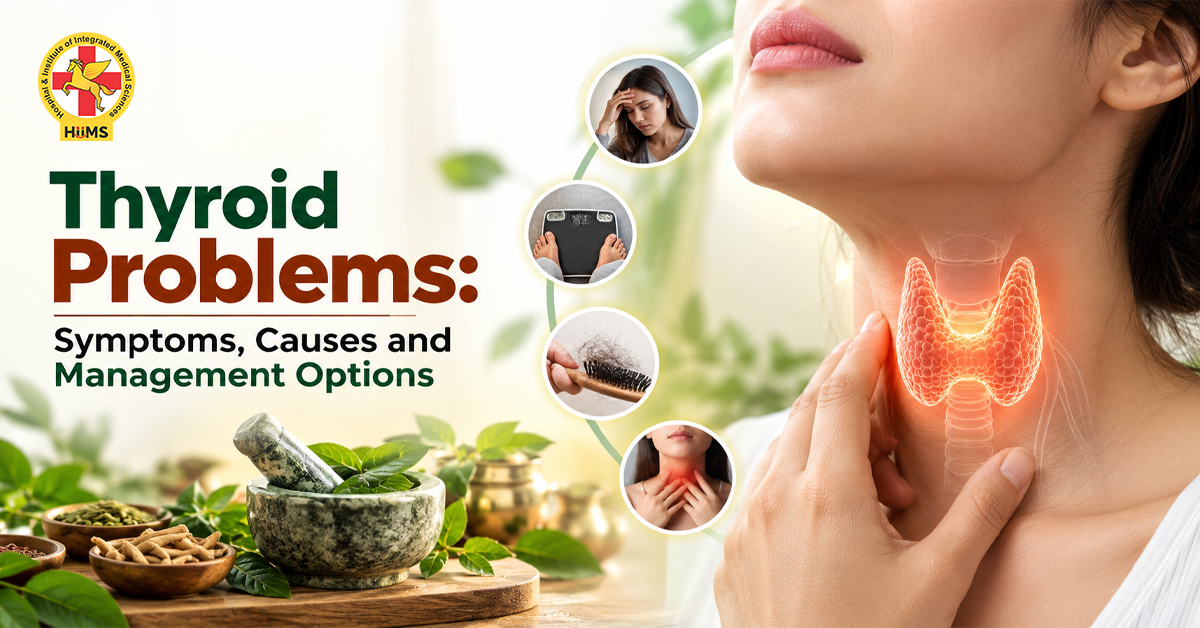

The thyroid is a small gland in the neck. It controls energy, weight, mood, and heart rate. Its symptoms often look like stress or tiredness. So many people never get tested, and the problem stays hidden.
Indian data shows how common the condition is. The study in the Indian Journal of Endocrinology and Metabolism tested 5,376 adults. About 11% had hypothyroidism. The rate was much higher in women (15.86%) than in men (5.02%). Also, 21.85% had anti-TPO antibodies, a sign of autoimmunity.
This blog explains thyroid problems, their symptoms, their causes, and the management options.
What Are Thyroid Problems?
The thyroid makes two hormones, T3 and T4. These hormones control how fast your body uses energy. The pituitary gland checks their levels. It sends a signal called TSH to the thyroid. When this system goes out of balance, symptoms appear. Thyroid disorders can start at any age. They often begin slowly so early signs are easy to miss.
The main types are:
- Underactive thyroid (hypothyroidism): The gland makes too little hormone.
- Overactive thyroid (hyperthyroidism): The gland makes too much hormone.
- Goitre: The gland swells in size.
- Thyroid nodules: Small lumps grow in the gland.
Autoimmune conditions are common causes. For instance, Hashimoto’s disease often leads to an underactive thyroid. Similarly, Graves’ disease often leads to an overactive one.Tired all the time for no clear reason? Talk to our experts.
Thyroid Symptoms: Signs to Watch For
Thyroid symptoms depend on whether the gland is underactive or overactive. They also develop slowly. So many people ignore them at first.
Signs of an Underactive Thyroid
A slow thyroid slows the body down. Then common signs appear, such as tiredness, weight gain, feeling cold, dry skin, and hair loss. Also, constipation, low mood, and irregular periods are common.
Signs of an Overactive Thyroid
A hyperactive thyroid speeds the body up. So it can cause weight loss, a rapid heartbeat, sweating, and anxiety. Some people also notice shaky hands and loose stools.
Signs in the Neck
Swelling or a lump in the neck needs a check. Do not wait for it to grow. A hoarse voice can also point to a thyroid issue. Also watch for trouble swallowing or a feeling of pressure in the throat.
But these signs overlap with many other conditions. For instance, stress and anaemia also cause tiredness. So only a blood test can confirm a thyroid disorder. Next, let us see what causes these changes.
Causes of Thyroid Problems
The causes of thyroid problems vary from person to person. Often, more than one factor works together.
Iodine Imbalance
The thyroid needs iodine to make hormones. Too little iodine can cause an underactive gland and goitre. But too much iodine can also upset the gland. Iodised salt gives most people enough iodine.
Autoimmune Conditions
In Hashimoto’s disease and Graves’ disease, the immune system attacks the thyroid. So these are among the most common causes.
Age, Gender, and Family History
Women have a higher risk than men. The risk also rises with age. In addition, a family history of thyroid disease raises the chance.
Stress and Lifestyle
Long-term stress and poor sleep may add to the problem. They do not cause thyroid disease alone. But they can make symptoms worse.
Medicines and Earlier Treatments
Some medicines, such as lithium and amiodarone, can affect the thyroid. Also, earlier radiation or thyroid surgery can change hormone levels.
Pregnancy and Childbirth
Hormone changes in pregnancy and after delivery can trigger thyroid changes. So doctors often test the thyroid during pregnancy. Untreated thyroid disorders can affect both the mother and the baby.
How Doctors Test the Thyroid
Doctors use a simple blood test. It measures TSH, T3, and T4. It can also look for signs of an autoimmune cause. An ultrasound can also show lumps or swelling in the neck. Doctors may ask about family history and past illnesses too. This helps them find the likely cause.
Get tested if symptoms last for more than a few weeks. Also repeat the tests as your doctor advises. These tests then show whether treatment works.
Standard Thyroid Treatment Options
Treatment depends on the type of thyroid disorder. It also depends on your age and health. A doctor decides the plan after reading your reports. The main thyroid treatment options are given below.
For an Underactive Thyroid
Doctors usually prescribe a daily thyroid hormone tablet. The dose depends on your TSH level. Also, take the tablet on an empty stomach, as your doctor advises. Most people need treatment for a long time. So follow-up tests are important.
For an Overactive Thyroid
Doctors may use anti-thyroid drugs to lower hormone levels. Radioactive iodine or surgery are other options. The choice depends on the cause and your health. Each option has its benefits and risks, so doctors explain them first. Beta blockers can also ease a rapid heartbeat.
Thyroid medicines work well with proper monitoring, but incorrect doses can cause harm and some drugs may lead to serious side effects or relapse. Radioactive iodine and surgery can also result in an underactive thyroid, requiring lifelong medication.
Even with normal reports, some people experience discomfort, sleep issues or stress. Ayurveda may offer additional support alongside conventional treatment but it should never replace prescribed thyroid medicines.
Ayurvedic Treatment for Thyroid Problems
Ayurveda looks at the thyroid as part of the whole body. It links thyroid imbalance to weak digestion (Agni), an imbalance of Kapha and Vata, and stress. It also describes goitre as ‘galaganda’. So Ayurvedic treatment for thyroid problems looks at diet, sleep, and daily routine together.
A 2018 trial in the Journal of Alternative and Complementary Medicine included 50 adults with mildly raised TSH. They took Ayurvedic herb ashwagandha root extract for eight weeks. Their TSH, T3 and T4 results improved with ashwagandha.
Yoga and slow breathing are part of Ayurvedic routines too, and they help manage stress. Ayurveda supports the body along with standard care.Want to understand your body type and thyroid pattern? Connect with our experts.
Supportive Thyroid Care at Jeena Sikho HiiMS
Jeena Sikho HiiMS is an integrated hospital that combines Ayurveda, Naturopathy, Homeopathy, Unani, and modern science. Doctors first review your reports, symptoms, and daily habits. Then they plan supportive care for your body. This includes:
- Panchkarma: These cleansing therapies help the body release built-up toxins. Doctors choose them after assessment.
- pH-balanced diet: This food plan is made to suit your body and condition. It also supports steady energy and gut health.
- Herbal support: Doctors guide the use of herbs. They also check them against your current medicines.
- Mind & Body healing: Yoga and breathing practices support calm and balance. You also receive guidance on sleep, activity and meal timing to align with your circadian rhythm.
Looking for supportive thyroid care? Book a visit at Jeena Sikho HiiMS today.
Book a visit at Jeena Sikho HiiMS
Conclusion
Thyroid problems are common, and the symptoms are easy to miss. A simple blood test gives a clear answer. Daily habits and Ayurvedic support provide natural support for thyroid care. Also, early care helps prevent complications. So the key step is to get tested early and follow your doctor’s plan.
FAQs
1. What are the first signs of an underactive or overactive thyroid?
An underactive thyroid causes tiredness, weight gain, and feeling cold. An overactive thyroid causes weight loss, a fast heartbeat and anxiety. A blood test confirms the cause.
2. What is the difference between hypothyroidism and hyperthyroidism?
Hypothyroidism means the thyroid makes too little hormone. But hyperthyroidism means it makes too much.
3. Can a thyroid disorder be managed without lifelong medicine?
It depends on the cause. Some conditions need long-term medicine while others improve with treatment. So your doctor decides.
4. Can I stop thyroid medicine if I take Ayurvedic herbs?
No. Stop or change thyroid medicine only on your doctor’s advice.
5. How does Jeena Sikho HiiMS support thyroid care?
Doctors review your reports and plan supportive care with diet, herbs, Panchkarma, and daily habit guidance. Also, you can visit in person or book a VOPD video consultation.
Leave a comment