

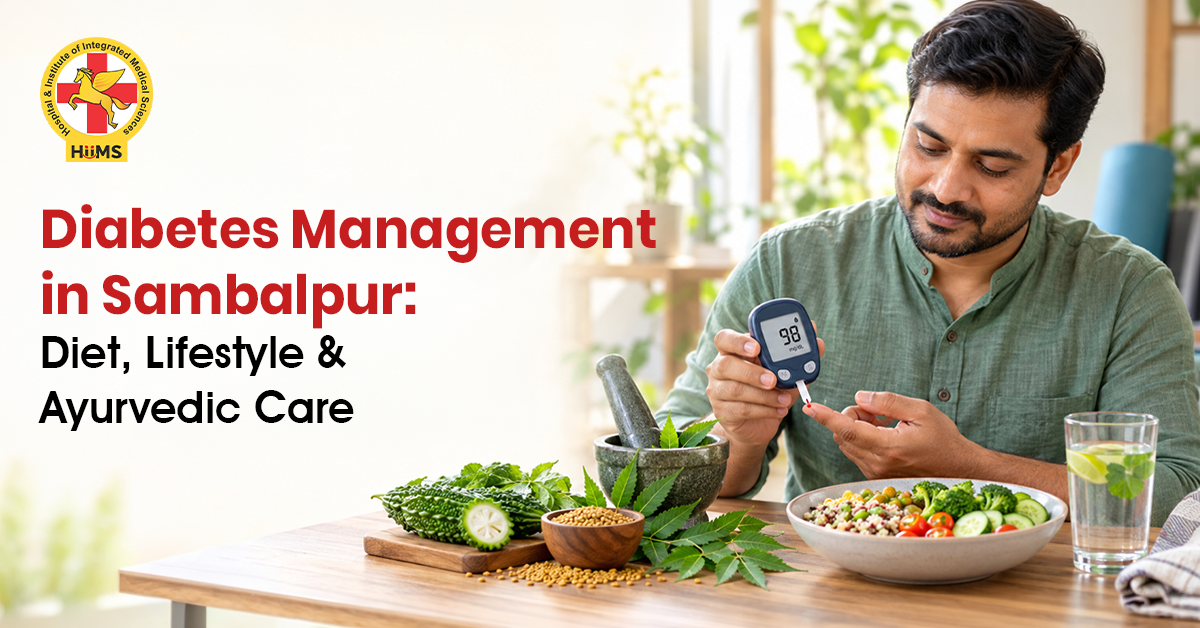

Living with diabetes can make everyday life feel a little different. Food choices, meal timings, sleep, stress and physical activity all become important parts of the daily routine. Many people notice changes such as increased thirst, frequent urination, tiredness or changes in weight, while some may not notice clear signs for a long time. According to the World Health Organization, these can be common signs of diabetes, and regular checking can help a person understand their condition better.
Ayurveda has discussed diabetes under the name Madhumeha and gives importance to food, digestion, daily habits and overall balance. Research on Ayurvedic approaches also highlights the role of diet and lifestyle in managing Madhumeha.
Diabetes management in Sambalpur at Jeena Sikho HiiMS follows a simple approach based on suitable food, regular movement, proper rest and guided Ayurvedic care. These practices can become an important part of daily life. This blog explains how these habits can be followed in a practical way.
Understanding Diabetes in Simple Words
In simple words, diabetes happens when the body is not able to use sugar the way it should. Normally, the food we eat turns into sugar, and this sugar gives us energy. But when the body stops working with this sugar properly, it starts collecting in the blood instead of being used. Over time, this can affect energy, digestion, sleep, and even the skin and eyes.
In old Ayurvedic texts, this condition is called Madhumeha. It is not treated as a small sugar problem. It is seen as a result of weak digestion and years of unbalanced routine. When digestion becomes weak, the body cannot break down food the right way, and this slowly disturbs the whole system.
Common Signs You Should Not Ignore
Many people carry high sugar levels for months without even knowing it. The early diabetes symptoms are often mild, so people may think they are simply feeling tired. Some common signs include:
- Feeling tired even after resting well
- Passing urine more often than usual
- Feeling thirsty again and again through the day
- Wounds or cuts taking longer to heal
- Sudden weight loss without any clear reason
If you notice two or more of these signs together, it is wise to get your sugar checked instead of waiting.
Diabetes Management in Sambalpur: The Ayurvedic Way
When we talk about this natural way of care, it looks much deeper than just bringing the number down for a day. It tries to understand why the body reached this stage in the first place. Diabetes management in Sambalpur at Jeena Sikho HiiMS begins by understanding a person’s digestion, sleep pattern, food habits and stress levels before suggesting further care.
This approach works step by step instead of promising something overnight. It focuses on bringing better structure to food, daily routine and overall care. Many people who are tired of short term results may prefer a slower and more consistent approach.
Managing Diabetes Through Better Food Choices
A proper diabetes diet is not about starving or cutting food completely. It is about eating the right food at the right time. Skipping meals or eating very late at night can disturb the body more than people realise. Instead, having smaller meals throughout the day, with enough vegetables and fibre, can make meals more balanced.
Food plays one of the biggest roles in keeping sugar under control, and this is why the Ayurvedic approach followed in this city gives so much importance to daily meals. The idea is not to follow a strict or complicated chart but to bring small and steady changes into the kitchen.
Some simple food habits that help are:
- Adding bitter vegetables like karela and neem leaves in small amounts
- Choosing whole grains such as barley, millet, and brown rice over polished rice
- Using kitchen spices like turmeric, fenugreek, and cinnamon in daily cooking
- Avoiding packaged snacks, sweets, and cold drinks
- Eating dinner early and keeping the last meal light
Drinking warm water, chewing food slowly, and avoiding heavy fried items can also support comfortable digestion.
Neem Karela Therapy as Part of Ayurvedic Care
Among the natural methods used in Ayurveda, Neem Karela Therapy is one that many people come to know about early. It is a gentle approach that supports the body gradually instead of aiming for quick changes in sugar levels.
At Jeena Sikho HiiMS Sambalpur, this therapy is used as part of a broader plan that also considers a person’s diet and daily routine. The simple idea behind Neem Karela Therapy is:
- Helping clean the internal system
- Supporting the body’s own metabolism
- Improving how the body responds to sugar over time
Overall, Neem Karela Therapy is used as a supportive Ayurvedic approach along with suitable food and lifestyle changes. The focus remains on gradual progress and maintaining balance as part of daily diabetes care.
Daily Habits That Can Support Blood Sugar Balance
Along with the food, daily habits carry equal weight in this whole process. Small changes, when followed regularly, add up to a big difference over months.
- Sleep and wake up at a similar time every day
- Walk for a few minutes after eating
- Include simple yoga or breathing exercises in the daily routine
- Take regular movement breaks during long sitting hours
- Keep meal timings fairly regular throughout the week
Feeling weak, dizzy, or irritated can sometimes happen when blood sugar changes quickly. One simple way to support a steadier routine is to eat meals on time and avoid keeping long gaps between them. Sugary drinks should also be limited, as they can lead to a quick rise in blood sugar.
Traditional Ayurvedic Herbs for Diabetes
This Ayurvedic diabetes care leans on herbs that have been used for generations to support the body gently. These are not meant to give instant results but to work slowly with the body’s own system.
Some herbs often used are:
- Gudmar, traditionally used in Ayurvedic care
- Neem, valued in traditional Ayurvedic practice
- Karela, commonly included in traditional dietary practices
- Jamun, traditionally used as part of Ayurvedic care
These herbs are usually suggested only after understanding a person’s body type and condition, since what suits one person may not suit another.
Keeping Blood Sugar Steady Through the Day
Sudden ups and downs in sugar levels can leave a person feeling weak, dizzy, or irritated. To support more stable blood sugar, it helps to eat on time, avoid long gaps between meals, and stay away from sugary drinks that can cause a quick rise. Simple daily discipline and consistency can make these habits easier to maintain over time.
Conclusion
Handling diabetes does not have to feel like a burden every single day. With patience and the right guidance, it can become a manageable part of life rather than a constant worry. Diabetes management in Sambalpur at Jeena Sikho HiiMS focuses on understanding the body first, then guiding people through diet, daily habits, and Ayurvedic support in a simple and practical way.
If you wish to explore this natural approach for yourself or a loved one, book a free consultation with our expert at Jeena Sikho HiiMS Sambalpur and take the first step towards better health and well-being.

FAQs
1. Can diet help with diabetes management?
Yes, balanced meals and sensible food choices can be an important part of managing diabetes.
2. What foods should be limited when managing diabetes?
Sugary drinks, sweets, packaged snacks and heavily processed foods are generally better limited.
3. Can yoga support diabetes care?
Yoga and simple breathing practices can be included as part of a healthy lifestyle routine.
4. What is Ayurvedic diabetes care?
Ayurvedic diabetes care focuses on suitable food, lifestyle habits, digestion and traditional Ayurvedic support.
5. Why is digestion important in Ayurveda?
Ayurveda considers healthy digestion an important part of maintaining overall balance in the body.

Leave a comment