

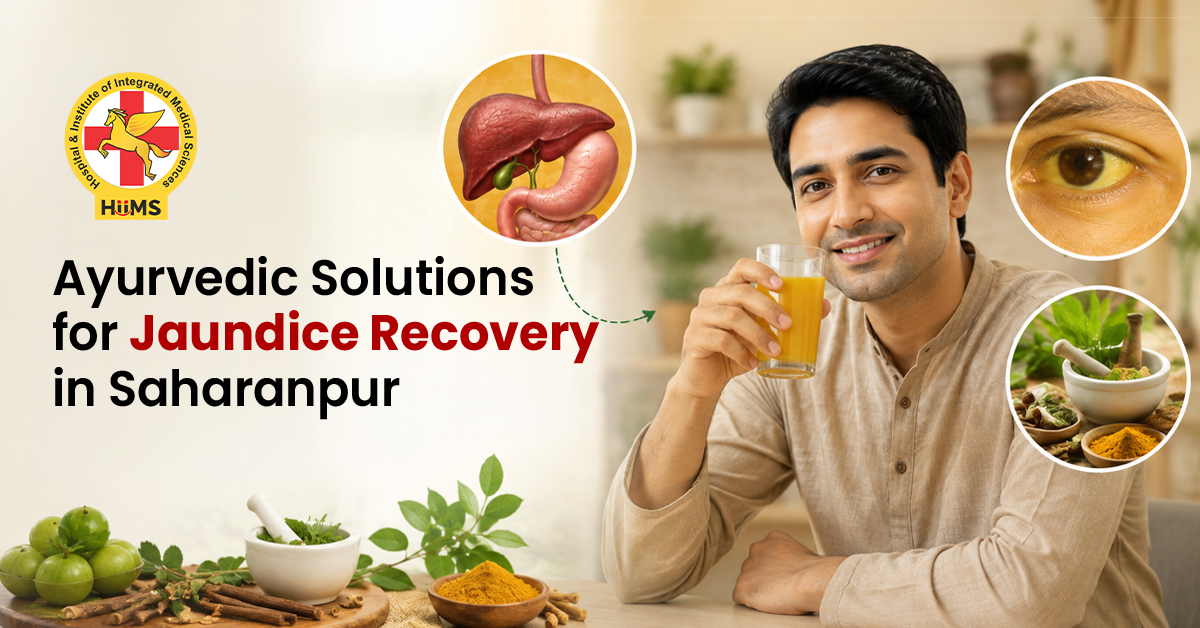
The awareness that one’s eyes or skin have turned yellow is always disturbing. However, jaundice does not just involve physical appearance because it is brought about by an excess accumulation of bilirubin in the body and is caused by various health problems related to the liver, gall bladder, bile ducts, and blood cells.
Jaundice in Ayurveda is called ‘Kamala’ and has historically been linked to a Pitta Dosha imbalance. The importance of right foods, digestion, sleep, lifestyle, and Ayurvedic herbs or therapies chosen according to need has always been emphasized by Ayurveda. All these things should be combined with a proper medical examination, especially if the root cause of jaundice is unknown at the moment.
This manual outlines Ayurvedic jaundice care in HiiMS Clinic Saharanpur. It provides an explanation about Kamala in Ayurveda, Ayurvedic herbs to detoxify the liver, the Ayurvedic diet for jaundice, lifestyle factors that should be considered, and the concept of liver cleansing in Ayurveda. There is information regarding things to avoid, times for professional help, and how a VOPD consultation can benefit you.
What Is Jaundice?
Jaundice is a condition in which the skin or whites of the eyes become yellow because bilirubin levels in the body increase. It is a sign that does not refer to a particular disease but results from several factors such as hepatitis, gallstones, or other ailments concerning the liver or bile.
Additional symptoms can be observed, such as dark-colored urine, white stools, itchiness, fatigue, nausea, poor appetite, or abdominal pain. The exact symptoms depend on the underlying cause.
For this reason, jaundice should not be managed only by looking at the color of the eyes or skin. A healthcare professional may recommend bilirubin testing, liver function tests, imaging, or other investigations depending on the situation.
What Ayurveda Says About Jaundice
Jaundice is referred to as “Kamala” in the books of Ayurveda. According to the Ayurvedic theory, Kamala is always associated with imbalances of Pitta. The Ayurvedic way of thinking involves digestion, metabolic processes, diet, lifestyle, and the constitution of the body in dealing with such disorders.
Supportive measures from the Ayurvedic point of view may involve proper diet, sufficient rest, digestion aids, correction of lifestyle, and specific herbs.
Nevertheless, the theory of Kamala in Ayurveda cannot substitute for present-day medicine. This is due to the fact that jaundice has diverse origins.
Core Ayurvedic Herbs Traditionally Used for Liver Support
Several herbs are traditionally used in Ayurveda as part of liver and digestive wellness practices. Their suitability, dosage, and duration should be decided by a qualified practitioner.
- Bhumyamalaki
Bhumyamalaki is traditionally used in Ayurveda to support liver and digestive health and may be included in selected Ayurvedic formulations.
- Katuki
Katuki (Picrorhiza kurroa) is a bitter Ayurvedic herb traditionally associated with digestive and liver support. It should be used under appropriate guidance. - Guduchi
Guduchi (Giloy) has a long history of Ayurvedic use and is traditionally used to support general wellness and balance.
- Punarnava
Punarnava is traditionally used in Ayurveda for fluid balance and digestive wellness and may be considered according to individual needs.
These herbs should not be combined into a self-made remedy for jaundice. People with liver conditions, those taking medicines, children, pregnant women, and older adults may require special consideration.
Diet for Jaundice Recovery
Diet could also form a significant component of supportive care in the course of recovery. The optimum diet varies from individual to individual, considering his/her appetite, digestive system, disease, and professional advice.
Foods Which Could Help in the Recovery Process
Some of the foods that could help the process include:
- Light cooked rice
- Moong dal and light moong soup
- Vegetables which have been cooked well
- Fresh fruits which suit the patient
- Coconut water for keeping hydrated
- Buttermilk when possible
- Light home-cooked food in moderate quantities
Some of the traditional Ayurvedic practices also include the intake of sugarcane juice in selected cases. But it is important to note that these foods cannot be used as the cure for jaundice, and diabetics need individual advice regarding their food intake.
Foods and Practices to Avoid
In general terms, during the process of recovery, individuals are advised to stay away from:
- Alcohol
- Deep-fried and extremely oily foods
- Extremely spicy foods when these disturb the digestive system
- Highly processed foods like junk food
- Heavier meals
- Unnecessary supplements and combination of herbs
- Overeating
Lifestyle Guidelines for Recovery After Jaundice
Diet is only one part of recovery after jaundice. Everyday habits can also support general well-being during the recovery period.
- Get Adequate Rest
Fatigue is common with several conditions associated with jaundice. Adequate rest and avoiding strenuous physical activity can be helpful until your healthcare professional advises you to resume normal activity.
- Stay Hydrated
Drink adequate fluids to help prevent dehydration, particularly if appetite is reduced or there has been vomiting or diarrhoea. Water should remain a primary source of hydration.
- Avoid Alcohol
Alcohol can place additional stress on the liver. It is best avoided during jaundice and until a healthcare professional confirms that it is appropriate to resume drinking.
- Avoid Self-Medication
Do not start medicines, supplements, or herbal combinations without professional advice. Some medicines and supplements can affect the liver or interact with other medicines.
Liver Cleansing in Ayurveda: What Does It Mean?
The term “liver cleansing” in Ayurveda is commonly searched online, but it should not be understood as a quick detox that can cure jaundice.
In Ayurveda, cleansing may involve dietary discipline, digestive support, lifestyle correction, selected herbs, and, in appropriate cases, supervised therapies. These practices should be personalized rather than followed as a fixed detox routine.
From a medical perspective, the priority is to identify the cause of jaundice. Hepatitis, gallstones, bile duct obstruction, medication-related liver injury, and other conditions can require very different approaches.
Therefore, the focus should be on supporting the body and liver while addressing the underlying cause appropriately.
How to Support a Healthy Liver Naturally
People searching for ways to keep their liver healthy naturally often want simple habits they can follow every day.
Such helpful foundations include:
- Eat a varied diet
- Reduce processed foods
- Do not drink unnecessarily
- Maintain appropriate body weight
- Engage in physical activity depending on your health condition
- Have enough sleep
- Use medications strictly as prescribed
- Do not use unnecessary supplements
- Consult your doctor if you have jaundice and other liver-related symptoms
These practices may help maintain overall liver health, but they cannot be used in place of medical treatment in case of a liver disease.
When to Seek Professional Care
Jaundice should be medically evaluated because it can sometimes indicate a serious underlying condition.
Consult a doctor immediately when jaundice is associated with:
- High fever
- Severe abdominal pain
- Vomiting
- Yellow discoloration
- Bleeding or easy bruising
- Weakness
- Disorientation or drowsiness
- Abdominal or leg swelling
- Dark urine or light-colored stool
A sudden onset of jaundice along with tenderness in the upper abdomen or altered consciousness warrants immediate medical help.
Jaundice in an infant is another instance that needs immediate medical attention because it may have different reasons than jaundice in adults.
Ayurvedic Jaundice Care in Saharanpur
Those seeking Ayurvedic jaundice care in HiiMS Clinic Saharanpur are advised to seek a center where they will get consultation and guidance, instead of solely depending on home remedies.
At Jeena Sikho HiiMS Clinic, Saharanpur, patients will be able to discuss their signs of jaundice, medical records, medicines, diet, and overall health status during consultation. This will enable the planning of Ayurvedic guidance based on the patient’s requirements.
The areas of focus could include dietary advice, lifestyle guidance, Ayurvedic medicines, etc.
Any herbs or therapies should be selected according to the individual’s condition rather than used as a fixed jaundice remedy.
If you are considering Ayurvedic care, it is also useful to ask how the clinic monitors progress and when additional medical evaluation or referral is recommended.
Conclusion
Jaundice is not simply a change in skin or eye color. Its possible causes could be many; hence, the right assessment and monitoring are required during recovery. Jaundice in Ayurveda is known as Kamala, and it usually focuses on diet, digestion, lifestyle, herbs, and personalized treatment.
For patients who require personalized Ayurvedic treatment for jaundice in Saharanpur, professional help would assist them in finding out what diet and wellness practices would suit them. At Jeena Sikho HiiMS Clinic, Saharanpur, one can get their health issues and reports discussed at consultations and get personalized guidance.
Alternatively, those patients who want to start off with an online consultation can use the services of VOPD Consultation to get their health issues, reports, diet, and requirements discussed with an expert.
Get a VOPD consultation from Jeena Sikho HiiMS to get your health issues assessed and personalized Ayurvedic guidance for your recovery and liver health.

FAQs
Q1. How long does recovery after jaundice take?
Recovery varies according to the underlying cause and severity, so there is no fixed timeline. Follow-up tests are more reliable than judging recovery only by yellowing.
Q2. Can the Ayurvedic treatment be followed by children?
No. It may be necessary to evaluate different requirements of the child and provide different doses; hence, it is recommended to give Ayurvedic herbs under professional advice.
Q3. Can I use Ayurvedic herbs without consulting anyone?
It is not recommended because some herbs or supplements may not suit individuals with liver diseases or those taking other medications.
Q4. Can coconut water be consumed when suffering from jaundice?
It can help in maintaining fluids in the body, but it cannot be used as an alternative for treating jaundice.
Q5. Can jaundice be managed at home?
Jaundice needs to be diagnosed first before being able to manage its symptoms with proper rest, diet, and fluids.