


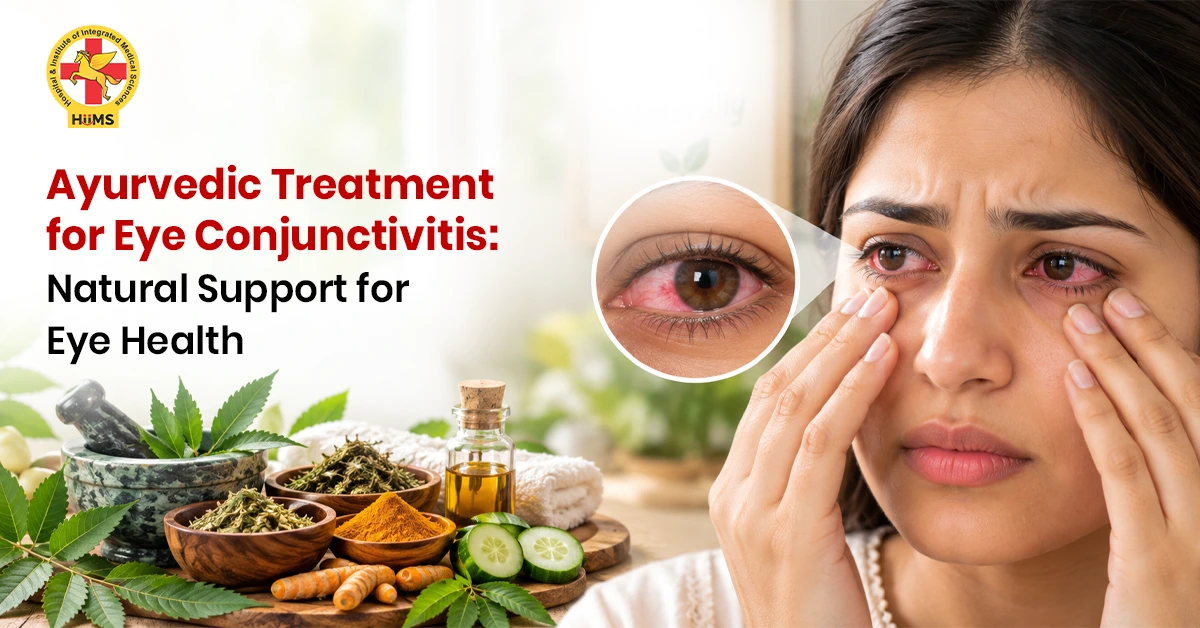
Red eyes, that constant itch, waking up with your lashes stuck together: if this sounds familiar, you’ve probably already tried a drop or two from the chemist. Sometimes that’s enough. Sometimes it isn’t, and the irritation just keeps coming back a week later.
That’s usually when people start looking into Ayurvedic treatment for eye conjunctivitis, not to skip proper eye care, but to add something that works from the inside while your eyes settle down.
Here’s what’s actually causing pink eye, what natural support genuinely looks like, and how Ayurveda thinks about eye health differently from a quick clinic visit.
What Exactly is Conjunctivitis?
Your eye has this thin, clear layer covering the white part and lining the inside of your eyelids. When that gets inflamed, the tiny blood vessels underneath become more visible; that’s the reddish tint everyone recognises as pink eye.
It could be a virus, bacteria, an allergy, or just plain irritation from smoke or dust. Depending on which one it is, you might get it in one eye or both.
What Does Eye Conjunctivitis Treatment Usually Involve?
Honestly, it depends entirely on the cause. Viral conjunctivitis mostly just needs time: a week, maybe two, with cold compresses and lubricating drops taking the edge off while it runs its course. Bacterial cases sometimes need antibiotic drops.
Allergic conjunctivitis is a different story altogether; figuring out what’s triggering it and avoiding that, plus antihistamine drops if needed, is the usual route. Getting a proper eye exam first saves you from guessing which category you’re actually in.

How Can You Tell If It’s Conjunctivitis or Something Else?
Fair question, since eye irritation can look pretty similar across the board. A few things point specifically toward pink eye:
- That pink or red tint in the white part of the eye
- Watery or thick discharge: sometimes enough to glue your lashes shut overnight
- Itching, or a gritty feeling like something’s stuck in there
- Mild puffiness around the eyelids
If things get worse after a few days, or you’re dealing with real pain, light sensitivity, or your vision starts changing, that’s your cue to stop waiting and go see someone.
Can Conjunctivitis Treatment Naturally Actually Help?
This is where a lot of people get curious. Conjunctivitis treatment naturally mostly comes down to soothing the eye while your body does its own recovery: cool compresses, keeping things clean, staying away from smoke or dust that’ll only irritate it further.
It sits alongside proper diagnosis and care, not instead of it, especially if bacteria’s involved and drops are actually needed.
How Does Ayurveda Approach Pink Eye?
Ayurveda never really separates the eyes from the rest of the body. It ties eye health back to Pitta dosha: the energy connected to heat and inflammation.
When Pitta’s running high, that’s supposed to show up as redness, burning, irritation, eyes included. That’s basically the whole logic behind pink eye Ayurvedic treatment: cool the internal heat down, support digestion, and the eyes respond accordingly.
Ayurvedic Treatment for Eye Conjunctivitis
Akshi Tarpan is probably the most well-known therapy here. A soft dough ring gets placed around the eyes, filled with warm medicated ghee, and your eyes stay open in it for several minutes.
The idea is that it nourishes the eye tissue, eases strain, and helps with natural tear production.
People mostly use it for dryness and tired eyes, though many practitioners see it as generally supportive for irritated eyes too.
Alongside that, there’s usually some diet adjustment to bring down internal heat, herbal support, and just basic eye hygiene worked into the routine.
Simple Natural Remedies for Pink Eye You Can Try at Home
While you’re dealing with any prescribed treatment, some simple things at home genuinely help with comfort:
- A clean, cool compress on closed eyes, a few times through the day
- Wash your hands often, and try not to touch or rub your eyes
- Use your own towel and pillowcase, so you’re not spreading it to your other eye, or to anyone else at home
These are just comfort measures really: part of what people mean by natural remedies for pink eye, not a substitute for actual treatment when it’s needed.
When Should You See a Doctor Instead of Waiting It Out?
Most mild cases sort themselves out with basic care. But thick yellow or green discharge, real pain, sensitivity to light, blurry vision, or symptoms that just keep getting worse after a few days, that’s not something to keep sitting on. Get it checked.

Conclusion
Pink eye is annoying, but most people come out the other side fine with the right mix of proper diagnosis and some gentle care in between.
If you want to explore Ayurvedic treatment for eye conjunctivitis alongside whatever your eye doctor’s already suggested, you can book a VOPD consultation with Jeena Sikho HiiMS and talk through your symptoms with their team before figuring out what makes sense for you.
FAQ’s
1) Is pink eye something you can catch from someone else?
Viral and bacterial types, yes: pretty easily. Allergic conjunctivitis isn’t contagious at all, since it’s just your body reacting to something specific.
2) How long does this usually stick around?
Viral pink eye tends to run its course in one to two weeks. Bacterial cases often clear faster once proper treatment starts.
3) Can Akshi Tarpan actually help during an active infection?
It’s mostly meant for dryness and eye strain rather than active infections, talk to a practitioner before trying it while something’s actively flared up.
4) Should contact lenses stay off while this is going on?
Yes, better to skip them entirely until your eyes are fully back to normal: wearing them just adds more irritation.
5) Can allergies cause symptoms similar to conjunctivitis?
They can, yeah, redness, itching, watery eyes, all similar. The difference is that allergic conjunctivitis isn’t contagious and usually has a clear trigger.