

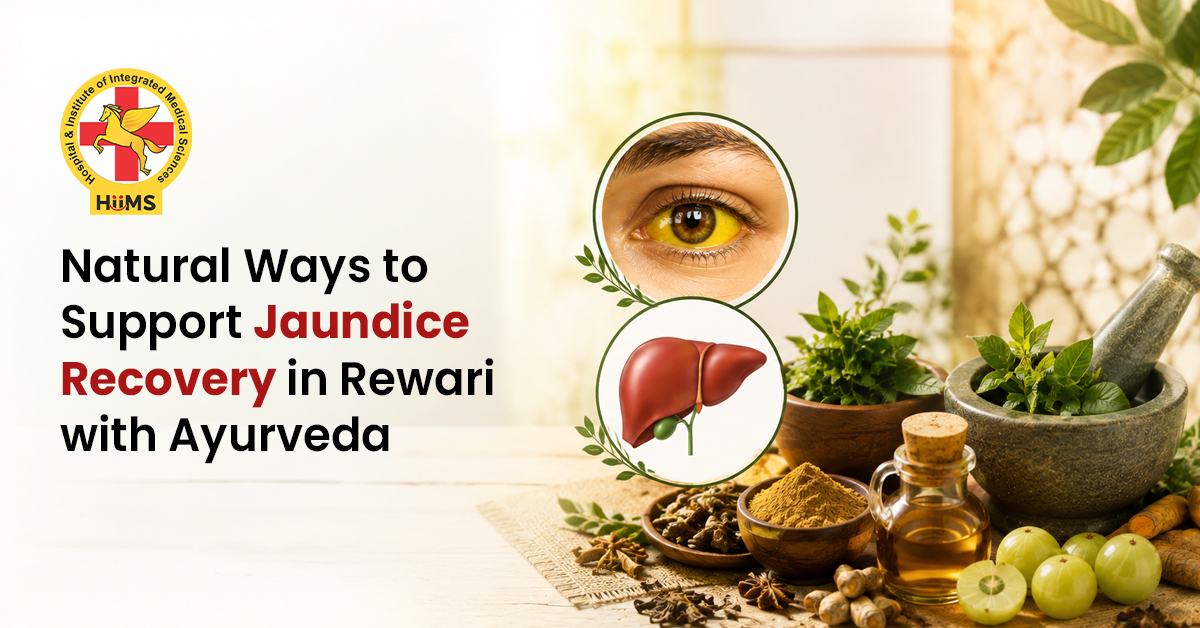
Yellow eyes staring back in the mirror. Urine is darker than it should be. That heavy, dragging tiredness that just won’t lift, no matter how much you rest. Jaundice makes even the simplest tasks feel like a lot.
It happens when bilirubin, yellow pigment your liver’s supposed to filter out, starts piling up faster than your body can actually clear it. If you’re in Rewari and looking for genuine support alongside your medical treatment, Jaundice recovery in HiiMS Clinic Rewari is built around exactly this: diet, Ayurveda, and proper monitoring, working together to help your liver get back on track.
What is Jaundice, and Why Does the Liver Get Overwhelmed?
Jaundice isn’t really a disease by itself. More of a sign that something’s off with your liver, gallbladder, or blood cells. It could be viral hepatitis. It could be alcohol-related liver damage. Gallstones blocking the bile ducts, or red blood cells breaking down faster than usual, all of these can trigger it.
Different causes, same result: bilirubin builds up faster than your liver can process it, and that excess shows up as the yellow tint in your skin, eyes, and sometimes even your nails.
Ayurveda for Jaundice: Understanding Kamala and Pitta Imbalance
In Ayurveda, jaundice goes by a different name, Kamala, and it’s tied mainly to an aggravated Pitta dosha, the energy behind metabolism and digestion. Ayurveda for jaundice doesn’t just look at the yellow tint itself; it asks what actually disturbed Pitta in the first place: poor digestion, too much heat-generating food, and unmanaged stress.
That’s exactly why Ayurvedic treatment leans so heavily on cooling the system and supporting digestion, as well as directly addressing the liver.
Jaundice Diet: What to Eat and What to Avoid
A proper Jaundice diet genuinely eases the load on your liver while it recovers:
- Fresh fruits like papaya, pomegranate, watermelon, and oranges
- Steamed vegetables, bottle gourd, ridge gourd, carrots, and beetroot
- Light whole grains like brown rice, oats, and small portions of roti
- Easily digestible proteins like moong dal, avoiding heavier pulses like rajma early on
- Plenty of water, coconut water, and herbal teas to support hydration
Avoid oily, spicy, and fried food, alcohol entirely, excess caffeine, and heavy dairy, all of which genuinely add strain to a liver that’s already working overtime.
Natural Jaundice Treatment: Daily Habits That Support Healing
Food’s only part of it. A few consistent habits genuinely support natural jaundice treatment too.
- Rest, more than people expect, matters here. Your liver does most of its repair work while you’re resting, so pushing through fatigue in that first week or two usually slows things down rather than speeding them up.
- Water helps too, 2.5 to 3 litres daily, since your liver needs that fluid to flush bilirubin out through urine and stool.
- Ayurvedic guidance also points to a few things worth skipping: daytime sleeping, suppressing natural urges, unnecessary travel, and small habits that quietly get in the way of healing.
Ayurvedic Liver Care: Therapies Worth Knowing About
Ayurvedic liver care often goes beyond diet alone.
- Panchakarma therapy, Virechana specifically, a supervised purgation process, gets used often to help cleanse the liver and bring Pitta back into balance.
- Herbal support shows up too, juices like aloe vera, radish, sugarcane, and papaya leaf extract, traditionally used to aid detoxification and support liver function.
Best results tend to come when these therapies get paired with consistent dietary correction, not used as some standalone quick fix.
When Does Jaundice Need More Than Diet and Rest?
Important to say this plainly. Diet and rest alone don’t resolve every case. Obstructive jaundice, caused by a blocked bile duct or gallstones, often needs surgery or an endoscopic procedure; no amount of dietary correction fixes a physical blockage sitting there.
Same goes for very high bilirubin levels, or jaundice tied to something like cirrhosis or a pancreatic tumour; both need proper medical evaluation and treatment, not just home remedies. Which is exactly why a blood test, checking your Liver Function Test and bilirubin numbers, needs to happen before deciding on any treatment path.
What Does Jaundice Recovery in HiiMS Clinic Rewari Actually Look Like?
Starts with understanding your specific case. How weak the liver currently is, what’s likely driving the imbalance, and how you’re responding as treatment progresses. Jaundice recovery in HiiMS Clinic Rewari typically brings together a personalised diet plan, Panchakarma therapies where they fit, and herbal support, alongside guidance on cutting out alcohol and unnecessary chemical-based medication going forward. The goal is long-term liver health, not just fading that yellow tint temporarily and calling it done.
Conclusion
Real recovery here usually means proper diet, rest, and Ayurvedic support, working alongside medical evaluation, not instead of it. If your bilirubin levels are already climbing, or your doctor’s already flagged something more serious, don’t put off proper medical care in favour of home remedies alone.
If you want to explore how Ayurvedic support could genuinely fit into your recovery, feel free to book a VOPD consultation with Jeena Sikho HiiMS Rewari and talk it through with their team.

FAQs
Q1. How long does jaundice recovery usually take?
Mild cases tend to improve within 2 to 6 weeks with proper rest and diet, though it really depends on what’s causing it.
Q2. Can turmeric or home remedies fix jaundice from a blocked bile duct?
No. That kind needs surgical or endoscopic treatment; diet alone won’t clear a physical blockage.
Q3. Is fruit juice better than whole fruit during recovery?
Whole fruit wins here; it keeps the fiber intact, which supports digestion better than juice does on its own.
Q4. Can Ayurvedic therapies run alongside prescribed medical treatment?
Yes, just make sure your doctor knows about anything else you’re doing, so care stays coordinated and safe.
Q5. What foods should be avoided completely during recovery?
Alcohol, fried and oily food, too much caffeine, heavy dairy- all of it just adds extra work for a liver that’s already struggling.