

We talk a lot about high blood pressure. The salt consumption warnings, the stress-related discussions, the diet charts, all of it. But low blood pressure? It hardly gets a mention, even though it causes problems for more people than we think.
Some people have low readings and feel totally fine, no issues at all. Others feel dizzy, tired, or a bit foggy in the head almost every other day.
That is the real problem here, and it is exactly why the symptoms of low blood pressure need proper healthcare attention. Your body usually gives hints before things get serious, but most of us ignore them or blame it on a bad night’s sleep.
So in this blog, you will learn what low blood pressure really means, why it happens, the common warning signs, and when you should actually visit a doctor instead of waiting it out. Let us get into it.
What Is Low Blood Pressure and Why Does It Happen?
In simple words, low blood pressure means the blood in your arteries is not moving with enough force. Doctors usually take 90/60 mm Hg as a general marker, but honestly, how you feel is more important than the exact number.
When pressure drops, your brain gets less oxygen, and that is why you feel dizzy, weak, or sometimes like you might faint. Things like not drinking enough water, blood loss, certain medicines, pregnancy, or an existing health problem can all bring the numbers down.
And once this happens, some clear warning signs start showing up on their own.
Common Symptoms of Low Blood Pressure You Should Know
If you know the low blood pressure symptoms in advance, you can catch the problem early and avoid a lot of issues later. Here are the ones to keep an eye on.
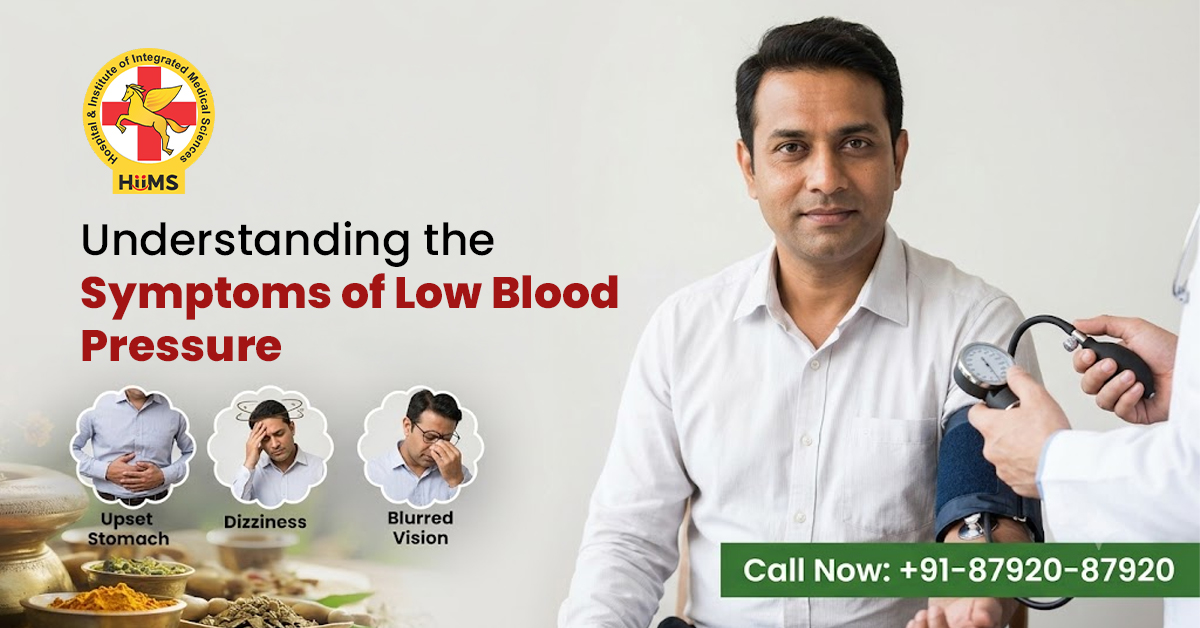
1. Dizziness and Lightheadedness
This is usually the very first sign. Get up too fast from your bed or chair, and the room feels like it’s spinning for a second. It happens because your blood takes a moment to adjust to the sudden change in position.
2. Unusual Weakness and Tiredness
Feeling tired even after simple, everyday work is one of the most common symptoms of low BP. Something as basic as climbing a few stairs or walking around the house can leave you more exhausted than it should.
3. Blurred or Fading Vision
Your eyesight can go blurry for a few seconds during a sudden drop in blood pressure. It usually goes away on its own, but it can definitely catch you off guard the first time.
4. Nausea and Difficulty Concentrating
Feeling sick in the stomach along with issues with focusing on anything is another common complaint. Since your brain and gut both get less blood flow at that moment, your mind feels scattered too.
5. Fainting or Feeling Like You May Faint
This is the one you should never take lightly. Fainting once in a while might not mean much, but if it keeps happening, it is a clear sign that something needs proper checking, not speculation. These low BP symptoms are also the ones doctors commonly point to when discussing hypotension, so spotting the pattern early really does help.
Why Do Low BP Symptoms Sometimes Appear Suddenly?
Most of the time, symptoms hit the moment you stand up too quickly. Doctors call this postural or orthostatic hypotension, basically your nervous system taking too long to adjust. Not drinking enough water, standing for too long, hot weather, or even a heavy meal can trigger the same reaction, which is exactly why these occurrences can feel so unpredictable.
When Should You Seek Medical Attention?
Feeling light-headed once in a while is usually nothing big. But if dizziness or fainting keeps repeating, if the symptoms suddenly get worse, or if weakness and confusion just won’t go away, that is your reason to see a doctor. These situations need real medical advice, not something you should try to resolve on your own.
Conclusion
Catching the symptoms of low blood pressure early makes everything so much easier to handle before it turns into a bigger problem. A single low reading with no symptoms usually isn’t something to worry about, but repeated dizziness, tiredness, or fainting definitely needs attention, not guesswork.
Since every person’s body reacts differently, the best results usually come from a mix of proper medical checkup, the right diet, better daily habits, and Ayurvedic support suited to you.
If any of these signs sound familiar, you can go for a VOPD consultation for your health issue with expert doctors at Jeena Sikho HiiMS.

FAQs
Q.1 What causes low blood pressure in otherwise healthy people?
Ans: Dehydration, prolonged standing, skipping meals, or certain medications can lower blood pressure even in people with no other health issues.
Q.2 Is low blood pressure more common in a particular age group?
Ans: Older adults are likely to experience it more often due to slower cardiovascular reflexes and medication use.
Q.3 How can someone tell the difference between simple tiredness and low BP related weakness?
Ans: Low BP weakness usually comes with dizziness or lightheadedness alongside the fatigue, unlike ordinary tiredness from lack of sleep.
Q.4 What lifestyle habits help keep blood pressure stable through the day?
Ans: Staying hydrated, eating smaller frequent meals, avoiding sudden posture changes, and limiting alcohol intake all support steadier readings.
Q.5 Does low blood pressure treatment always involve medication?
Ans: Treatment often starts with dietary and lifestyle changes, and medication or Ayurvedic support is added only when symptoms are recurring or severe.