


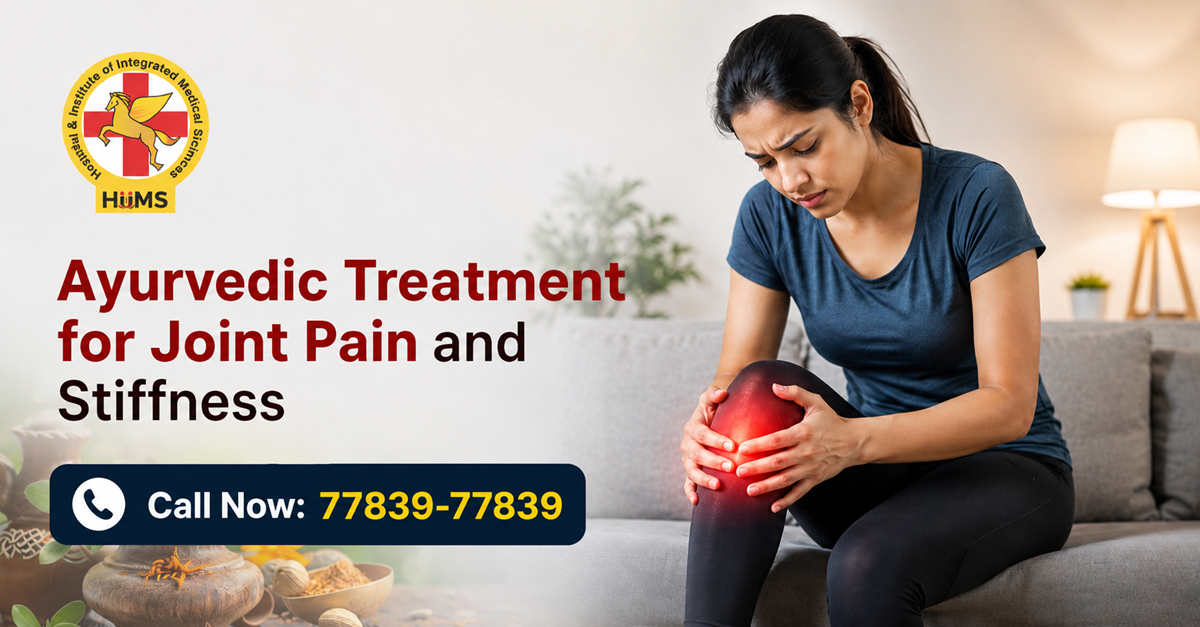
Ever tried getting out of bed and felt your knees protest before you’ve even taken a step? Joint pain has a way of showing up quietly at first, a little stiffness in the morning, a twinge while climbing stairs, and then slowly becoming something you plan your whole day around.
If you’ve been looking into ayurvedic treatment for joint pain, you’re probably tired of painkillers that dull things for a few hours and wear off by evening. This blog talks about what actually causes joint pain and stiffness, how Ayurveda looks at the problem differently, and what a more natural, long-term approach can look like.
Why Do Joints Start Hurting in the First Place?
Joint pain isn’t always about age, though that’s usually the first thing people blame it on. There’s a lot more going on underneath. Some common reasons joints get stiff and painful include:
- Years of wear and tear, knees and hips usually take the worst of it
- Inflammation that builds up slowly without you noticing at first
- Poor digestion. Sounds unrelated, but Ayurveda ties gut health directly to how well your joints get nourished
- Sitting too long without moving much, which a lot of desk jobs quietly encourage
- Cold or damp weather, ask anyone with older joints, and they’ll tell you they can feel a weather change coming
- Stress tightens up the muscles around your joints more than people realise
In Ayurveda, this mostly comes down to Vata, the dosha that governs movement in the body. When Vata gets thrown off, joints tend to dry out and stiffen, and that’s usually where the dull, lingering ache comes from.
What Does Ayurvedic Treatment for Joint Pain Actually Involve?
This is where a lot of people are surprised. Ayurvedic treatment for joint pain isn’t just about rubbing on an oil and hoping for the best. It usually works on a few fronts at once.
Diet plays a bigger role than most people expect. Foods that are cold, dry, or overly processed tend to aggravate Vata, so warm, cooked meals are generally preferred. Ingredients like ginger, garlic, and turmeric show up often because they’re known to support the body’s natural response to inflammation.
Warm oils, think sesame or medicated herbal oils, are massaged into the affected joints to improve circulation and ease that constant tightness. A lot of people find this simple ritual genuinely comforting, not just for the joints but for general relaxation too.
Herbs commonly used in joint pain ayurvedic treatment include Ashwagandha, Shallaki, and Guggulu, each valued for their role in supporting joint comfort and mobility over time.
Joint Pain Treatment That Goes Beyond Just the Joint
Here’s the thing about joint pain treatment done the Ayurvedic way. It rarely stops at the joint. Gentle movement matters a lot too. Practices like yoga, especially poses that focus on flexibility and slow, controlled stretching, can help keep joints from stiffening further. Swimming is another one that comes up often since it takes the pressure off the joints while still keeping them active.
Rest matters just as much as movement, maybe even more. The body needs downtime to actually repair itself, and pushing through pain without giving it that break tends to backfire.
Treatment for Joint Pain Stiffness Through Panchakarma
For people dealing with more stubborn stiffness, Panchakarma therapies are often part of the conversation. This is a deeper cleansing process involving specialised massages, herbal steam, and other detox-based procedures aimed at clearing out what Ayurveda considers accumulated toxins in the body. It’s usually done under supervision rather than at home, since the process needs to be tailored to the individual.
Ayurvedic Treatment for Joint Pain in Raxaul
If you’re based in Raxaul and have been searching for somewhere that actually takes the time to understand your specific case rather than handing out the same generic advice to everyone, it helps to look for a centre with experienced practitioners and a proper diagnostic process. Ayurvedic treatment for joint pain in Raxaul tends to work better when someone actually takes the time to look at your routine, your diet, and how long you’ve been putting up with the stiffness, instead of just handing you the same generic plan they give everyone else.
How Does Jeena Sikho HiiMS Approach Joint Pain?
At Jeena Sikho HiiMS, joint pain isn’t treated like some standalone complaint that showed up out of nowhere. The team actually looks at your diet, your daily routine, stress levels, and overall body constitution, because all of that quietly shapes how your joints end up feeling.
What you actually get depends on your case. It might be dietary changes, herbal support to ease the stiffness, some yoga or gentle movement work, or Panchakarma procedures if that fits your situation. Nobody’s promising a fix in three days here. The whole point is steady, lasting improvement, not something that wears off the moment you stop.
Conclusion
Joint pain doesn’t have to be something you just live with. A combination of the right diet, gentle movement, and consistent Ayurvedic care can genuinely support how your joints feel over time. If you’re looking for guidance that takes your whole lifestyle into account, Jeena Sikho HiiMS Clinic Raxaul offers VOPD consultations where you can sit down and talk through your specific concerns with experienced practitioners.

FAQs
1. Does Ayurvedic treatment for joint pain actually help in the long run?
For a lot of people, yes, especially when it’s paired with the right diet and a few lifestyle changes. If it’s a severe case though, get it checked medically first.
2. How soon before I notice something?
No fixed answer here. Some people feel a difference in a few weeks, others take a while longer. Sticking with it matters more than how fast it works.
3. Does Panchakarma hurt?
Not usually, most people find it relaxing. A few procedures can feel a bit intense, but that depends on your body and what you’re dealing with.
4. Can I just try oils at home instead of going for a consultation?
For mild stiffness, sure, a warm oil massage at home is fine to try. If the pain’s been sticking around or it’s more severe, get it looked at properly first.
5. Is there a Jeena Sikho HiiMS centre in Raxaul?
Yes, there is. It offers personalised Ayurvedic care for joint pain and similar concerns.