


Kidney damage often causes no pain for years. As a result, many people learn about it only when a routine report shows a problem.
The SEEK study screened 5,588 people in India. It found chronic kidney disease in 17.2% of them, and about 6% had stage 3 or worse. However, this was a screening study, so the real numbers may differ. Still, it shows how common the problem is. This blog explains when to see a kidney clinic in Noida, what tests to expect and how care can support you.
Why Kidney Problems Often Go Unnoticed?
The kidneys keep working even after they lose some strength. Damage builds slowly, so early signs look like plain tiredness or stress. Therefore, many people ignore them.
A 2024 meta-analysis combined 18 Indian community studies from 2011 to 2023. It found chronic kidney disease in about 13.24% of adults. Also the rate rose from 11.12% in 2011-2017 to 16.38% in 2018-2023. These numbers suggest that the problem is growing.
Did you know? Healthy kidneys filter about 180 litres of fluid from the blood every day. Then they return most of it to the body and pass only 1 to 2 litres as urine.
Early checks give the best chance to protect your kidneys.
Signs You Should Consult a Kidney Specialist
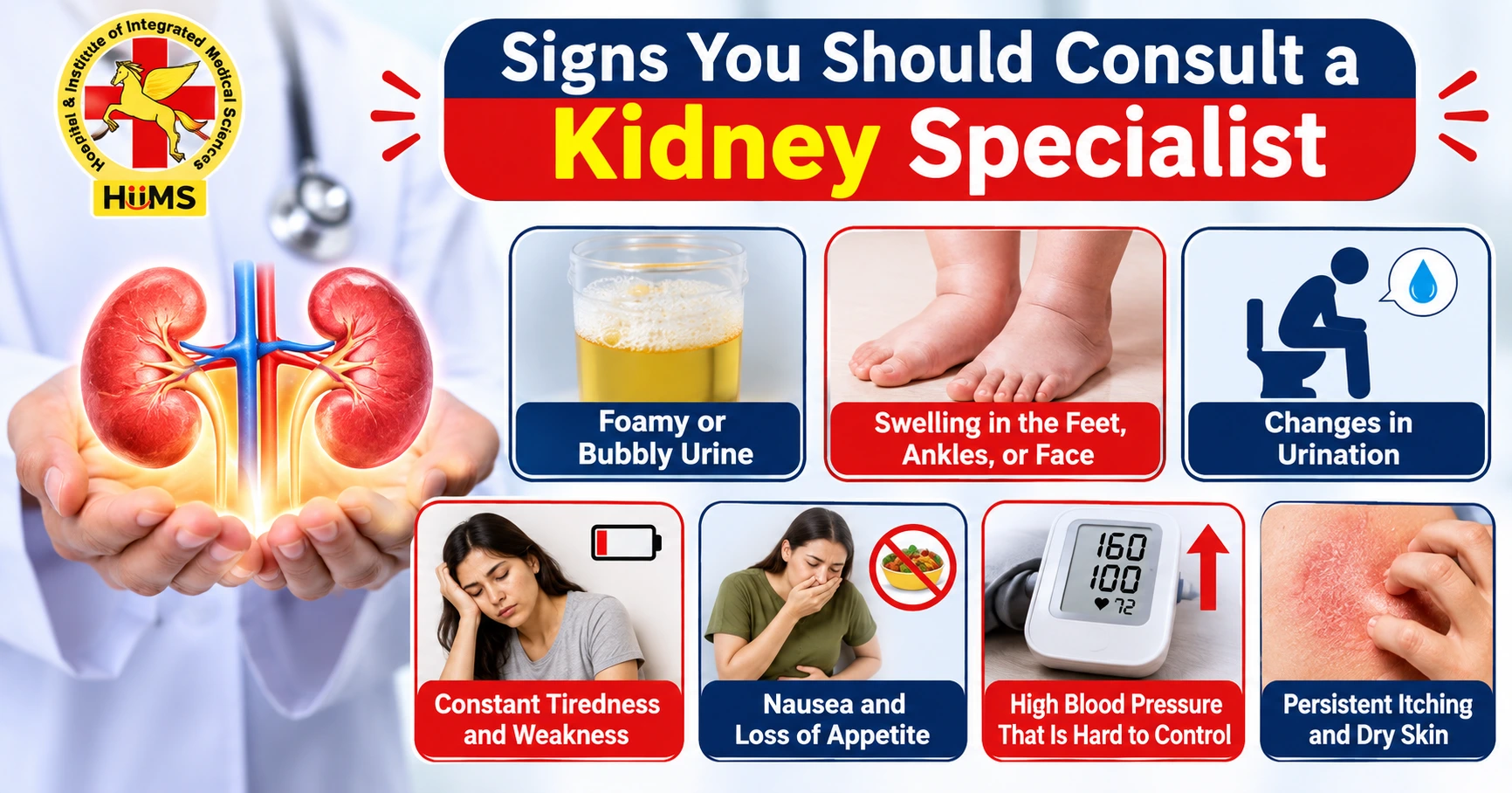
No single sign confirms a kidney problem. However, the signs below deserve attention, mainly when they last for weeks.
-
Foamy or Bubbly Urine
Foam that stays in the toilet can point to protein in the urine. Healthy kidneys keep protein in the blood. In contrast, damaged kidneys let it leak out.
-
Swelling in the Feet, Ankles, or Face
Weak kidneys cannot remove extra fluid and salt. As a result, the fluid collects in the body. Swelling often shows first around the ankles and eyes.
-
Changes in Urination
Watch for urinating more or less than usual. Also notice if you wake often at night or pass dark urine. In addition, blood in the urine needs quick attention.
-
Constant Tiredness and Weakness
Damaged kidneys let waste build up in the blood. They also make less of the hormone that helps form red blood cells. Because of this, a person feels tired and weak.
-
Nausea and Loss of Appetite
Waste in the blood can upset the stomach. For example, some people notice a metallic taste in the mouth.
-
High Blood Pressure That Is Hard to Control
The kidneys help control blood pressure. At the same time, high pressure harms the kidneys. Therefore, pressure that stays high despite treatment needs a kidney check.
-
Persistent Itching and Dry Skin
When the kidneys cannot clear waste well, the skin often turns dry and itchy. Creams alone do not fix this.
If you notice several of these signs, visit a kidney clinic in Noida. The same applies if one sign lasts for weeks. Then a specialist can find the cause early.
Who Should Get Kidney Tests Early
Some people face a higher risk, even without symptoms. For example, consider regular tests if any of these apply:
- You have diabetes or high blood pressure.
- A close family member has kidney disease.
- You take painkillers for a long time.
- You have had kidney stones or repeated urine infections.
- You are over 50 years old.
Testing takes little time. Also, it can catch a problem before it grows. Have one of these risk factors? Contact our ayurvedic experts today.

What Happens at a Kidney Clinic: Tests and Diagnosis
First, the doctor asks about your health history and checks your blood pressure. Next, the doctor suggests a few simple tests:
- Serum creatinine: A blood test that measures a waste product made by muscles.
- eGFR: A score that shows how well the kidneys filter blood.
- Urine protein test: It checks for protein that leaks into the urine.
- Ultrasound: It shows the size and shape of the kidneys.
Healthy kidneys clear creatinine from the blood. So a high level can mean the kidneys are not filtering well. Doctors then look for the reason behind the rise. For this reason, high creatinine treatment in Noida starts with a clear diagnosis. A good kidney clinic in Noida also explains each result in plain words.
Conventional Treatment: What It Offers and Where It Falls Short
Doctors manage chronic kidney disease by treating its causes. Medicines keep blood pressure and blood sugar in range. Diet limits ease the load on the kidneys. Regular tests then show progress. In later stages, patients may need dialysis or a transplant.
However this path can feel heavy. Medicines often continue for years, and some cause side effects. Diet limits can feel strict. Dialysis also takes time and strength. For these reasons, many people look for support that works alongside their kidney doctor’s plan.
As a result, for chronic kidney disease treatment in Noida, people often look for natural care at home.
An Ayurvedic View of Kidney Care
Ayurveda sees kidney health as part of the whole body. It links the kidneys to Mutravaha Srotas, the channels that carry urine. It also connects them to digestion (Agni). When digestion weakens, undigested waste builds up.
So Ayurvedic care goes beyond just managing symptoms. It looks at balancing diet, daily habits, sleep, natural therapies and herbs together. Each part supports the others.
A clinical study in the journal AYU (2010) followed 67 people with chronic renal failure for eight weeks. One group took Punarnavadi compound along with other Ayurvedic medicines. In that group, blood urea fell by about 15%, and breathlessness improved.
So Ayurvedic care can offer support. Still, it works best as part of a planned approach.
How Jeena Sikho HiiMS Noida Supports Kidney Care
Understanding the whole person leads to an integrated approach. Jeena Sikho HiiMS Noida is an integrated hospital that brings Ayurveda, Naturopathy, Homeopathy, Unani, and modern science under one roof. Doctors first review each patient. Then they plan the therapies. As an Ayurvedic kidney clinic in Noida, it offers these supportive therapies.
-
GRAD Therapy
GRAD combines three practices. In hot water immersion, the body warms up and sweats. This helps release waste through the skin and eases the load on the kidneys. Head-down tilt uses gravity to direct blood flow toward the kidneys. Meanwhile, the pH-balanced diet eases digestion. Doctors check each patient first and adjust every practice to their condition.
-
pH-Balanced Diet
This plan is plant-based and home-cooked. It includes fruits, salad and simple, light millet meals. The goal is to ease the load on the body and support digestion.
-
Herbal Support
Doctors may suggest herbs that Ayurveda uses for kidney health, such as Punarnava, Gokshura, and Varun. They choose herbs for each patient. They also supervise their use.
-
Panchkarma
Panchkarma is a group of Ayurvedic cleansing therapies. Doctors pick them after a check-up. For example, Virechana and Basti help support the body’s balance.
-
Lifestyle Changes
A slow daily routine, gentle yoga, and enough rest support the kidneys over time. Small changes work best when the patient keeps them steady.
This care is supportive. Doctors plan it after a check-up, so patients should keep up regular kidney tests.
Conclusion
Kidney problems often stay silent until they advance. Signs such as foamy urine, swelling, constant tiredness, and high blood pressure need the attention of a specialist visit. Standard treatment handles the causes and problems. Meanwhile, Ayurveda adds a whole-body view.
Book your kidney consultation with Jeena Sikho HiiMS Noida today. Speak to our experts through VOPD (video consultation) and receive a personalised care plan from home.

FAQs
Q1. When should I see a kidney specialist?
Ans. See one if you notice foamy urine, swelling, constant tiredness or changes in urination that last for weeks. People with diabetes or high blood pressure should also get regular kidney tests.
Q2. Which tests check kidney health?
Ans. Doctors mainly use a serum creatinine test, an eGFR score, a urine protein test and an ultrasound. Together, these show how well the kidneys filter blood.
Q3. What does a high creatinine level mean?
Ans. It can mean the kidneys are not filtering waste well. The doctor first finds the cause and treatment then depends on that cause.
Q4. What kidney care does Jeena Sikho HiiMS Noida offer?
Ans. It offers supportive therapies such as GRAD, a pH-balanced diet, herbal support, Panchkarma, and lifestyle changes. It also offers VOPD, OPD and IPD consultations and follow-ups.
Q5. Can I consult Jeena Sikho HiiMS Noida online?
Ans.Yes. You can speak to the experts through VOPD (video consultation) from home.
Leave a comment