

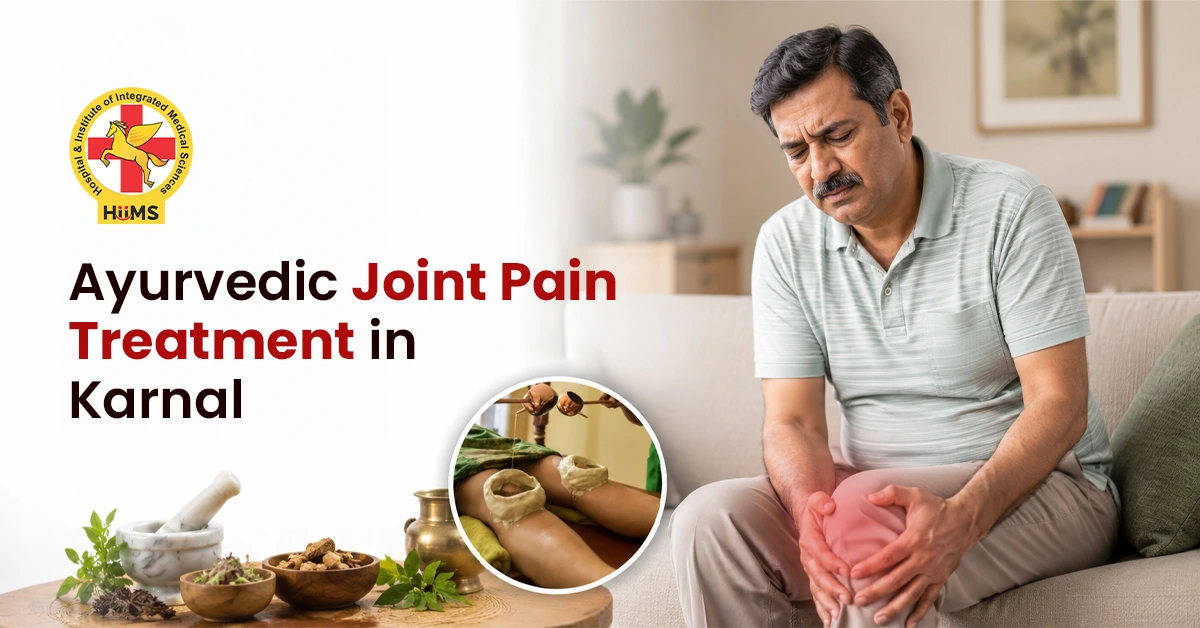

Joint pain does not usually occur instantly. Most of the times, it occurs gradually. Knee stiffness early in the morning when it’s cold. Shoulder pains after a long day at work. Back pains that take a slightly longer time to straighten than they previously took. If such pains are ignored, they can cause movement to be slightly restricted and even your mood and behaviour.
People of Karnal seeking Joint pain Treatment other than medication will find Ayurveda as an alternative since it treats the body holistically and not the area experiencing pain only.
It is the principle of treating the body as a whole that directs how every single patient is treated at Jeena Sikho HiiMS. It entails finding out the underlying causes of the pain and, from there, developing a treatment programme according to the causes.
Why Joint Pain Happens
The joint is formed by two bones that have to be well-supported by sufficient cushioning, lubrication, and appropriate alignment to function without causing pain to us. Once this balance is upset, even the simplest of actions cause us pain.
The major causes why joints become a source of pain for us include wear and tear of the cartilage due to aging, a sedentary lifestyle, obesity which adds stress on our joints, poor posture developed because of desk work, and even other diseases such as arthritis.
In Ayurveda, much of this is linked to an aggravated Vata dosha, the air element of the body. When Vata goes out of balance, it tends to bring dryness and reduced cushioning to the joints, which shows up as stiffness, cracking sounds, and pain during movement.
This is where Ayurveda for joint pain starts, by correcting that underlying imbalance instead of simply numbing the pain.
Signs You Shouldn’t Ignore
It is worth seeing a doctor when joint pain is accompanied by swelling or visible puffiness around the joint, redness or warmth in the area, stiffness that doesn’t ease with rest, or clicking and grinding sounds that come with a general loss of smooth movement. Catching these signs early makes a real difference in how well the pain can be managed later on.

How Jeena Sikho HiiMS Approaches Joint Pain
A joint pain specialist in Karnal working from an Ayurvedic perspective won’t hand every patient the same prescription. At Jeena Sikho HiiMS, treatment begins with understanding a person’s Prakriti, or natural body constitution, along with how severe their pain is.
From there, a plan is built around that individual picture, usually combining therapeutic treatments, herbal formulations, and dietary guidance meant to calm Vata and support the joints from within.
Some of the panchakarma therapies that are usually done to deal with issues related to joints include janu basti, in which warm herbal oil is retained around the knee to provide flexibility and reduce stiffness, and kati basti, which is a herbal oil treatment focused on the lower back and spine.
Some herbs have also been used as supplements to panchakarma treatments to help the body in dealing with the problems experienced in joints.
They include shallaki, which has been used to provide flexibility in the joints, guggulu for lubrication in joints, ashwagandha for muscle strength, and turmeric, which has natural healing properties.
Beyond therapies and herbs, patients are usually guided toward small lifestyle changes that add up over time. Warm, light meals, staying well hydrated, and gentle yoga postures such as Vajrasana, Mandukasana, and Trikonasana can all help support flexibility in the knees, hips, and spine.
Why More People in Karnal Are Choosing Ayurveda for Joint Care
More patients are turning to a joint pain clinic in Karnal that is rooted in Ayurveda because it addresses the root cause rather than just the symptom.
What tends to draw people toward this kind of care is a calm, patient-first clinical environment, treatment plans built around the individual rather than a standard template, natural therapies designed for lasting comfort instead of temporary numbing, practical lifestyle guidance patients can actually use in daily life, and a consistent focus on identifying what caused the pain in the first place.
Conclusion
Joint pain doesn’t have to be something you simply learn to live with. Ayurvedic treatment for joint pain, built around personalised therapies, targeted herbal support, and mindful daily habits, offers a real path toward long-term relief rather than a brief pause in discomfort. If joint pain has been slowing you down, talking to an experienced Ayurvedic team can be a good first step toward moving freely again.

FAQs
Q1.What are some of the things included in Ayurveda joint pain treatment?
Generally, it entails customized Panchakarma treatments, herbal medicines, and diet and lifestyle recommendations depending on the constitution of the patient and severity of the pain.
Q2. Is the treatment procedure for joint pain via Ayurveda safe?
The treatment approach in Ayurveda is very natural with emphasis on less aggressive treatments that is why many people perceive it as safer. Nonetheless, a consultation of a professional is recommended regarding your health state.
Q3. Is it possible to manage joint pain with lifestyle modification alone?
Lifestyle modifications such as regular movements, proper diet and body weight help reduce the symptoms associated with joint pain but in severe cases, professional treatment is essential.
Q4. Whom is it advisable to visit a joint pain specialist?
If one has problems with pain and swelling, inflammation, stiffness, redness of the affected joint, then one needs to visit a specialist.

Leave a comment