A Traditional Ayurvedic Therapy for Knee Relaxation and Inflammation Management
Start Your Natural Healing Journey Today
Start Your Healing Journey
What is Janu Basti
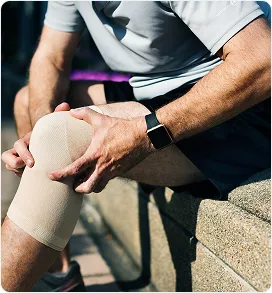
Janu Basti is a classical Ayurvedic knee treatment focused on nourishing, strengthening, and healing the knee joints.
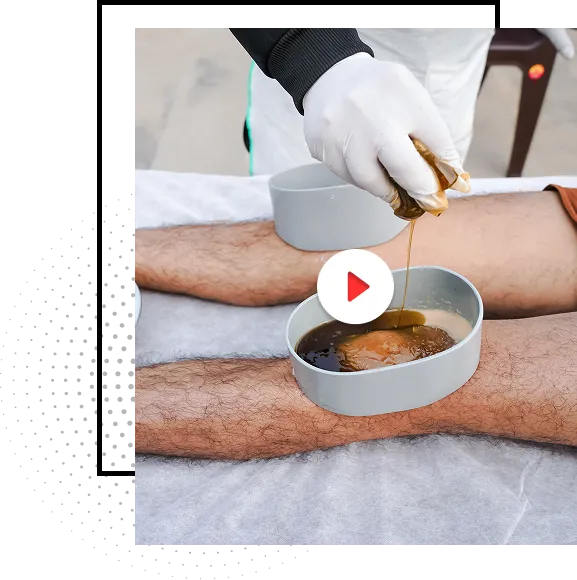
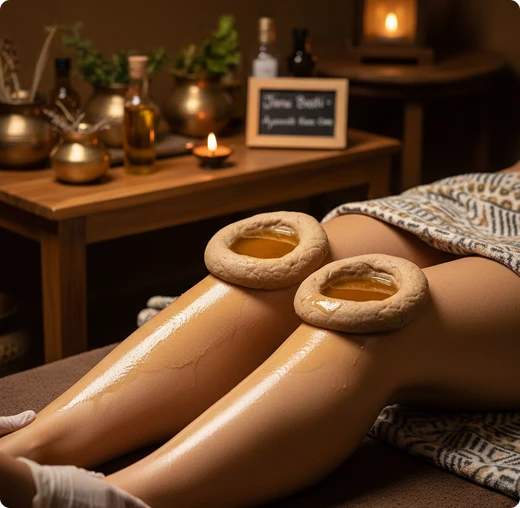
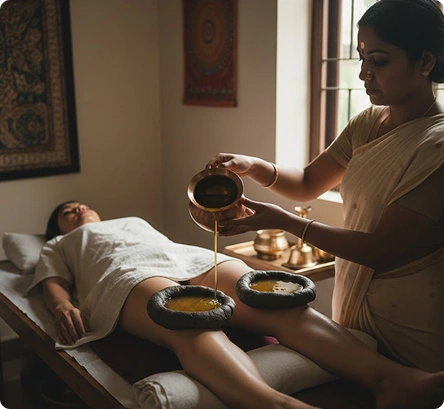
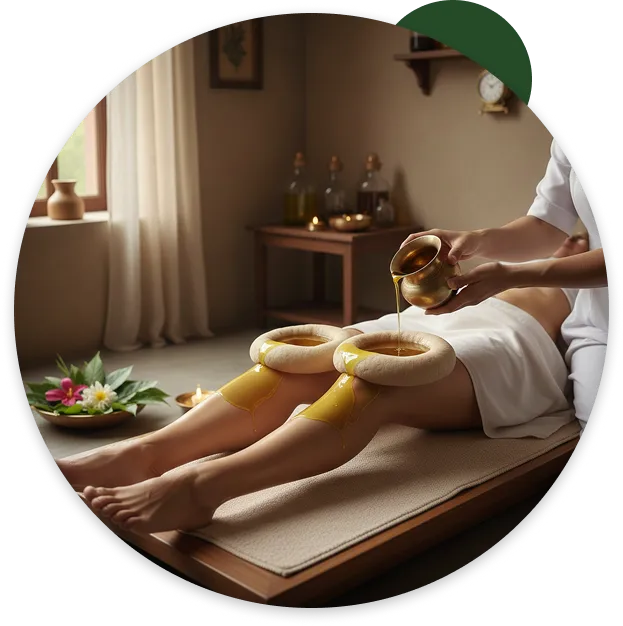
A soft dough ring is formed around the knee and filled with warm herbal oil, which is kept in place for a fixed time.
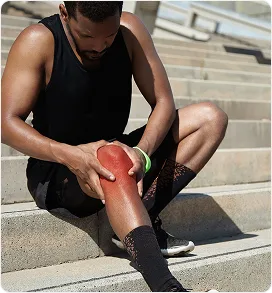
This therapy relieves soreness, limits swelling, reduces inflammation, and improves the strength and mobility of the knee.
It works from inside the joints, improves smooth movement, balances doshas, and helps maintain healthy knees over time.
Process of Janu Basti
Janu Basti is a traditional Ayurvedic knee therapy that helps reduce pain, stiffness, and weakness while improving joint strength and flexibility.
The treatment is performed in three main stages to ensure comfort, safety, and better results.
This is the first step, where the body and knee joint are prepared for the main therapy.
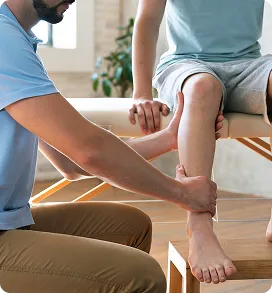
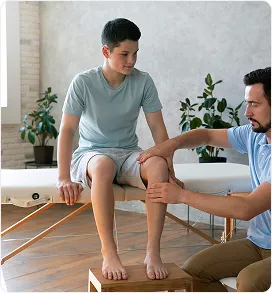
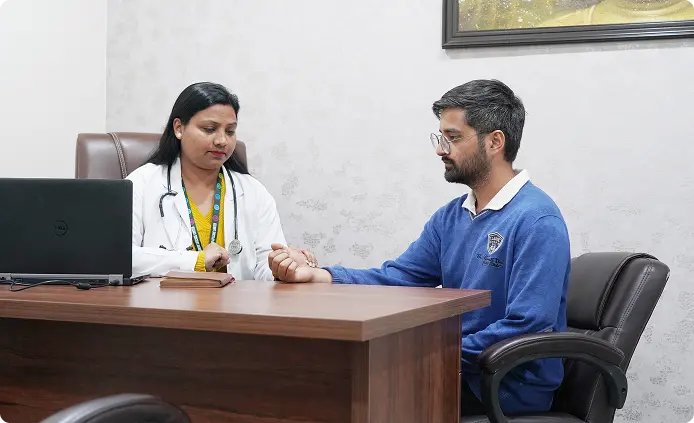
Before starting, the Ayurvedic doctor examines the patient’s knee condition and overall health.
Based on this, the doctor selects the most suitable medicated oil and decides the duration of treatment.
All necessary materials are then prepared. The chosen oil is gently warmed to a comfortable temperature.
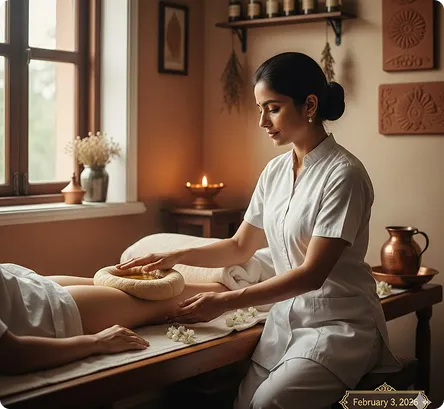
A soft but firm dough, usually made from black gram flour, is shaped to form a strong boundary around the knee.
The patient is asked to lie down comfortably on the treatment table in a calm and clean environment.
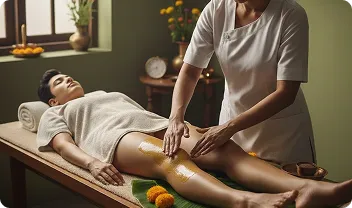
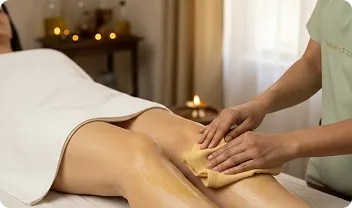
A gentle massage is given to the knee using medicated oil to relax the muscles and improve blood flow.
This is followed by mild steam therapy to open the pores and loosen stiffness.
Pradhanakarma
This is the most important part of Janu Basti, where deep healing and nourishment take place.
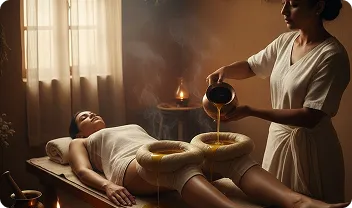
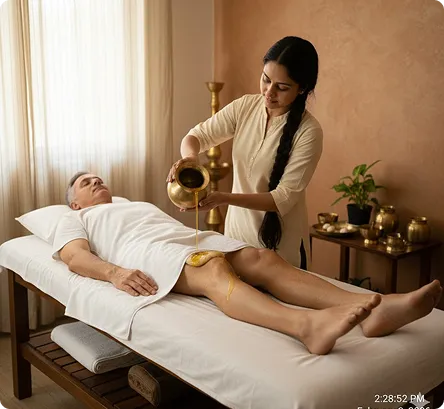
The prepared dough ring is carefully placed around the knee joint and sealed properly to prevent leakage. Once it is fixed securely, warm medicated oil is slowly poured into the ring.
The oil is kept inside the boundary for about 30 to 45 minutes. During this time, the temperature is maintained by replacing the oil when it cools. This allows the warmth and herbal properties of the oil to penetrate deep into the joint tissues.
The patient remains relaxed during the procedure so the therapy can work effectively.
Paschatkarma
This final stage focuses on cleaning, relaxation, and recovery after the therapy.
After the required time is completed, the oil is gently removed using a spoon. The dough ring is then carefully taken off, and the knee area is cleaned with lukewarm water or herbal wipes.
A light massage may be given to soothe the joint and improve circulation. In some cases, mild steam therapy is repeated to support better absorption.
The patient is advised to rest for about 20 to 30 minutes after the session. They are also encouraged to avoid heavy physical activity and follow the doctor’s guidance for best results.
Process of Janu Basti
Purvakarma
This is the first step, where the body and knee joint are prepared for the main therapy.
Before starting, the Ayurvedic doctor examines the patient’s knee condition and overall health.
Based on this, the doctor selects the most suitable medicated oil and decides the duration of treatment.
All necessary materials are then prepared. The chosen oil is gently warmed to a comfortable temperature.
A soft but firm dough, usually made from black gram flour, is shaped to form a strong boundary around the knee.
The patient is asked to lie down comfortably on the treatment table in a calm and clean environment.
A gentle massage is given to the knee using medicated oil to relax the muscles and improve blood flow.
This is followed by mild steam therapy to open the pores and loosen stiffness.
Pradhanakarma
This is the most important part of Janu Basti, where deep healing and nourishment take place.
The prepared dough ring is carefully placed around the knee joint and sealed properly to prevent leakage. Once it is fixed securely, warm medicated oil is slowly poured into the ring.
The oil is kept inside the boundary for about 30 to 45 minutes. During this time, the temperature is maintained by replacing the oil when it cools. This allows the warmth and herbal properties of the oil to penetrate deep into the joint tissues.
The patient remains relaxed during the procedure so the therapy can work effectively.
Paschatkarma
This final stage focuses on cleaning, relaxation, and recovery after the therapy.
After the required time is completed, the oil is gently removed using a spoon. The dough ring is then carefully taken off, and the knee area is cleaned with lukewarm water or herbal wipes.
A light massage may be given to soothe the joint and improve circulation. In some cases, mild steam therapy is repeated to support better absorption.
The patient is advised to rest for about 20 to 30 minutes after the session. They are also encouraged to avoid heavy physical activity and follow the doctor’s guidance for best results.
Types of Janu Basti
Janu Basti is mainly classified based on the type of medicated oil used and the therapeutic purpose of the treatment.
The oil is selected according to the patient’s knee condition and body constitution to achieve better results.
Sneha Janu Basti (Oil-Based Therapy)
This type uses warm medicated oils to nourish and lubricate the knee joint. Commonly used oils include Mahanarayan Taila and Ksheerbala Taila. It is mainly recommended for stiffness, dryness, and joint degeneration.
Kashaya Janu Basti (Herbal Decoction Therapy)
In this method, herbal decoctions are used instead of oil. It is more suitable for conditions involving inflammation, swelling, and heat. This type helps reduce redness and excess fluid accumulation in the joint.
Janu Basti with Nadi Swedana (Steam Therapy)
After oil retention, localized steam therapy is applied to the knee. Herbal steam prepared with Dashmoola decoction is commonly used. It improves blood circulation and enhances the effect of the oil treatment.
Key Benefits of Janu Basti
Relieves Pain & Inflammation
Helps reduce knee pain, swelling, and redness by calming irritated joints with warm medicated oils.
Improves Joint Lubrication
Supports natural lubrication inside the knee, lowering friction between bones and easing movement, especially in osteoarthritis.
Enhances Mobility & Flexibility
Reduces stiffness and supports smoother joint movement by balancing aggravated Vata dosha.
Strengthens Supporting Tissues
Nourishes ligaments, tendons, and muscles around the knee, improving joint stability and strength.
Boosts Blood Circulation
Improves local blood flow, helping deliver nutrients and remove toxins from joint tissues.
Slows Joint Degeneration
Helps delay cartilage damage and joint wear, making it a helpful non-surgical option for long-term knee care.
Mental & Emotional Benefits
Balances Vata
Supports nervous system balance, reducing restlessness, anxiety, and overthinking.
Improves Sleep Quality
Helps promote deeper and more restful sleep by easing long-term pain and discomfort.
Enhances Mental Stability
Promotes a feeling of calmness, security, and inner peace through nourishing therapy.
Strengthens the Nervous System
Soothes and refreshes the nerves, improving mental clarity and overall emotional well-being.
The History of Janu Basti
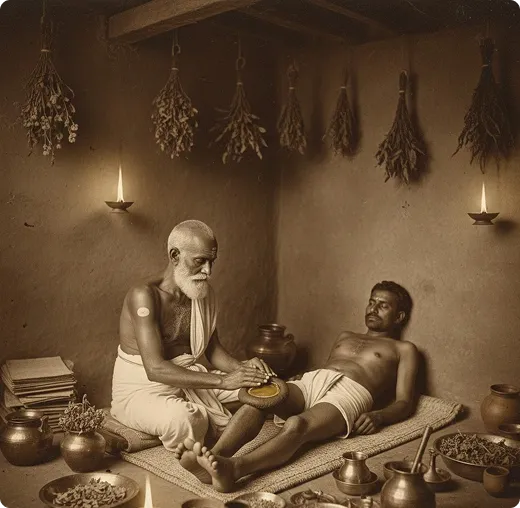
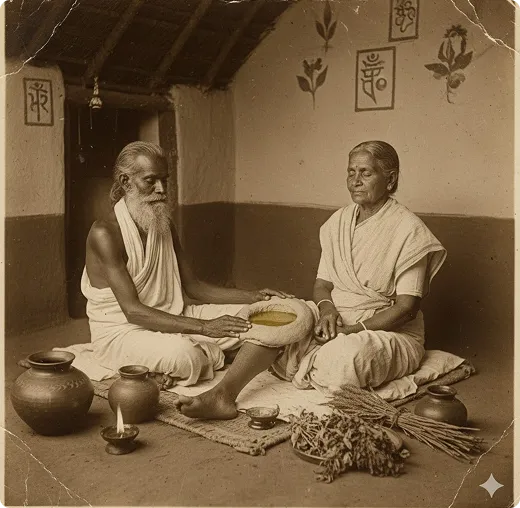
Janu Basti is rooted in ancient Ayurvedic traditions and has been practiced for centuries for joint care and mobility.
The term comes from Sanskrit, where "Janu" means "knee" and "Basti" means "to hold or contain medicated oil."
In early Ayurveda, Basti mainly referred to internal cleansing therapies used in Panchakarma.
With time, this concept was adapted into external oil-retention treatments for focused healing.
The therapy is based on the principles of Snehana (oil therapy) and Swedana (heat therapy).
These principles are described in classical texts like Charaka Samhita and Sushruta Samhita.
Traditionally, Janu Basti was used to calm aggravated Vata and manage stiffness and degeneration.
Today, it has evolved into a structured clinical therapy and remains important for long-term knee health.
Conditions Reversed
Janu Basti is used for both preventive and therapeutic purposes. It helps in
Alleviating Knee Discomfort and Rigidity
Rebuilding Joint Motion
Addressing Early-Stage Osteoarthritis
Supporting Ligament and Tissue Recovery
FAQ’s
It is a traditional Ayurvedic treatment that nourishes, strengthens, and relaxes the knee joints.
Warm medicated oil is gently retained over the knee using a soft dough ring.
A single session usually lasts between 30 to 45 minutes.
Yes, it helps reduce pain, stiffness, swelling, and joint discomfort.
It is useful for osteoarthritis, joint stiffness, ligament weakness, and knee injuries.
It means holding warm medicated oil over the knee for healing and nourishment.
You have selected multiple
diseases. Please fill out the form below to to proceed further.
Thanks for providing your details.
Our health representative will connect with you shortly.
×
Talk to Our Care Expert
At Jeena Sikho HiiMS Outpatient Department (OPD), patients visit for medical consultations without being admitted.
Our mission is to empower you to become self-reliant and your own doctor so that you can lead a drug—and disease-free life. We don’t just offer consultations, we educate, guide, and support you in adopting healthy lifestyle practices, therapeutic protocols, and even diet charts and recipes to take control of your health independently.
What Sets Us Apart?
Personalised Care, Every Step of the Way-
Registration – Patients check in and provide personal and medical information.
Consultation – A doctor examines the patient, reviews symptoms, and may ask questions about medical history.
Diagnosis & Tests – If needed, the doctor recommends diagnostic tests (like blood tests or X-rays).
Treatment/Prescription – Based on the findings, the doctor provides treatment advice or prescribes medication.
Follow-up – Patients may be advised to return for a follow-up visit.
What Makes Our Services Better?
Therapeutic Learning: We teach you essential therapies like Panchakarma, Hot Water Immersion, Contrast Therapy, Head-Down Tilt Therapy, and other health protocols to cure fever, tuberculosis, blood pressure, and more, enabling you to manage your health independently.
Personalized Health Plans: Tailored treatment protocols that blend DIP diets with AYUSH therapies, including Ayurveda, Yoga, and Naturopathy.
Jeena Sikho HiiMS OPD aims to provide quick, adequate medical care without overnight stays.
VOPD (Virtual Out-Patient Department)
Our mission is to empower you to become your doctor. We don't just offer consultations — we educate, guide, and support you in adopting healthy lifestyle practices, therapeutic protocols, and even meal preparation techniques to take control of your health independently.
What Makes Our Services Better?
Expert Guidance Anywhere: Virtually access consultations with Jeena Sikho HiiMS doctors and healthcare specialists, eliminating the need for physical visits.
Therapeutic Learning: We teach you essential therapies like Panchakarma, Hot Water Immersion, Contrast Therapy, Head-Down Tilt Therapy, more health protocols to cure fever, tuberculosis, blood pressure and many more, enabling you to manage your health confidently at home.
Personalized Health Plans: Tailored treatment protocols that blend DIP diets with AYUSH therapies, including Ayurveda, Yoga, and Naturopathy.
Patient Benefits:
Convenient Access: Receive expert healthcare advice from wherever you are.
Holistic Treatment Plans: Comprehensive protocols to address chronic and lifestyle-related conditions.
Chronic Disease Support: Guidance for managing long-term conditions with a focus on lifestyle and dietary changes.
Follow-Up Consultations: Ongoing support to track your progress and adjust your health plan as needed.
Empowered Healing for Life:
At Jeena Sikho HiiMS, we believe that true healing begins with education and self-reliance. Through our VOPD services, we provide expert medical advice and guide you in mastering therapeutic practices and healthy meal preparation. Our goal is to make you the expert on your health journey.
Why Jeena Sikho HiiMS VOPD?
With our integrated, patient-first approach, Jeena Sikho HiiMS VOPD ensures you receive the care, guidance, and education needed to transform your health — all from the comfort of your home.
Jeena Sikho HiiMS IPD (In-Patient Department)
We provide all therapies under one roof, covering the entire AYUSH spectrum (Ayurveda, Yoga, Unani, Siddha, and Homeopathy) and modern healthcare practices.
What Makes Our Services Best?
Comprehensive Healing: Access to Panchakarma, Hot Water Immersion, Contrast Therapy, Head-Down Tilt Therapy, and more for a complete wellness experience.
Therapeutic Learning: We teach you essential therapies and health protocols like how to cure fever, tuberculosis, blood pressure and many more, so you can confidently continue your healing journey home.
Meal Preparation Guidance: Learn how to prepare wholesome, nutritious meals that align with your health and therapeutic needs and are made personalized DIP diet to you.
Patient Benefits:
Continuous Care: Round-the-clock monitoring and personalized support from expert doctors and compassionate Jeena Sikho HiiMS staff.
Comprehensive Diagnosis: Proper lab tests for accurate assessments and effective treatment planning.
Emergency Support: Prompt care for urgent medical needs.
Chronic Disease Management: Customized care and education for long-term health improvement.
Dedicated Nursing Support: 24/7 attentive and compassionate nursing care.
Empowered Healing for Life:
At Jeena Sikho HiiMS, lasting wellness starts with knowledge. We guide you in learning therapeutic techniques and preparing healthy meals and essential health protocols, empowering you to manage your health independently.
State-of-the-Art Facilities:
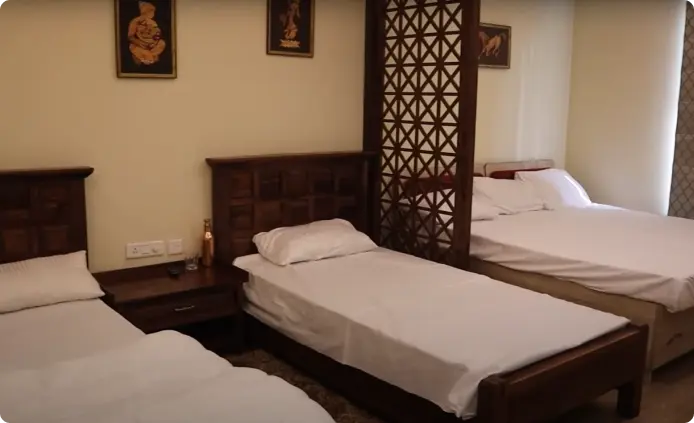
- Spacious, clean, and tranquil rooms are designed for healing and relaxation.
- A peaceful environment is conducive to recovery.
- Expert-led educational sessions and therapy demonstrations to support your learning journey.
Jeena Sikho HiiMS At Home
Our mission led us to develop this service because we wanted to provide medical care of high quality for any individual, regardless of their location.
The Purpose Behind Our Mission
The Jeena Sikho HiiMS organization exists to help people gain complete control of their health conditions through individualized natural therapeutic approaches. Patient journeys to hospital facilities become complicated because of physical mobility problems, ongoing medical conditions, and daily scheduling requirements. Through Jeena Sikho HiiMS at Home, we bring the expertise and treatment recommendations physicians offer to hospital patients right to their doorsteps.
How It Works
Video Consultation (VOPD): The doctors perform VOPD to evaluate your health before deciding whether Jeena Sikho HiiMS at Home suits your needs.
Personalized Treatment Plan: A tailored medical approach is developed after approval, considering your health state, life requirements, and individual needs.
Continuous Monitoring & Support: Our staff maintains continuous outreach to provide care guidance, including life recommendations that adjust your healthcare treatment as needed.
Empowering Patients: The Advantages of Our Services
Convenience: Receive expert medical care without travelling.
Personalized Attention: Tailored treatments based on your specific health concerns.
Continuous Guidance: Ongoing support and monitoring from our expert team.
Holistic & Natural Approach: Treatments based on Ayurveda, DIP diet, and lifestyle modifications.
Cost-Effective: Saves time and expenses associated with hospital visits.
Take control of your health today with Jeena Sikho HiiMS at Home! Experience expert healthcare, holistic treatments, and continuous support—all from the comfort of your home.
Connect with us today and start your journey towards better health!
Jeena Sikho HiiMS Webinars
At Jeena Sikho HiiMS (Hospital and Institute of Integrated Medical Sciences), we believe that knowledge is the key to healing. Our interactive webinars provide a unique platform where participants can directly engage with Acharya Ji and a team of expert doctors to address their health concerns, learn therapeutic protocols, and gain inspiration from real success stories.
What Makes Our Webinars Unique?
Direct Interaction: Get personalized advice from Acharya Ji and experienced doctors dedicated to solving your health issues.
Motivational Success Stories: Hear about patients who have successfully recovered and transformed their health, inspiring you to stay motivated.
Comprehensive Solutions: Receive holistic recommendations based on traditional therapies.
Therapeutic Learning: Gain insights into effective therapies and health protocols you can implement independently.
Patient Benefits:
Expert Health Advice: Personalized solutions to your health queries from a knowledgeable and compassionate team.
Holistic Insights: Learn how to integrate therapeutic practices into your daily routine for better health outcomes.
Empowered Healing: Understand how to become your doctor by adopting effective health strategies and protocols.
Inspiration to Succeed: Draw motivation from the recovery journeys of other patients.
Convenient Access: Join from anywhere and benefit from expert advice at your fingertips.
Empower Yourself Through Knowledge:
Jeena Sikho HiiMS webinars are designed to inspire, educate, and empower you to take control of your health. With expert guidance from Acharya Ji and real-life recovery stories, you’ll be motivated to transform your health journey and achieve long-lasting wellness.
After attending this webinar, you'll gain essential knowledge on how to take precautions and prevent major diseases, leading to a positive and lasting impact on your life.
Join Our Webinars for Just ₹49!
Access invaluable health insights and learning that will support your healthy lifestyle journey.
How to Join:
Download Our App: Get the Shuddhi App on the Play Store for Android.
Call Us: Contact us at 77 1037 1037 for detailed webinar information.