


Kidneys perform their functions quietly on a daily basis to keep the body healthy. They filter the waste from the blood and remove excess fluid from the body through urine. When kidneys malfunction, there will be an accumulation of fluid and waste in the body which will affect the body’s health. Kidney problems can occur suddenly or gradually after several years.
If you are searching for kidney failure treatment in Jhansi, understanding the warning signs, possible causes and available care options is an important first step. In the beginning stage, kidney disease does not cause any symptoms. Hence, the need for regular checks is very essential, particularly among diabetic patients or those with high blood pressure.
This blog explains the common symptoms of kidney failure, its causes, treatment options, foods that support kidney health and the kidney care services available at Jhansi.
What Is Kidney Failure?
Kidney failure means that your kidneys are no longer able to eliminate wastes and excess fluids from the blood. This is either abrupt and known as acute kidney injury or gradual and due to chronic kidney disease. According to the National Institute of Diabetes and Digestive and Kidney Diseases, kidney failure leads to the accumulation of waste products and excess fluid in the body. Treatment will depend on the cause and the general condition of the patient.
Worried about your kidney health? Book a consultation with our experts for personalised care and guidance.
Kidney Failure Symptoms: Early Warning Signs
Not all cases of kidney disease show obvious symptoms in the early stages. With declining kidney function, a person is likely to go through a number of changes. Kidney disease symptoms include:
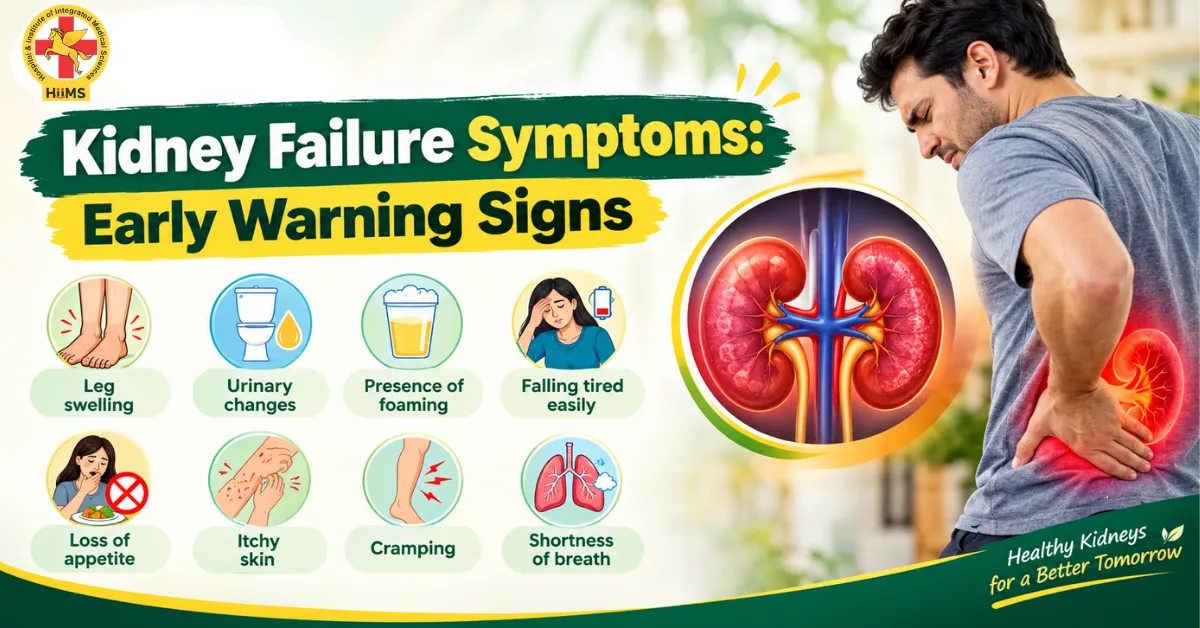
- Leg swelling: Fluid can accumulate in the legs.
- Urinary changes: The amount of urine excreted can change.
- Presence of foaming: Sometimes it indicates the presence of protein in urine.
- Falling tired easily: Renal disorder may be one of the reasons for anaemia.
- Loss of appetite: Some patients may experience nausea and loss of desire to eat.
- Itchy skin: Waste accumulation may provoke skin itching.
- Cramping: Due to fluid and mineral imbalance, cramps may appear.
- Shortness of breath: Accumulation of fluid can influence breathing.
These symptoms may also appear because of other diseases. You should seek medical advice if you have noticed any of these changes in your condition.
What Are the Early Signs of Kidney Failure?
Kidney disease in its early stages is detectable through blood and urine tests even before any symptoms arise. This is because a blood test is capable of detecting creatinine levels and calculating the glomerular filtration rate, or the eGFR. A urine test can detect albumin, a certain form of protein.
People with diabetes, high blood pressure or a family history of kidney disease should ask their doctor whether regular kidney function testing is needed.
Causes of Kidney Failure: What Damages the Kidneys?
There are several factors that may affect the kidneys. Some of them are the following:
Diabetes
High glucose levels can cause damage to the blood vessels in the kidneys. Controlling the blood sugar level and regular visits to a doctor will decrease the risk of complications.
High Blood Pressure
High blood pressure can damage the blood vessels in the kidneys. In addition, kidney diseases can cause high blood pressure and make it hard to control, which creates a vicious circle that requires adequate treatment.
Dehydration
Any kind of illness which leads to fluid loss through vomiting or diarrhoea can result in dehydration due to low blood flow to the kidneys, causing kidney injury.
Some Drugs
Drugs, particularly some pain-relieving drugs, have an effect on how the kidneys work and should be taken carefully and with a prescription from the physician.
Infections or Obstructions to the Kidneys
Some infections or obstructions such as kidney stones may inhibit kidney functions.
Understanding the underlying cause is essential when planning kidney disease treatment in Jhansi.
Kidney Failure Treatment in Jhansi: Available Care Options
Treatment for kidney failure will be decided by the type of kidney failure and how much kidney function is still available. The doctor may decide to order tests like blood, urine tests, and scans before starting treatment. The treatment usually includes:
- Medication for other conditions: The doctor may recommend medication for the control of blood pressure, blood glucose, anaemia, or any other health problems depending on what is required.
- Changes in dietary habits: An individualised diet may be considered for the control of sodium, potassium, phosphorus, protein and fluid intake.
- Dialysis or transplant: Dialysis is used in cases where the kidney has failed to remove wastes and fluids from the body.
- Monitoring: Follow-up visits assist in evaluating the health status of the kidneys.
If you are looking for kidney failure treatment in Jhansi, talk to our experts, who can guide you through appropriate testing and help arrange specialist care when necessary.
Ayurvedic Kidney Treatment in Jhansi
Some individuals consider Ayurvedic treatment as a part of their complete healthcare system while suffering from kidney disease. The effectiveness of any type of Ayurvedic treatment will depend on the individual’s health condition and the functioning of his/her kidneys.
Kidney Care at Jeena Sikho HiiMS
At Jeena Sikho HiiMS Jhansi, the Ayurvedic and integrated care approach includes different therapies, dietary guidance and lifestyle practices the work on the root cause of the disease. The following approaches:
- GRAD System: The GRAD System at Jeena Sikho HiiMS includes Hot Water Immersion (HWI), Head Down Tilt (HDT) therapy, and the pH-balanced diet. HWI involves immersing the body in warm water, while HDT involves lying on an inclined bed with the head positioned lower than the feet. In case of the PH-balanced diet, the main idea is to stick only to the products coming from plants such as fruits and vegetables. When suffering from any renal diseases, it is necessary to discuss such diets with the doctor.
- Panchakarma Therapy: Traditional Ayurvedic procedures used as part of an individualised care plan under professional supervision.
- Ayurvedic Remedies: Ayurvedic medicines may be considered according to an individual’s health condition and the practitioner’s assessment.
- Lifestyle Guidance: Personalised advice on daily habits, food and lifestyle as part of an overall care plan.
People looking for kidney treatment in Jhansi can visit our Jeena Sikho HiiMS Jhansi clinic or contact us to learn more about its services and consultation options.
The suitability of these approaches depends on the person’s kidney function and overall health. Kidney failure can require specialised medical care, including dialysis in some cases. Ayurvedic therapies and dietary changes should not replace necessary kidney treatment, and herbal medicines should be discussed with the treating doctor before use.
Foods That Support Kidney Health
While good nutrition contributes to overall well-being, individuals suffering from kidney disease will require some special diets depending on the level of functioning of kidneys and test results.
Here is what you should do:
- Choose home-cooked meals: cooking food at home can aid in controlling sodium and processed ingredients.
- Avoid excess salt: the extra amount of sodium can lead to water accumulation in the body and increase the risk of developing hypertension.
- Get enough proteins: The requirement for proteins depends on your kidneys’ functioning and the type of treatments.
- Select fruits and vegetables wisely: you could need to reduce the certain foods where there are very high concentrations of potassium.
- Have adequate nutrition: It is important to get sufficient calories and other nutrients to give you enough energy.
There is no general kidney-safe diet that works for all people since there are certain foods which have to be consumed in limited quantities because of blood test results. For example, bananas, tomatoes, beans, nuts, and dairy products.
The National Kidney Foundation recommends tailoring dietary choices to kidney function and individual nutritional needs. Do not restrict fluids or major food groups without professional advice.
When Should You Seek Medical Help?
Do not ignore the persistent swelling, changes in urination, unusual tiredness or foamy urine. These symptoms need assessment because they can have the different causes. Seek urgent medical attention if you experience very little or no urine, severe breathing difficulties, confusion, chest pain or rapidly worsening swelling. Early assessment can help identify kidney problems and guide appropriate care.
Conclusion
However, renal failure may have numerous effects on your body, but treatment is based on the underlying causes of kidney failure and the seriousness of the condition. It is crucial to be aware of the symptoms at an early stage, take precautions against diabetes and hypertension, eat a balanced diet, and have regular check-ups.
In case you require kidney failure treatment in Jhansi, schedule a free VOPD appointment with Jeena Sikho HiiMS. Our professionals will provide you with the expert advice concerning your health issues.

FAQs
1. What are the early symptoms of kidney failure?
The early symptoms of kidney failure may include the changes in urination, foamy urine, swelling in the feet and ankles, and fatigue. The condition can be diagnosed through blood and urine tests.
2. What are the common causes of kidney failure?
The common causes of kidney failure may include diabetes, high blood pressure, dehydration, medications, kidney infection, and a blocked urinary tract.
3. Where can I get the treatment for kidney failure in Jhansi?
In case you are seeking for kidney failure treatment in Jhansi, you should check out the official Jeena Sikho HiiMS Jhansi clinic site to know more about consultation facilities offered by the clinic. An expert in healthcare can advise you regarding the right kidney-functioning tests.
4. Is there any Ayurvedic treatment for kidney failure?
The treatment for kidney failure cannot be taken as Ayurvedic medicines, as they cannot replace kidney failure treatment. Before consuming any herbal medicines, you must consult your doctor.
5. What foods are good for kidneys?
It is healthy to consume fresh and homemade food with limited amounts of salt. However, patients with kidney problems might need to control their consumption of protein, potassium, phosphorus and liquids depending on the test results and the advice of their doctors.

Leave a comment