


Did your last health check show a sugar number you did not expect? Many people in Faridabad first hear about diabetes this way, from a routine report and not from a symptom. If that was you, or someone at home, this blog is meant to answer the usual questions.
We cover Diabetes Treatment in Faridabad, the signs to watch for, why sugar rises, what to eat, and. Your medicines and your doctor’s advice stay as they are unless your doctor changes them.
Early Signs of Diabetes You Should Not Ignore
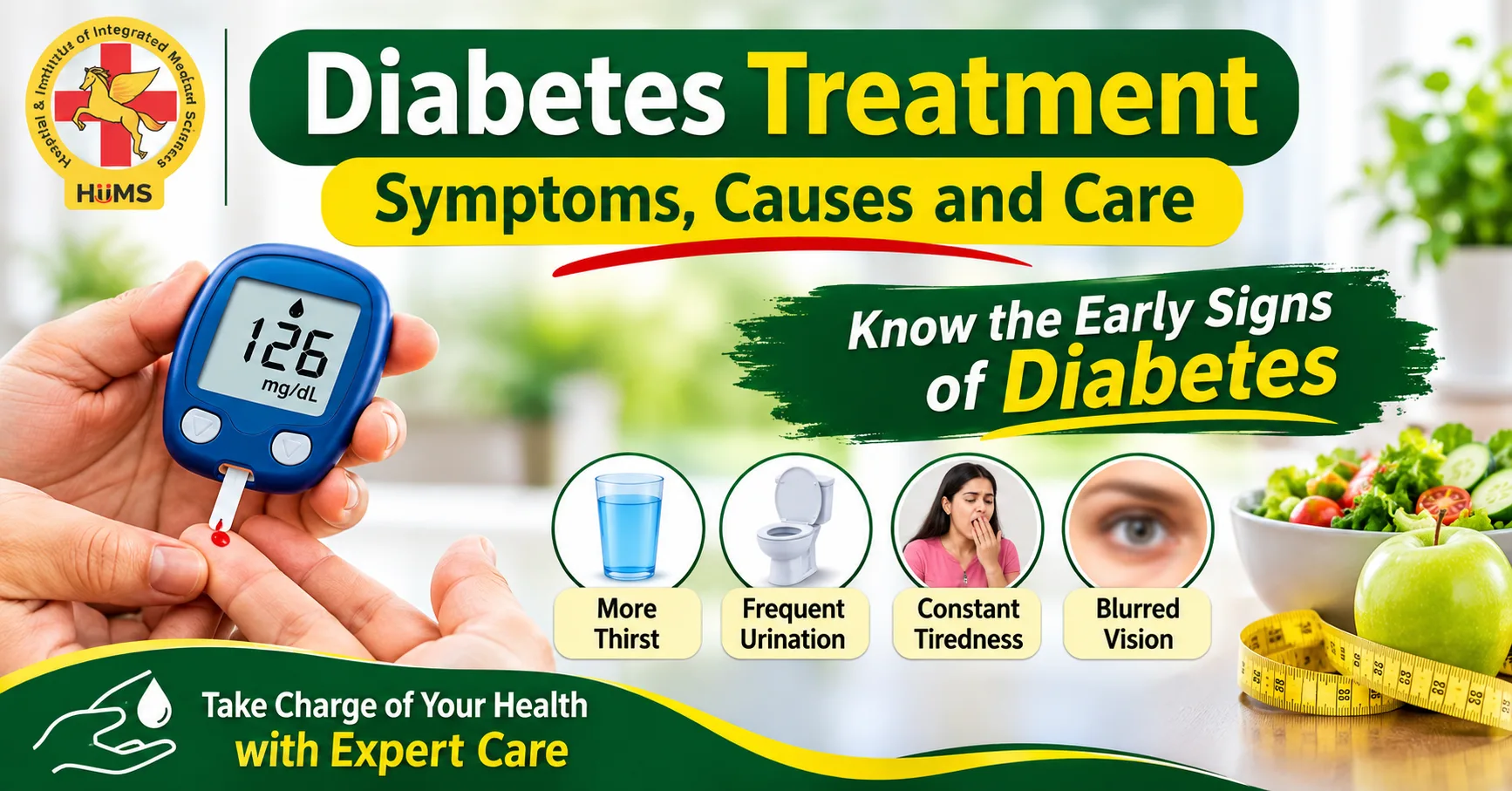
The early signs of diabetes are easy to miss because they look like ordinary tiredness. In our OPD conversations, many people tell us they put the thirst and the night-time bathroom trips down to work stress for months. A few things are worth noticing:
- Feeling thirsty more often than usual, and passing urine more often
- Tiredness that does not go away with rest
- Blurry vision, or cuts and sores that heal slowly
- Tingling in the feet, or frequent skin and urinary infections
Diabetes is not one condition, and the signs differ a little between the two main types.
Type 2 Diabetes Symptoms
Type 2 diabetes symptoms usually build slowly over the years. Some people have none at all and find out through a blood test. When they do appear, they are the ones listed above, often with weight gain around the waist and darkening of skin folds on the neck.
Type 1 Diabetes Symptoms
Type 1 diabetes symptoms tend to come on faster, often in children and young adults. Sudden weight loss, strong thirst, frequent urination and unusual hunger are the common ones. Type 1 needs insulin, so a child or young person with these signs should see a doctor the same day. Noticed any of these signs? Talk to a Jeena Sikho HiiMS Faridabad doctor about which tests to start with.
Causes of High Blood Sugar: Why It Happens
The causes of high blood sugar are rarely just one thing. Food, weight, family history, age, sleep and stress all play a part, and some medicines can raise sugar too.
A community study published in 2025 looked at 910 adults in villages near Gurugram, close to Faridabad. Blood sugar testing showed diabetes in 6.2% of the 895 people tested. Being overweight or obese raised the odds of diabetes by almost six times, and people aged 50 to 59 had more than three times the odds of those aged 18 to 29.
This was a rural study, so city numbers may differ, but the pattern is the same one we see in most clinics: extra weight and age matter most, and weight is the part you can change. You can read the full paper in PubMed Central.
Long hours on a chair, a late and heavy dinner, sweet tea throughout the day and little walking add up quietly. None of them feels like a problem on its own.
Finding a Diabetes Doctor in Faridabad
Most people start with a diabetes doctor in Faridabad close to home, and that is a sensible first step. A physician or a diabetologist can order the right tests and set your medicine plan. If you want Ayurveda and diet support, it helps to ask the questions below before you book.
Diabetes Specialist in Faridabad: Questions to Ask
When you meet a diabetes specialist in Faridabad, ask which tests they want (fasting sugar, post-meal sugar and HbA1c are common), how often you should repeat them, and what to watch for in your feet, eyes and kidneys. Share every medicine and supplement you take, so nothing clashes.
Choosing a Diabetes Clinic in Faridabad
A good diabetes clinic in Faridabad explains the plan in plain words, reviews your reports before suggesting anything, and tells you when to come back. Be careful with any place that asks you to stop your medicines on day one. That decision should only come from your treating doctor after checking your sugar readings.
Diabetes Treatment in Faridabad at Jeena Sikho HiiMS
Here is what we offer for diabetes treatment in Faridabad at Jeena Sikho HiiMS. Your visit starts with an OPD consultation, where the doctor goes through your reports, symptoms and current medicines. If travelling is difficult, a VOPD video consultation with follow-ups is also available.
From there, the plan may include a pH-balanced, plant-based diet, herbal support chosen by the doctor, and Panchakarma, where it suits you. Herbal and cleansing therapies are not the same for everyone, so the doctor decides what fits your age, strength and other conditions.
Neem Karela Therapy
Neem Karela Therapy is one of the therapies HiiMS gives for diabetes care. A paste of neem and karela (bitter gourd) is prepared, and the person stands or moves their feet in it for a set time, usually 30 to 45 minutes. We describe it as a way to support circulation and relaxation alongside diet changes. Want a diabetes care plan based on your reports? Call Jeena Sikho HiiMS today and speak with our experts!
Diabetes Diet Plan: The Plate 1 and Plate 2 Method
Acharya Manish Ji’s pH-balanced, plant-based diet is built around two plates at each meal, and the idea is simple: eat raw food first, then cooked food. Plate 1 is the raw one, with seasonal fruit at breakfast and a fresh salad at lunch. Plate 2 is a millet-based or home-cooked meal, eaten after Plate 1 is finished.
This diabetes diet plan gives you fibre first, which slows how fast food leaves the stomach. For dinner, the HiiMS chart suggests only fruit and salad, or a small salad with a light vegetable soup, taken before sunset.
Diet Chart for Diabetic Patients
Here is how a diet chart for diabetic patients may look in this method. It follows the two-plate chart published on the HiiMS website, and your doctor will adjust portions to your weight and sugar readings.
- Breakfast (7 to 9 AM): Plate 1 is three to five seasonal fruits. Plate 2 is millet porridge, vegetable upma, poha or sprouts.
- Lunch (1 to 2 PM): Plate 1 is a raw salad of cucumber, carrot, tomato, radish or leafy greens. Plate 2 is a millet or barley roti with dal and a seasonal vegetable.
- Dinner (before sunset): Fruit and salad, or a small salad with vegetable soup.
The HiiMS chart lists about 500 g of fruit at breakfast for people above 50 kg. If you have diabetes, please check fruit portions with your doctor first and watch your sugar readings after meals, because some fruits raise sugar faster than others and medicines may need adjusting as your diet changes.
Foods to Control Blood Sugar
These are foods to control blood sugar that fit easily into the two-plate method: millets such as foxtail, barnyard, and kodo; whole pulses; sprouts; leafy greens; cucumber; bitter gourd; and fruit with skin, like guava and apple, in sensible portions. White rice, maida, packaged snacks, and sweet drinks are best reserved for rare occasions.
Diabetes Prevention Tips for Your Family
If diabetes runs in your family, or your reports show borderline sugar, these diabetes prevention tips are worth starting now.
- Walk for 30 minutes a day, ideally after your main meal. Keep dinner early and light, and replace sweet drinks with water, buttermilk or unsweetened herbal tea.
- Test your fasting sugar once a year after 30, and more often if a parent has diabetes.
- Sleep at fixed times too, since poor sleep can push sugar up.
Small habits like these support any diabetes treatment in Faridabad you choose, and they help whether or not you already have a diagnosis.
Conclusion
Diabetes care works best when medical tests, steady daily habits and good food go together.
If you are looking for diabetes treatment in Faridabad that includes Ayurveda and diet guidance, we are happy to review your reports and plan with you. Keep taking your prescribed medicines unless your doctor advises otherwise. Reserve a VOPD slot with Jeena Sikho HiiMS Faridabad and go through your sugar reports from home.

FAQs
1. Can I stop my diabetes medicines if my sugar comes down?
No. Only your treating doctor should change or stop medicines after checking your readings.
2. Is fruit safe for people with diabetes?
Many people can eat it in measured portions, but it depends on your readings. Check portions with your doctor.
3. Which test shows my average sugar?
HbA1c shows the average of the last two to three months.
4. Can children get diabetes?
Yes. Type 1 often begins in childhood, so sudden thirst or weight loss in a child needs a visit to a doctor.
5. How soon can I see the doctor at HiiMS?
You can book an OPD slot or a VOPD video consultation by calling 82704-82704.
Leave a comment