
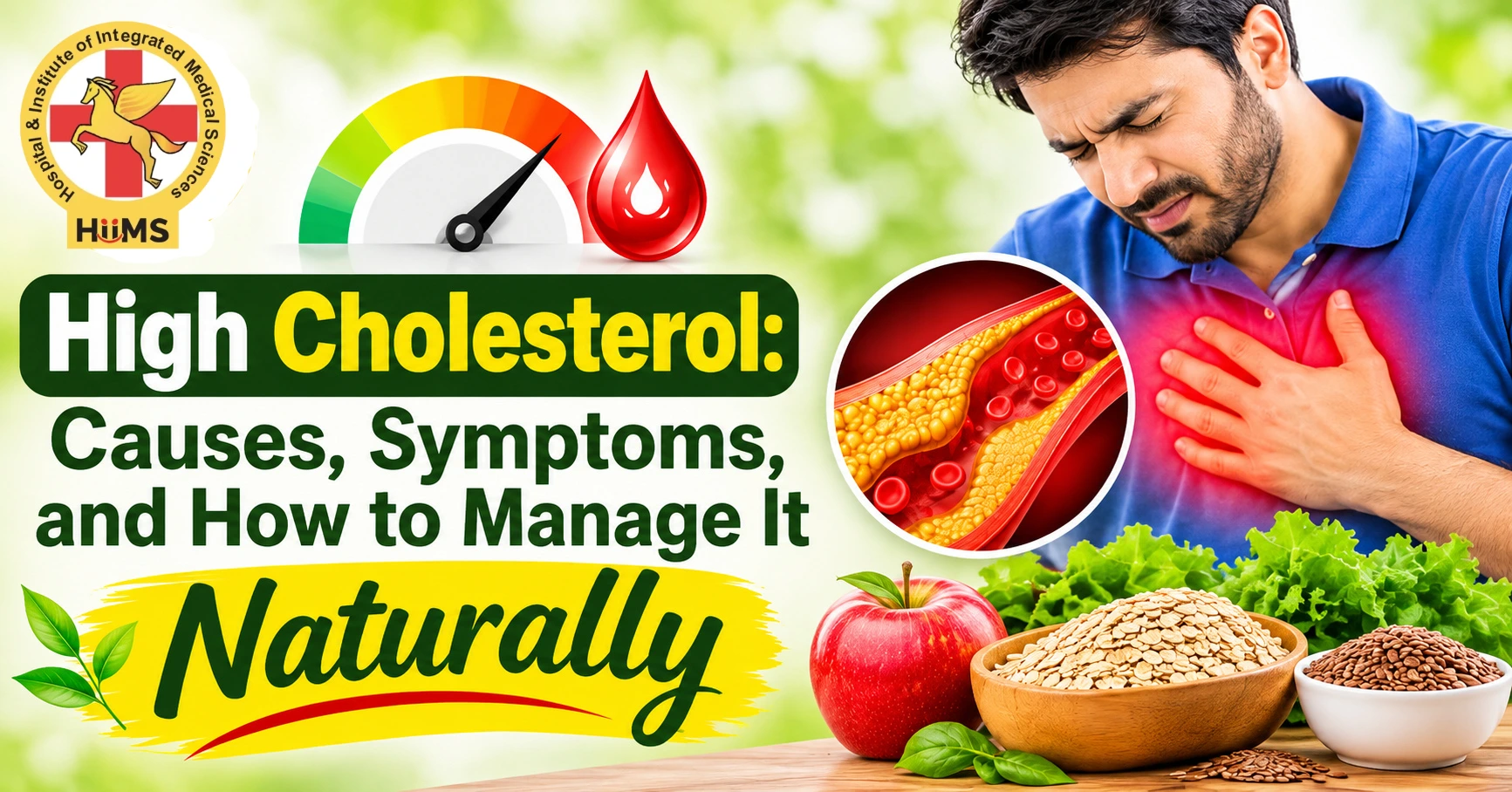

Cholesterol is a fat the body needs. Cholesterol itself is not harmful because the body needs it. The trouble starts when levels stay too high for too long. Most people feel nothing while it builds, so high cholesterol symptoms are often missing. As a result, many people find out only after a blood test. Knowing that high cholesterol causes early helps you act before problems start.
The ICMR-INDIAB study tested 23,665 Indian adults. In 87.3% of them, at least one blood fat level was out of range. Raised LDL, the “bad” cholesterol, appeared in 49.4%.
This blog explains what cholesterol is, what raises it, the signs to watch for, and the daily habits that help. Then it comes to the Ayurvedic view of managing cholesterol.
What Is Cholesterol? Good (HDL) vs Bad (LDL)
Cholesterol is a waxy fat that the body needs, but the balance between its types decides its effect.
The liver makes cholesterol to build cells, hormones, and vitamin D. Because fat does not mix with blood, it travels inside carriers called lipoproteins.
LDL carries cholesterol to the tissues. When there is too much of it, the extra settles in the artery walls and narrows them over time. For this reason, doctors call it bad cholesterol (LDL).
HDL works in the opposite direction. It collects extra cholesterol and returns it to the liver. A higher level of good cholesterol (HDL) therefore protects the arteries. Triglycerides, a third type of blood fat, add to the risk when they rise along with LDL. Knowing how these three behave makes it easier to see why levels rise. Curious what your cholesterol numbers say about your health? Speak with our experts.
High Cholesterol Causes: Why Levels Rise
Cholesterol rarely rises for one reason. Instead, habits, genes, and other conditions often add up over the years. Knowing which high cholesterol causes apply to you is the first step to control.
Refined Carbohydrates and Unhealthy Fats
Fried snacks, packaged foods, and bakery items add unhealthy fats to the diet. Sugary drinks and sweets can raise triglycerides. For example, a daily habit of samosas, biscuits, or soft drinks adds up over months. Such foods are easy to find, so they are easy to overeat.
Low Physical Activity
Long hours of sitting lower HDL and let LDL climb. Also, activity helps the body use fat for energy. So a desk job with no walking can raise levels slowly.
Extra Weight
Extra weight around the belly is a common cause. In fact, reports from the ICMR-INDIAB study named belly fat as a leading predictor of abnormal lipids. So waist size matters as much as body weight.
Smoking and Alcohol
Smoking lowers HDL and harms artery walls. Alcohol can raise triglycerides. As a result, both habits make the problem worse.
Family History
Some people inherit high LDL, even when they eat well. So having a parent or sibling with high cholesterol increases your own risk. In such families, doctors often advise earlier testing.
Diabetes and an Underactive Thyroid
Diabetes often changes the balance of blood fats. A slow thyroid can raise LDL too. So treating these conditions also helps cholesterol.
These high cholesterol causes often overlap, so one change rarely fixes everything. Because they build quietly, the signs often appear late.
High Cholesterol Symptoms: Why It Often Goes Unnoticed
Most people with high cholesterol feel completely normal. So signs are often missing until levels stay high for years. This happens because the arteries narrow slowly. The body adapts, so you feel fine until a large part is blocked.
When signs do appear, they can include several clues. Very high levels can leave soft, yellowish fatty bumps on the skin or yellow patches near the eyelids. A grey-white ring can also form around the cornea. Narrowed arteries may cause chest discomfort or breathlessness on effort and leg cramps while walking. Many of these signs have other causes. A lipid profile blood test is the only sure way to know.
MedlinePlus lists adult LDL under 100 mg/dL and total cholesterol under 200 mg/dL as healthy. It also lists HDL of 60 mg/dL or higher as the best. HDL under 40 (men) or under 50 (women) is low. Your doctor reads these numbers along with your age and risk factors.
How to Manage High Cholesterol Naturally: Lifestyle Changes That Help
Lifestyle changes for cholesterol work best when small steps become daily habits. These cholesterol control tips are simple.
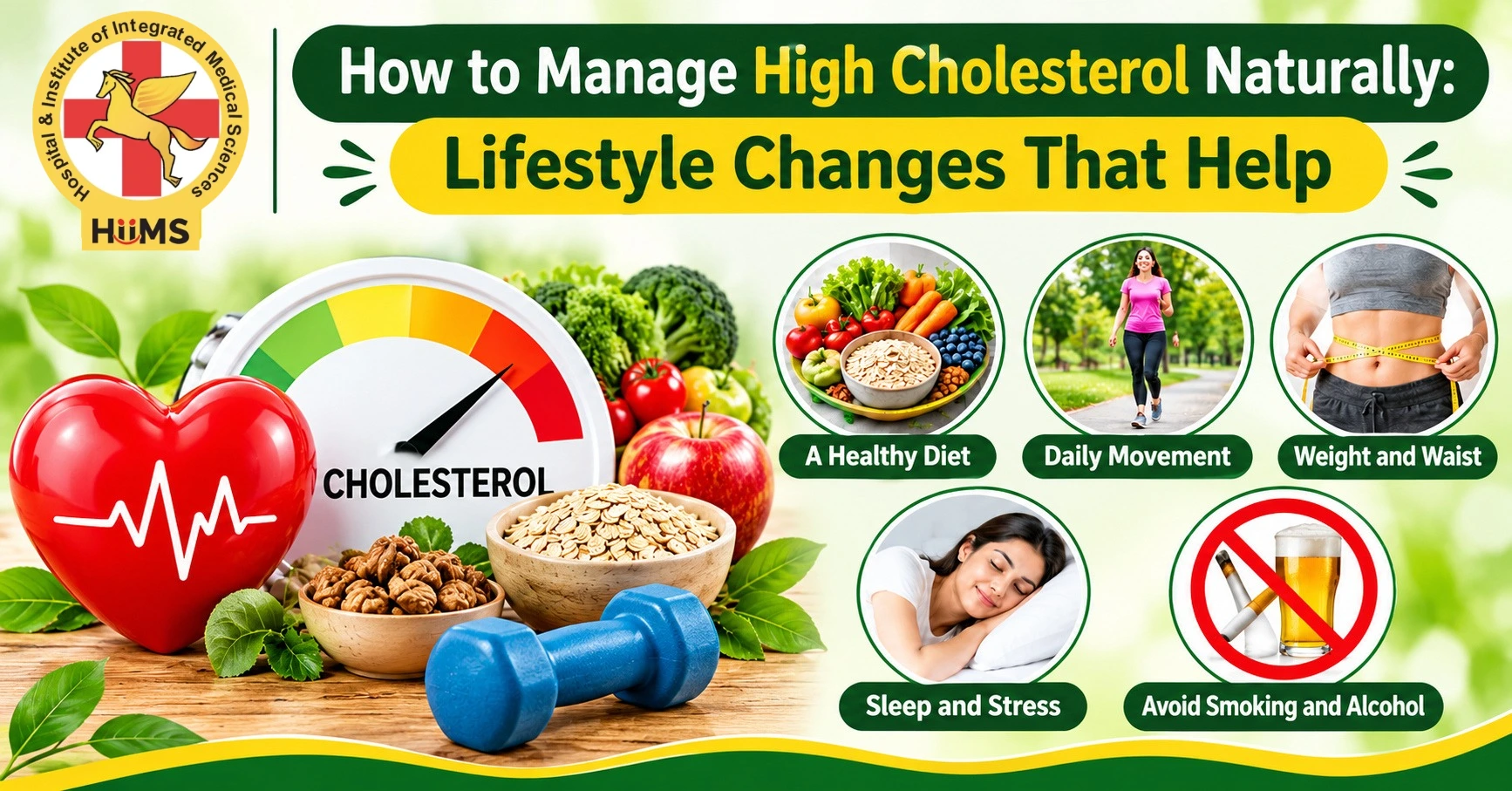
A High Cholesterol Diet to Follow
Choose fresh fruits, raw vegetables, oats, and dals. Soluble fibre helps lower LDL, so oats and beans are good choices. A handful of walnuts or flaxseed can also help. Limit fried food, bakery items, sugary drinks, and packaged snacks. Cook with less oil, and choose boiled, steamed, or roasted food more often than fried. A light, home-cooked meal is a good base.
Daily Movement
The NHLBI advises 150 to 300 minutes of moderate activity a week. A brisk walk counts, and so do short walks after meals and light yoga. Regular activity can lower LDL and raise HDL.
Weight and Waist
Even a small loss of belly fat helps blood fats. So watch your waist size, not only the scale. Small, steady changes work better than strict plans.
Sleep and Stress
Poor sleep and stress can push people toward unhealthy food and less movement. So keep a fixed sleep time, and aim for about seven to eight hours each night. A few minutes of slow breathing each day can also help calm stress.
Avoid Smoking and Alcohol
Quit smoking and limit alcohol. Also, repeat your lipid test as your doctor advises. Regular tests show whether your habits are working.
Habits do much of the work, that is what Ayurveda suggests. It focuses on food, digestion, and routine together to help balance the body.
Ready to build healthier habits? Book your appointment with our experts today.
The Ayurvedic View of High Cholesterol
Ayurveda describes it as Medoroga, a disorder of Meda Dhatu, the body’s fat tissue. Digestion plays a central role here. When Agni, the digestive fire, is weak, food is not fully digested. This leaves Ama, a sticky, undigested waste. Ayurveda links Ama and a rise in Kapha with fat build-up.
Ayurveda connects heavy, oily food, little activity and daytime sleep with this pattern. So Ayurveda starts with food, routine, and digestion. Doctors also look at Prakriti, your body type, when they plan diet and routine. As a result, two people with the same lipid report may get different plans.
This view gives people clear, practical steps to begin with. Now, we will look at how Jeena Sikho HiiMS puts them into care.
Cholesterol Care at Jeena Sikho HiiMS
Because cholesterol grows from food, routine, and digestion, care needs to cover all three. Jeena Sikho HiiMS is an integrated hospital that combines Ayurveda, Naturopathy, Homeopathy, Unani and modern science. So its doctors plan care after reviewing your lipid report, symptoms, and daily routine.
Panchkarma
Panchkarma is a set of five cleansing therapies: Vamana, Virechana, Basti, Nasya and Raktamokshana. The doctor chooses the ones that suit you after an assessment. These therapies support the body in clearing built-up waste.
Herbal Support
Ayurveda traditionally uses Guggulu, Arjuna, Triphala, and fenugreek for metabolism and heart health. The doctor chooses the herbs and doses for each person.
A randomized study in Ancient Science of Life followed 59 patients with raised lipids who took Guggulu for 8 weeks. Triglycerides fell 17.17% in one group and 13.64% in the other. It shows how Ayurveda can help support healthy cholesterol levels.
pH-Balanced Diet
This diet includes fresh fruits and raw vegetables and it keeps meals light. It also avoids salty, fried, and packaged foods. Light meals are easier to digest, which Ayurveda links to a stronger Agni.
Mind & Body Healing
Stress and poor sleep can affect food choices and routine. So this therapy combines yoga, pranayama, meditation and sleep guidance. Together, they support a calm mind and a steady routine.
Conclusion
High cholesterol often stays silent, so a regular lipid test is the best early signal. Daily habits are the base of cholesterol management. A light diet, regular movement and good sleep help keep LDL in check and support HDL. Ayurveda builds on this by working on digestion and routine which helps manage cholesterol naturally. For people who want guided support, Jeena Sikho HiiMS offers integrated care with Ayurveda.
Get guidance from Jeena Sikho HiiMS experts about your health from home. Book a VOPD (video consultation) and receive a care plan built around your routine.

FAQs
1. What are the main causes of high cholesterol?
Fried and packaged food, little activity, extra belly fat, smoking, alcohol, family history, diabetes, and thyroid problems are common causes.
2. Does high cholesterol cause symptoms?
Usually not. A lipid profile blood test is the only sure way to know your levels.
3. What are normal LDL and HDL levels?
For adults, LDL under 100 mg/dL is healthy. HDL of 60 mg/dL or higher is best, and under 40 (men) or under 50 (women) is low.
4. How does Jeena Sikho HiiMS support cholesterol care?
Our doctors plan care after reviewing your report, symptoms, and routine. It includes Panchkarma, herbal support, a pH-balanced diet, and lifestyle changes.
5. Can I consult Jeena Sikho HiiMS doctors online?
Yes. You can consult through VOPD, our video consultation service.
Leave a comment