

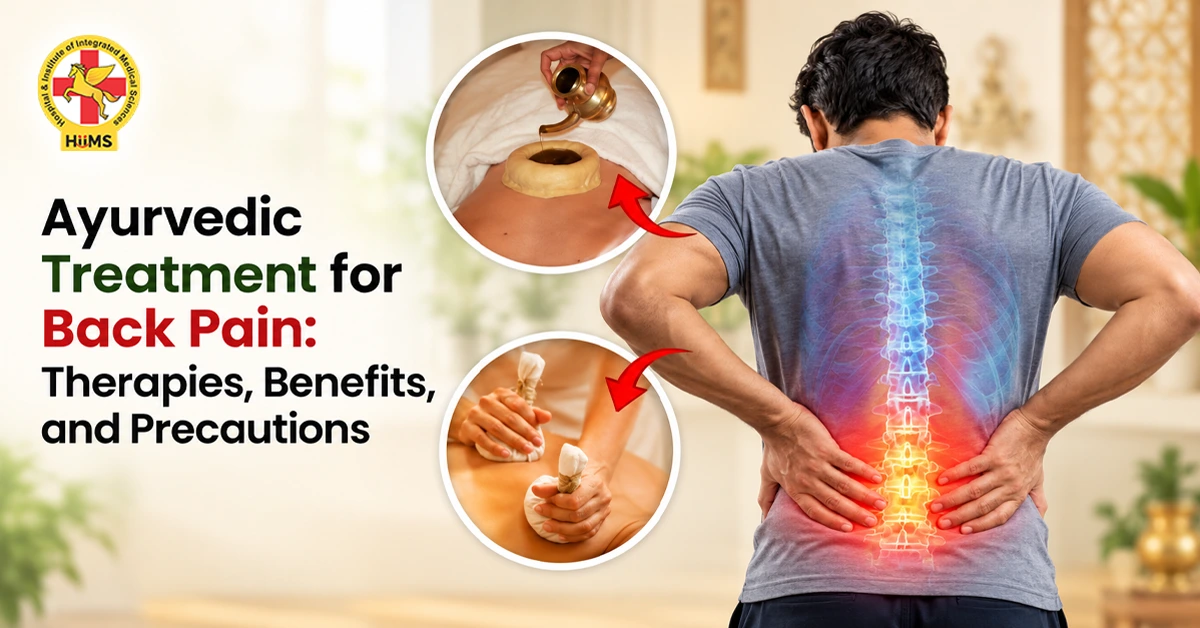

Back pain is one of the most common health complaints today. For example, it can start from long hours of sitting, lifting something the wrong way, or simply age. Ayurvedic treatment for back pain looks at why the pain started, not just where it hurts.
In fact, back pain affects people all over the world. The Global Burden of Disease study found that about 619 million people had low back pain in 2020. By 2050, this number may rise to about 843 million. Moreover it is the top cause of disability worldwide.
Desk jobs, long two-wheeler rides and heavy farm or household work are common in Faizabad too. So more people now look for back pain treatment in Faizabad that works on the root cause. This blog explains the causes, key Ayurvedic therapies, their benefits and the precautions to keep in mind.
What Causes Back Pain?
Back pain rarely has just one cause. Daily habits and body changes add up over time —
- Muscle Strain and Sprain: Lifting heavy objects, a sudden twist or overuse can strain the muscles and ligaments.
- Poor Posture: Long periods of sitting and slouching over phones or laptops put extra strain on the spine.
- Disc Problems: A slipped or bulging disc can press on nerves. As a result pain may travel down the leg, which doctors call sciatica.
- Weak Core Muscles: When the stomach and back muscles are weak, the spine gets less support.
- Age, Weight and Stress: The spine wears down with age. Besides, extra weight and stress add to the strain.
Meanwhile, Ayurveda looks at all these causes through the lens of the doshas. Living with back pain that keeps coming back?
How Ayurveda Looks at Back Pain
Ayurveda calls back pain Kati Shool and sciatica Gridhrasi. It links mainly to aggravated Vata, the dosha that controls movement and nerves. When Vata rises, it dries the joints and tissues. Consequently, stiffness and pain set in.
In addition, weak digestion plays a part. When agni, or digestive fire, is weak, toxins called ama build up and block the body’s channels. Over time, weak Asthi (bone) and Majja (nerve and marrow) tissues add to the problem.
So Ayurvedic treatment for back pain has three goals: calm Vata, nourish the tissues and clear ama. Jeena Sikho HiiMS in Faizabad builds its back care on this same root-cause idea.
Ayurvedic Treatment for Back Pain in Faizabad: Jeena Sikho HiiMS
Jeena Sikho HiiMS Clinic, Faizabad follows an integrated approach for root-cause back pain care. It brings Ayurveda, Naturopathy, and modern science together. First, doctors check your pulse, daily habits, digestion, and reports. In this approach, lower back pain treatment combines oil, heat, and cleansing therapies. The approach that the Jeena Sikho HiiMS clinic, Faizabad, follows:
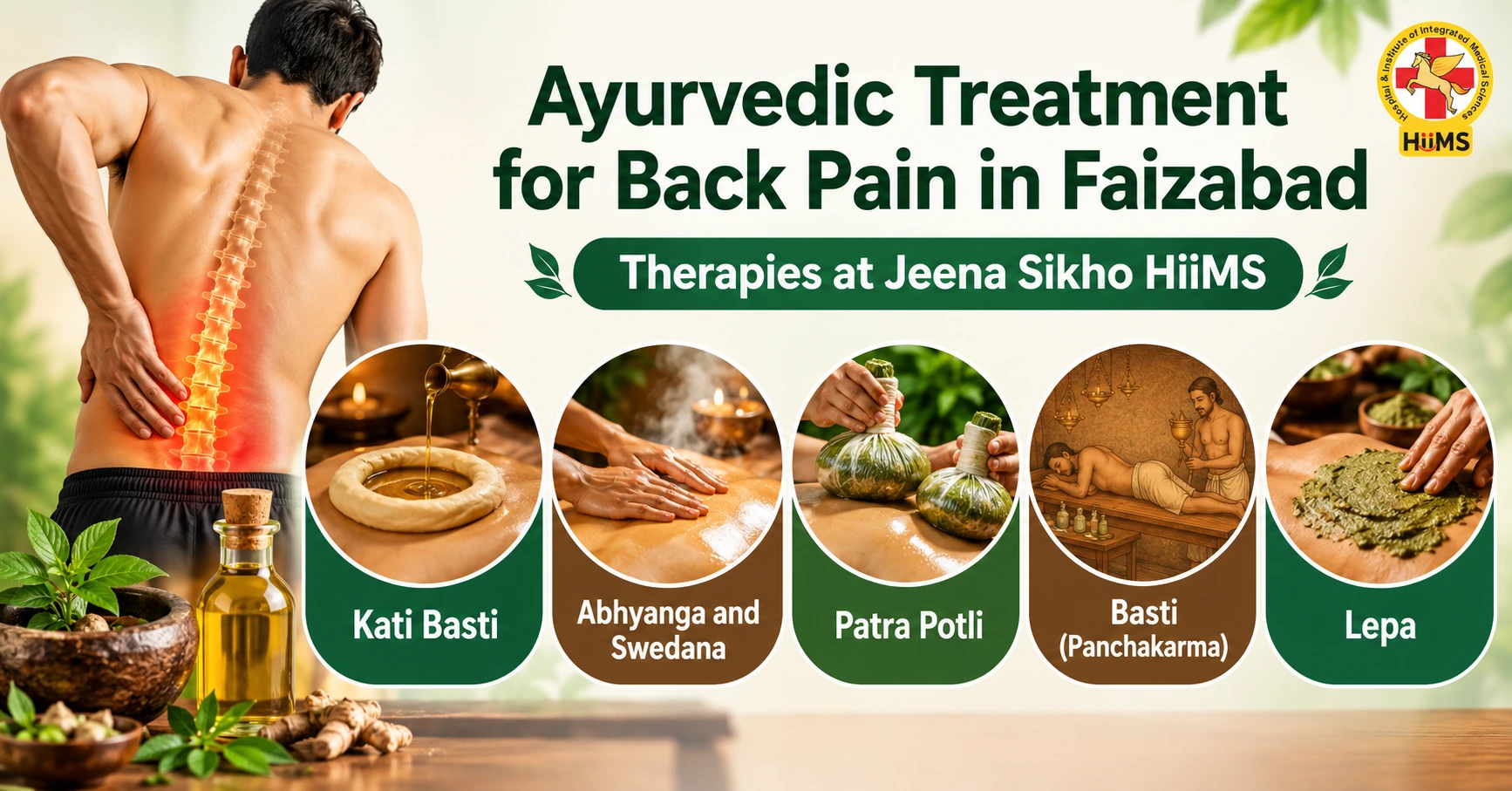
Kati Basti
In Kati Basti, the therapist places a ring of dough on the lower back. Then they pour warm medicated oil inside it and leave it there for some time. As a result the warmth and oil ease stiffness and nourish the tissues around the spine.
A 2024 randomised trial studied 40 people with chronic low back pain. One group did yoga alone, while the other did yoga with Kati Basti for one week. Both groups had less pain and disability at 1 week and 3 months. However only the Kati Basti group showed better physical health scores. Pain relief was similar in both groups.
Abhyanga and Swedana
Abhyanga uses warm medicated oil to massage the back and body. It calms Vata and relaxes tight muscles. Then Swedana or herbal steam, follows. The heat opens the channels, helps the oil work deeper and eases stiffness.
Patra Potli
Patra Potli, also called Patra Pinda Sweda, uses cloth bundles filled with fresh herbal leaves. The therapist heats these bundles in oil and gently presses them on the painful area. This combines heat, herbs and gentle pressure. So it helps ease pain, swelling and muscle spasm.
Basti (Panchakarma)
Basti is a medicated enema and part of Panchakarma. Ayurveda considers it the most important therapy for Vata problems. It uses herbal oils or decoctions to balance Vata from within. The doctor decides the type of Basti after a check-up.
Lepa
Lepa is a herbal paste applied over the painful area. For instance, it may contain herbs like Nirgundi or dry ginger. Therefore, it helps ease local pain and swelling.
What You Can Get at the Faizabad Clinic
At the clinic, you can visit the OPD for a consultation with Ayurvedic doctors. The doctor checks your pulse and tongue. Then you get diet, yoga, and posture tips that suit you. Besides, you can buy herbal medicines at the clinic’s own store. Regular follow-ups help track your progress.
The therapies need trained staff and proper setup. So, if you need Kati Basti, Basti, or other Panchakarma therapies. In that case, the clinic doctor may refer you to a suitable HiiMS hospital. This depends on your health and needs. Every plan comes after a check-up, and results vary.
Want to know which Ayurvedic therapy suits your back pain?
Ayurvedic Remedies for Back Pain: Herbs, Diet and Lifestyle
Therapies work best when daily care supports them. That is why herbs, food and movement form the second part of the plan. The clinic guides patients on these habits.
Herbal Support
Ayurveda has long used these herbs for back and joint health:
- Shallaki (Boswellia): It helps ease swelling and supports joint comfort.
- Guggul: It supports joint health and helps clear ama.
- Ashwagandha: It strengthens muscles and eases stress.
- Nirgundi: It is traditionally used to ease pain and swelling.
- Rasna: It helps calm Vata and ease stiffness.
Take these herbs only under a doctor’s guidance.
pH-Balanced Diet
First, eat warm, freshly cooked food. Ginger, garlic, and a little ghee help calm Vata. On the other hand, cold, dry, and packaged food can raise Vata. Overall a pH-balanced diet with fresh vegetables, fruits and whole grains supports healing.
Yoga and Daily Habits
Gentle yoga offer natural back pain relief. Poses like Marjariasana, Bhujangasana, Setu Bandhasana and Makarasana help the spine. A randomised study from Bengaluru followed 80 people with chronic low back pain. After one week, the yoga group showed better quality of life and spinal flexibility than the exercise group.
Likewise, small habits matter. Sit with back support and take short breaks. Also, sleep on a firm mattress, and bend your knees when you lift anything heavy.
Benefits of Ayurvedic Treatment for Back Pain
Together, therapies, herbs and daily habits offer more than short-term relief. Here is how they help in back pain.
- Works on the root cause: It focuses on Vata, ama, and weak tissues not just the pain.
- Eases stiffness: Oil and heat therapies help improve flexibility and movement.
- Supports sleep and calm: Less pain and stress often lead to better sleep.
- Helps prevent relapse: Diet, yoga, and posture habits support the back over time.
- Works alongside standard care: It can be used together with physiotherapy and the doctor’s advice.
Precautions to Keep in Mind
Ayurvedic care is gentle but it needs the right guidance. Keep these points in mind:
- See a doctor urgently: if your legs feel numb or weak. The same applies if you lose control of your bladder or bowels. Similarly, get checked fast for back pain with fever, after a fall or with sudden weight loss.
- Choose trained experts: Get therapies like Kati Basti, Basti and Swedana only from trained practitioners.
- Ask before taking herbs: This matters most during pregnancy or if you take other medicines.
- Avoid oil therapies at the wrong time: For example skip heavy oil therapies during fever or indigestion.
- Continue prescribed care: Don’t stop your medicines or physiotherapy on your own.
With these precautions in place, Ayurvedic care can support your back safely over time.
Conclusion
Back pain often comes from posture, strain, disc problems and aggravated Vata. Ayurveda addresses this root cause through Kati Basti, Abhyanga and Swedana, Patra Potli, Basti and Lepa. Herbs, a warm pH-balanced diet and yoga support this care.
Share your back pain history and reports with a Jeena Sikho HiiMS doctor via VOPD (video consultation). The doctor will guide you on diet, routine and the next steps. Book VOPD Now

FAQs
1. Can Ayurveda help with chronic back pain?
Ayurveda support chronic back pain through therapies, herbs, diet and yoga. It focuses on calming Vata and strengthening the tissues.
2. How many Kati Basti sessions are needed?
It depends on your condition. Usually, the doctor plans a course of a few sessions after a check-up.
3. Is Ayurvedic care safe for a slipped disc?
It can support slipped disc care alongside regular advice. However see a doctor first if you have leg weakness or numbness.
4. Which yoga poses help with lower back pain?
Marjariasana, Bhujangasana, Setu Bandhasana and Makarasana are gentle options. Learn them from a trained trainer first.
5. What are the timings of the Jeena Sikho HiiMS Clinic in Faizabad?
The clinic is open Monday to Saturday 9 AM to 6 PM. You can book an appointment online.

Leave a comment