


Walking to the market, climbing stairs or getting up from the floor can become a task when the knees, back or neck start hurting. Most people first reach for a balm or a painkiller, and then look for joint pain relief that lasts longer.
Ayurveda approaches this with warm oil therapies, herbal steam and cleansing, and Ayurveda offers several of them under one plan. Below, we go through each therapy, what it is meant for, and what the research actually shows, so you can decide with a clear picture.
Why Joint Pain Should Not Be Ignored
A 2023 analysis in The Lancet Rheumatology estimated that about 595 million people worldwide, or 7.6% of the global population, had osteoarthritis in 2020. Cases have risen by 132% since 1990, and the knee is the most common site.
When pain is left alone, people move less, muscles weaken and the joint gets stiffer. This is why looking for joint pain relief early, even for mild pain, makes the later road easier.
Joint pain troubling your routine? Talk to the Jeena Sikho HiiMS team about a plan.
The Ayurvedic View of Joint Pain
Ayurveda links most joint pain to the Vata dosha, which is connected with movement and dryness. In older adults, it is often called Sandhigata Vata (“sandhi” means joint). The idea is that dryness and poor digestion, along with built-up toxins, reduce the natural cushioning in the joint. So treatment tries to oil and warm the area, calm Vata and clear toxins, and also looks at your food and routine.
This is the traditional view. Modern medicine explains the same pain as wear of cartilage, inflammation or strain on soft tissues, and both can be followed together.
Ayurvedic Joint Pain Treatment at Jeena Sikho HiiMS
According to HiiMS’s own joint pain pages, its approach brings together Panchakarma, local Basti therapies, and oil massage with herbal steam. A note on the word “Basti”: in the therapies below, it does not mean an enema. It means warm medicated oil held on one body part, usually inside a ring of dough.
1) Panchakarma for Joint Pain
Panchakarma is a set of classical cleansing treatments (Vamana, Virechana, Basti, Nasya and Raktamokshana). HiiMS describes them as a way to reduce inflammation and balance the doshas, mainly Vata. Which procedure is used, and for how many days, is decided by the doctor after seeing your reports and your strength.
2) Janu Basti: For the Knee
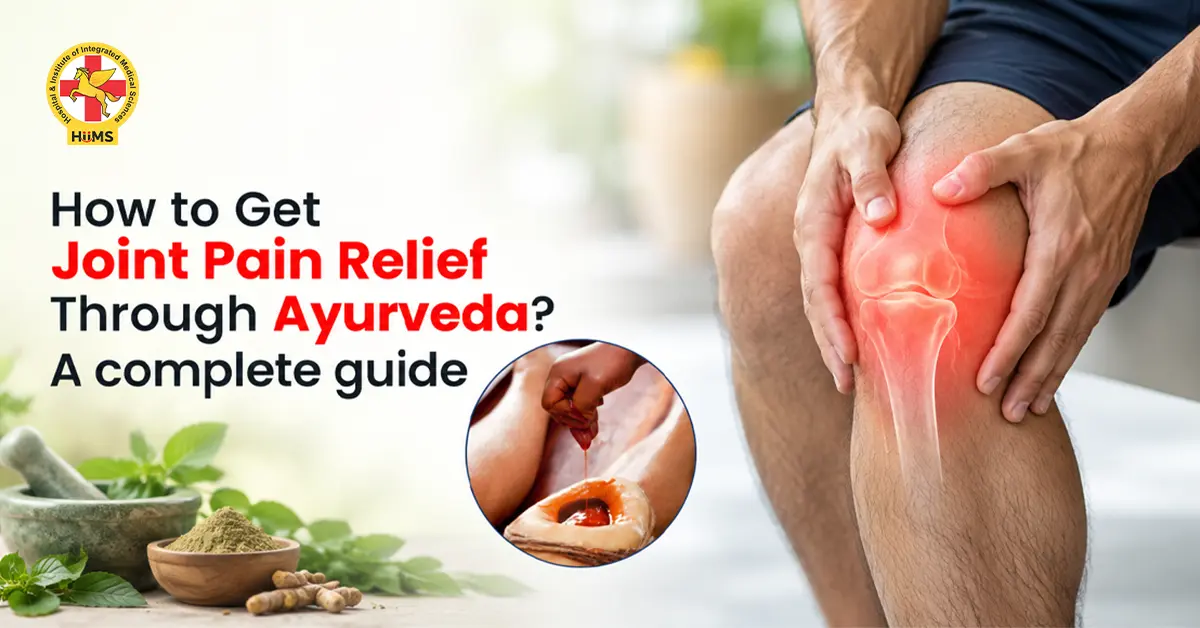
In Janu Basti, warm herbal oil is kept in a dough ring placed over the knee. HiiMS uses it to ease stiffness and improve flexibility. A small study on 20 patients, published in the Dev Sanskriti Interdisciplinary International Journal, combined Janu Basti (Ksheerbala oil) with Marma therapy for 9 days. Pain, stiffness and the WOMAC score improved.
3) Kati Basti: For the Lower Back and Spine
Kati Basti is warm oil therapy aimed at the lower back and spine. A 2024 study in the Journal of Ayurveda and Integrative Medicine provided 40 adults with chronic low back pain with either yoga alone or yoga with Ayurveda, involving Kati Basti, for one week. Both groups improved in pain and disability, with no clear difference between them. So the whole routine, including movement, seems to matter as much as the oil therapy.
4) Greeva Basti: For the Neck and Shoulder
Greeva Basti is the specialised therapy for cervical pain, neck and shoulder stiffness, often linked to long hours at a desk or phone. We found only case reports and small studies, with no large trial. It is best viewed as a comfort therapy along with posture correction and neck exercises.
5) Pristha Basti: For the Spine
HiiMS describes Pristha Basti as full-spine nourishment and toxin removal. Here, warm oil is retained along the back. As with Greeva Basti, good trial data are lacking, and a doctor should first rule out causes such as a disc problem or nerve pressure.
6) Abhyanga and Swedana: Oil Massage and Herbal Steam
Abhyanga is massage with warm herbal oils such as sesame, castor or coconut oil. It is generally followed by Swedana, a herbal steam, and act as a way to boost circulation. A study by Joshi et al. in Ayu, 2011 included 101 patients with knee osteoarthritis.
It tested a warm leaf-bundle fomentation (Nirgundi Patra Pinda Sweda) for 21 days along with Ashwagandhadi Guggulu. Both groups improved, and the fomentation group had better relief of pain and swelling. Together, these two are among the most common choices for joint pain relief in Ayurveda.
Want these therapies matched to your reports? Book a consultation with Jeena Sikho HiiMS.
What Does the Wider Research Say?
The best-known trial so far is a German study by Kessler et al., published in Osteoarthritis and Cartilage in 2018. It included 151 adults with knee osteoarthritis. A multi-modal Ayurveda programme was compared with conventional care over 12 weeks.
The Ayurveda group had a bigger improvement in the WOMAC score, and benefits were seen up to 12 months. Participants knew which group they were in, so more research is needed.
When to See a Joint Pain Doctor or Joint Pain Specialist?
A family doctor can manage mild, short-term pain. A joint pain doctor is worth seeing if the pain lasts more than a few weeks, wakes you at night, or limits walking and sitting. Carry old X-rays, blood reports and your medicine list.
A good joint pain specialist examines the joint, asks about your food, weight and work, and explains the likely cause in simple words. If you want to explore Ayurveda, Jeena Sikho HiiMS Dwarka offers Ayurvedic healthcare guidance to help you understand suitable care options under the supervision of an expert Ayurvedic doctor.
See a doctor urgently if you have:
- Sudden swelling with fever or redness
- A hot, locked joint or one that cannot bear weight
- Pain after a fall or injury
- Numbness or weakness in a limb
Daily Habits That Support Joint Pain Relief
Therapies work better with the right habits.
- Keep moving with gentle walking, yoga and stretching, because joints get stiffer when they stay still.
- Keep your weight in a healthy range, since extra weight adds load on the knees.
- Eat home-cooked meals with vegetables, dal and whole grains, and cut back on fried and packaged food.
- HiiMS also teaches a pH-balanced plant-based diet, hot water immersion and morning sunlight at its OPD and VOPD.
Conclusion
Ayurveda can be a useful part of joint pain relief, especially when oil therapies, steam, diet and movement work together under a qualified doctor.
The evidence is promising but still small, so keep your regular medicines going unless your doctor advises otherwise, and tell the doctor if you have BP, diabetes or skin problems before starting any heat therapy. For joint pain treatment that starts from home, a video visit with Jeena Sikho HiiMS is a simple first step.
Book your VOPD consultation with Jeena Sikho HiiMS from home today.

FAQs
1. Which therapy gives joint pain relief for the knee?
Janu Basti is the one usually chosen for the knee, but the doctor decides after examining you.
2. Is Kati Basti good for back pain?
It is used for lower back pain. A small trial found it helped, though yoga alone helped equally.
3. Can I take Ayurvedic therapy with my pain medicines?
Often yes, but tell both doctors. Do not stop prescribed medicines on your own.
4. Who should avoid herbal steam?
People with fever, a hot swollen joint, skin infection or uncontrolled BP or diabetes should check with the doctor first.
5. Can I consult without travelling?
Yes. VOPD is a video consultation with an Ayurveda doctor at HiiMS. Call on 75289-75283.
Leave a comment