



We check our phone battery ten times a day, yet we hardly ever check on the heart that keeps us going. In Bhagalpur, as in most Indian cities, long working hours, late dinners, outside food and little time for a walk have become normal. The heart takes the strain quietly, and most people notice it only when unusual tiredness or breathlessness shows up. By then, the habits are years old.
The World Health Organization estimates that 19.8 million people died from cardiovascular diseases in 2022, and everyday behavioural risks play a large part. This is why preventive care is so important and why healthy heart tips should become part of normal life and not a reaction to fear.
In this blog, you will find common risks, daily habits, Ayurvedic suggestions and warning signs that are worth knowing.
What Is the Current Situation of Heart Health in India?
Heart disease in India no longer belongs only to the elderly. Doctors now meet adults in their thirties and forties with high blood pressure, raised cholesterol and early heart trouble.
Lifestyle sits at the centre of this. Inactivity, a poor diet and tobacco use add up quietly over the years. A Lancet study based on the Million Death Study found that cardiovascular disease caused over 2.1 million deaths in India in 2015, more than a quarter of all deaths.
The situation is serious for eastern India too. A Business Standard report on the Beat by Beat 2025 study says the region accounts for 30 per cent of the country’s cardiovascular deaths. It also notes that under-diagnosis remains a concern in Bihar and Jharkhand. Although this is regional data, not Bhagalpur-specific data, but it shows why regular check-ups matter.
Also, did you know? India recorded an estimated 31.65 lakh (about 3.16 million) cardiovascular deaths in 2024, according to the World Heart Federation. That is roughly one in every three deaths in the country. Of the 2.1 million cardiovascular deaths in 2015, about 1.3 million happened between ages 30 and 69.
Book your Ayurvedic heart consultation today. Speak with an expert doctor and get personalised guidance for better heart health.
What Everyday Habits Can Affect Your Heart Health?
Heart problems hardly ever arrive overnight. It builds through small routines that look harmless. A healthy lifestyle for heart health starts with spotting them.
1. Sitting for Long Hours and Limited Movement
When the body stays still for hours, it burns fewer calories, and weight, blood sugar and blood pressure can slowly creep up. A short walk every hour breaks this pattern.
2. Eating Too Much Fried and Packaged Food
Samosas, namkeen and packed snacks carry extra salt and unhealthy fat. Both can push up blood pressure and cholesterol.
3. Irregular Sleeping Patterns
Late nights and broken sleep keep the body under pressure. Over time, this can raise blood pressure.
4. Continuous Stress and Mental Pressure
Constant worry about work, money or family keeps the body on alert. The heart feels that strain every day.
5. Tobacco Consumption and Alcohol Use
Tobacco in any form harms the arteries, and heavy drinking adds to the load.
6. Ignoring Blood Pressure and Cholesterol Levels
Both can rise without any symptoms. Many people learn about them only during an emergency.
Recognising these habits is the first step. Once you see them clearly, you can start changing them.
How to Maintain a Healthy Heart? 7 Daily Habits to Follow
Many people ask how to maintain a healthy heart without turning life upside down. The answer is simple. Pick small habits that fit your household routine, and repeat them daily. These are the healthy heart tips that Jeena Sikho HiiMS’ doctors share most often with patients.
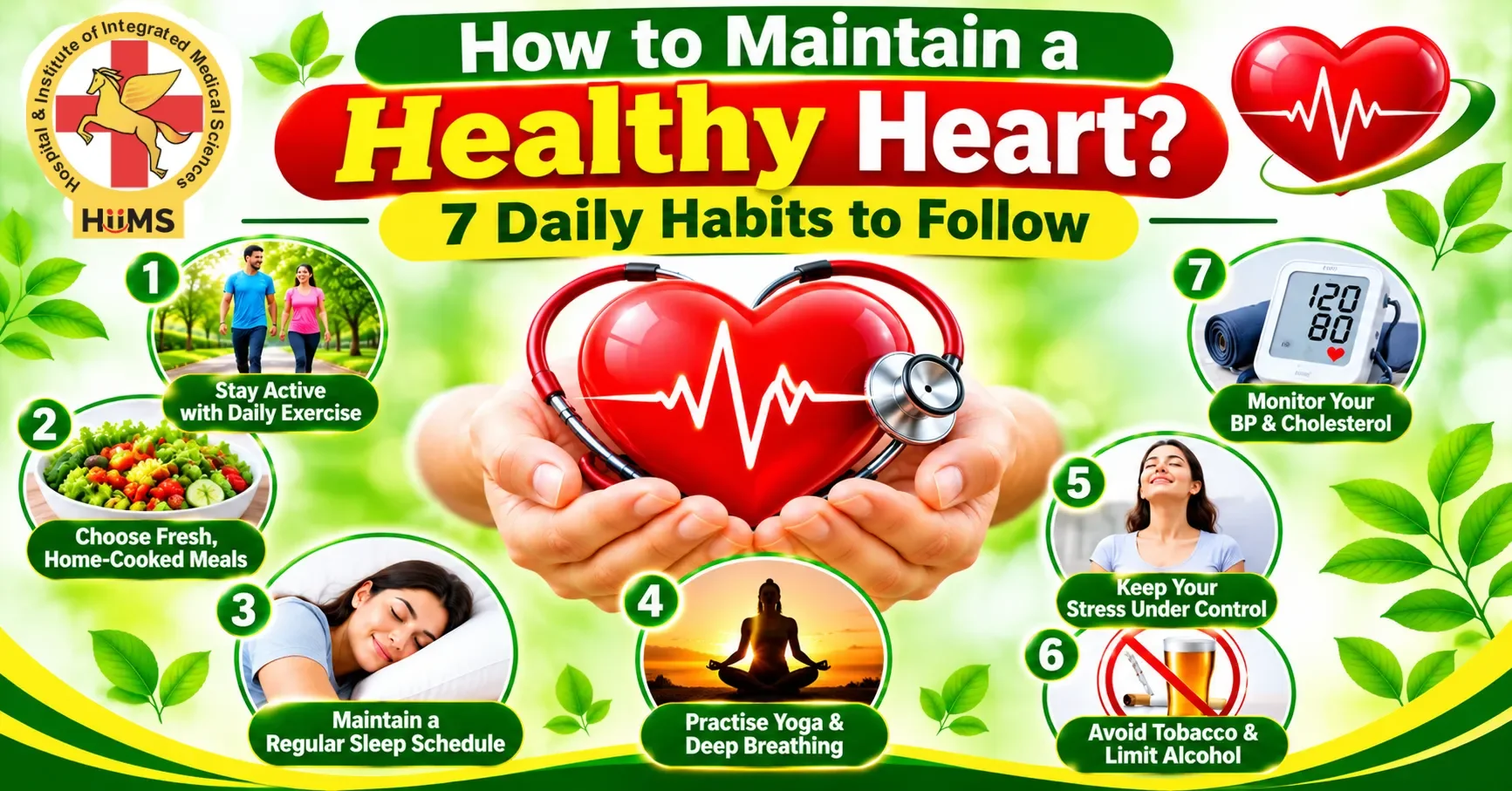
1. Start Your Morning with Some Physical Activity
A brisk 30-minute walk on most days counts as daily exercise for a healthy heart. Start with ten minutes if you are new to it.
2. Choose Fresh, Home-Cooked Meals
Cook with less oil and salt. Your kitchen gives you more control than any packet does.
3. Maintain a Regular Sleeping Schedule
Sleep and wake at fixed times, and aim for seven to eight hours.
4. Practise Yoga and Deep Breathing
Ten minutes of slow breathing after waking steadies the state of mind.
5. Keep Your Stress Under Control
Take short breaks, talk to family, and avoid carrying work worries into the evening.
6. Avoid Tobacco and Limit Alcohol
Quitting tobacco is one of the strongest steps you can take for your arteries.
7. Monitor Your Blood Pressure and Cholesterol
Check them regularly, even when you feel fine.
Which Foods Should You Include in Your Diet for a Healthy Heart?
Ayurvedic texts call food ‘ahara’, and it considers a meal as the base of health. These are simple natural ways to support heart health through your plate.
1. Fresh Seasonal Fruits and Vegetables
They provide fibre and natural nutrients. Add a vegetable dish to both lunch and dinner.
2. Whole Grains and Traditional Millets
Jowar, bajra, oats and whole wheat digest slowly and keep you full for longer.
3. Moong Dal and Other Pulses
Light pulses give protein without heavy fat.
4. Nuts and Seeds in Suitable Portions
A small handful is enough, since nuts are rich in calories.
5. Healthy Cooking Oils and Balanced Meals
Use oil sparingly and prefer boiling, steaming or light sautéing.
Which Foods Should You Limit for Better Heart Health?
- Excessively salty food, including pickles and papad
- Deep-fried snacks
- Packaged foods
- Sugary drinks and sweets
- Too many refined carbohydrates, such as white bread and maida items
How Does Ayurveda Approach Heart Health?
Modern medicines help many people control blood pressure and cholesterol. Some people, however, must take them for years and may face side effects such as tiredness or stomach upset. Tablets also cannot change the habits behind the problem.
On the other hand, Ayurveda works on the root cause of the problems and those habits. That is the base of Ayurvedic Heart Care: a supportive approach, not a replacement.
Watch the video and learn how to take care of your heart!
1. Understanding Hridaya: The Heart in Ayurveda
Ayurveda calls the heart Hridaya. Traditional texts describe it as the position of Ojas, the subtle energy linked with vitality and calm.
2. The Role of Vata, Pitta and Kapha in Heart Wellness
Ayurveda describes three doshas. Vata relates to movement, Pitta to digestion and heat, and Kapha to structure and heaviness. Each person carries a different combination, so advice on food and routine differs from one person to the next.
3. Why Ahara and Dinacharya Matter
‘Dinacharya’ means ‘daily routine’. Balanced food and a steady routine make heart-friendly habits easier to keep.
Which Ayurvedic Herbs Are Traditionally Used for Heart Wellness?
Ayurveda has used these herbs for centuries. Scientific evidence for each one varies depending on the research.
1. Arjuna (Terminalia arjuna)
Traditional texts describe the bark as a heart tonic.
2. Garlic (Lasuna)
People use it in food and traditionally for circulation.
3. Ashwagandha
It is traditionally used for stress and general strength.
4. Turmeric (Haldi)
It is a kitchen staple, valued for its traditional role in a healthy diet.
Always check with your doctor before combining herbs with your medicines. Product quality matters as well. The U.S. National Center for Complementary and Integrative Health notes that some Ayurvedic preparations may contain toxic metals, so buy only well-made products on a qualified practitioner’s advice. Call Now to Consult an Ayurvedic Doctor! Get personalised guidance on choosing the right diet and herbs for your body’s needs.
Can Yoga and Ayurvedic Practices Become Part of Your Heart Care Routine?
They can. They work best as supportive habits besides proper health care, not in place of it.
1. Anulom Vilom
Alternate nostril breathing calms the mind.
2. Bhramari Pranayama
Humming breath helps many people relax.
3. Gentle Yoga and Stretching
Light movement keeps the body supple and active.
4. Meditation for Stress Management
Ten quiet minutes a day support stress management for heart health.
5. Abhyanga (Traditional Oil Massage)
A warm oil massage is traditionally used to relax the body.
A 2023 meta-analysis in Current Problems in Cardiology pooled 64 randomised trials with 16,797 participants. It found modest improvements in blood pressure, cholesterol, blood sugar markers and BMI. The authors say yoga may play an ancillary role in preventing heart disease. It does not prevent or treat heart disease on its own.
When Should You Consult a Heart Specialist Doctor?
Do not wait for severe pain. A heart specialist doctor in Bhagalpur can examine you if you notice any of these:
1. Chest Pain or Unusual Chest Discomfort
Pressure, heaviness or burning that keeps returning needs a check.
2. Breathlessness During Everyday Activities
Getting breathless on a few stairs is worth attention.
3. Unusual Tiredness or Weakness
Fatigue that does not match your day deserves a look.
4. Swelling in the Feet and Ankles
It can point to a heart or circulation problem.
5. Irregular or Rapid Heartbeat
A pounding or skipping heartbeat should be checked.
Routine Ayurvedic consultation and emergency cardiac care serve different purposes. Use the first for prevention and lifestyle guidance, and the second for emergencies.
How Does Jeena Sikho HiiMS Guide People Towards Better Heart Health?
A trusted Ayurvedic clinic in Bhagalpur should explain things in very simple words. Jeena Sikho HiiMS offers the following guidance.
1. Consultation with an Ayurvedic Doctor
The doctor reviews your health history, existing concerns and medical reports.
2. Personalised Ayurvedic Diet Guidance
Food advice and diet chart match your individual needs and health conditions.
3. Lifestyle Guidance
You receive advice on daily routine, physical activity, sleep and stress management.
4. Ayurvedic Pharmacy
Prescribed Ayurvedic medicines and products are available at the center.
5. Regular Follow-Up Consultations
Doctors review your progress and adjust the guidance when needed.
What if you need Ayurvedic therapies or admission and hospital stay?
Clinic doctors can guide suitable patients to an appropriate HiiMS daycare centre or hospital nearby. There, the team can arrange further assessments and therapies, such as Hriday Basti and Panchakarma therapies like Vamana, Virechana, Basti and Nasya, depending on your requirements.
Conclusion
A healthy heart is built from ordinary choices: fresh food, a daily walk, steady sleep and a calmer mind. These small habits matter more than any single remedy, and Ayurveda adds individual diet and lifestyle guidance on top. Do not ignore unusual tiredness or breathlessness.
Follow these healthy heart tips one habit at a time, and meet a doctor early. Ayurveda works best alongside regular check-ups, never in place of them. You can reach Jeena Sikho HiiMS Bhagalpur for personal guidance. Book a VOPD consultation with expert doctors at Jeena Sikho HiiMS from home and discuss your heart health concerns.

FAQs
1. How can I keep my heart healthy naturally?
Eat fresh home-cooked meals, walk daily, sleep on time, manage stress and avoid tobacco.
2. Which foods are good for heart health according to Ayurveda?
Seasonal vegetables, fruits, millets, whole grains and moong dal suit the heart well.
3. Does walking every day help maintain a healthy heart?
A brisk 30-minute walk on most days supports circulation, weight and blood pressure.
4. Can Ayurveda help support people with existing heart conditions?
Ayurveda focuses on food, sleep, stress and routine, which can support your heart wellness.
5. What services are available at Jeena Sikho HiiMS Bhagalpur for heart health guidance?
You get consultation, diet and lifestyle advice, Ayurvedic medicines and follow-up reviews.
Leave a comment