

Lung cancer is actually among the most common types of cancer being diagnosed nowadays. Lung cancer starts if the unusual cells from the lungs develop in an unregulated way, don’t adhere to the regular body cycle and slowly create an increase in. Over time, this growth can affect normal breathing and lung function.
One of the major concerns with lung cancer is that early stages often do not show clear symptoms of lung cancer. Because of this, many people are not able to detect it on time. By the time signs become noticeable, the condition may already have progressed, which can make management more difficult. The reasons for lung cancer are different from those caused by smoking, breathing in polluted air, or enduring damaging substances for extended periods.
If a person is a non-smoker and develops it, the causes may be due to genetic or environmental factors. Knowing the types of lung cancer and lung cancer treatment, along with the causes and symptoms, will assist an individual to remain mindful of these signs and take suitable action.
Types of Lung Cancer
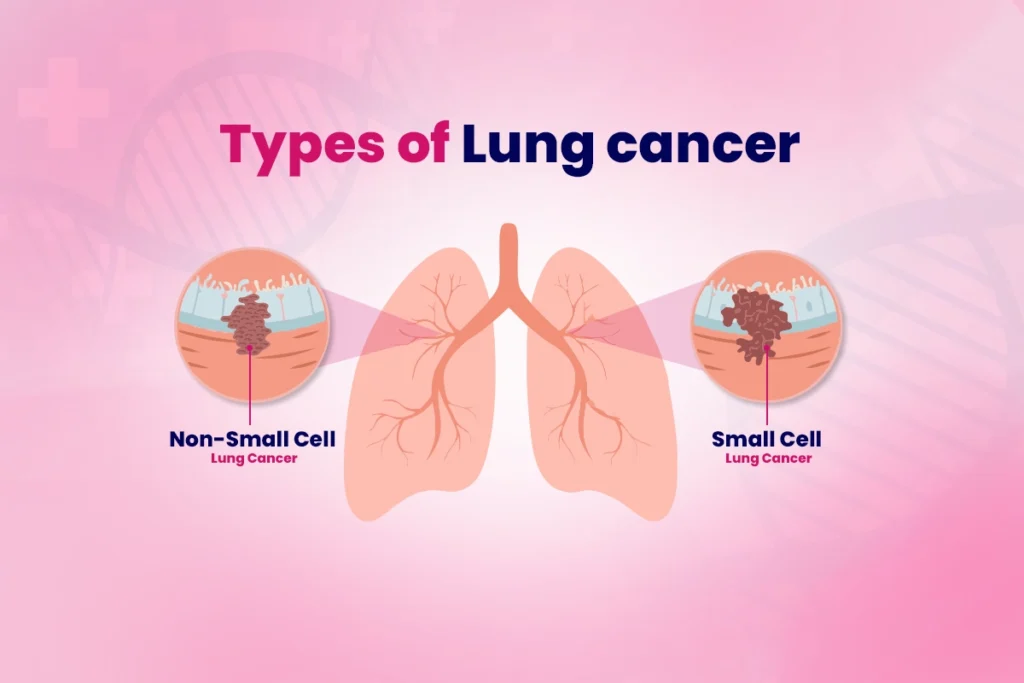
Cancer is not a single disease. It is a group of many conditions that can start in different parts of the body. Each types of lung cancer behaves differently and may need a different care approach. Talking about lung cancer, there are mainly two types, and each one acts in a different way inside the body.
1. Non-Small Cell Lung Cancer (NSCLC)
This type is seen most frequently and tends to be slow-growing and may not spread until later. NSCLC consists of adenocarcinoma, squamous cell carcinoma, and large cell carcinoma. This type is often detected earlier due to its slow-growing nature.
2. Small Cell Lung Cancer (SCLC)
Less common, though no less aggressive – they spread extremely fast. It is believed that most cases of SCLC are associated with chronic smoking, and usually these cancers are diagnosed when they have already reached advanced stages. Other common types of cancers include those that start in:
- Carcinoma: One that begins in the skin or organs such as the lung, breast, or colon.
- Sarcoma: One that starts in bone, muscle or the connective tissues of the body.
- Leukaemia: A blood cancer that starts in the blood or bone marrow but does not create a solid tumour.
- Lymphoma – Starts in the lymphatic system, which supports immunity.
- Myeloma – Affects plasma cells that help fight infections.
Each type of cancer is different, and care depends on its type, stage, and the overall condition of the person.
Common Symptoms of Lung Cancer
In the early stage, symptoms of lung cancer may not be clearly visible, which makes it difficult to notice the condition on time. But as it progresses, some signs may slowly start appearing.
- These may include a continuous cough that does not go away, coughing with blood or dark mucus, and pain in the chest, back, or shoulder area. It could be that they feel they are struggling to breathe or that they can hear wheezing when they breathe.
- Along with the symptoms mentioned above, some patients can also experience some or all of the following symptoms: unexplained weight loss and lack of appetite, loss of energy and feeling of fatigue, repetitive infections such as recurrent pneumonia and recurrent bronchitis.
- These signs may look common in the beginning, but if they continue for a long time, they should not be ignored. Timely attention can make a difference in understanding the condition properly.
Causes and Risk Factors
There are different reasons that can increase the chances of lung cancer:
- Smoking
This is the main cause. The risk increases with long-term smoking and the number of cigarettes. - Environmental Exposure
Even inhaling smoky air, dirty air, radioactive gases, chemicals or irritants like radon, asbestos or industrial pollutants may be harmful to your lung health. - Family History
If someone in the family has had lung cancer, the chances may become slightly higher.
Cancer Care Without Chemotherapy: The Jeena Sikho HiiMS Udaipur Approach
Along with conventional treatment, some people also look for supportive care methods that focus on overall well-being. At places like Jeena Sikho HiiMS Udaipur, an integrative approach is followed, which focuses on natural ways of supporting the body.
The approach mainly works on detoxification, balance, and improving the body’s internal strength rather than only targeting the condition.
- Detox Therapies (Panchakarma)
The various methods of cleaning the body of accumulated waste have different mechanisms to eliminate toxins that may have built up. For example, this could be to aid with digestion or breathing or to restore balance throughout the body.

- Autophagy and Fasting
Controlled fasting practices are sometimes included to support the body’s natural process of removing damaged cells and maintaining internal balance.

- Sattvic Diet
Diet should be simple and based on plants, including fresh and natural foods. It includes easy digestibility and proper nourishment of the body.

- Herbal Support
Ayurvedic herbs such as neem, tulsi, giloy, and turmeric can be included in the treatment process. - Lifestyle Changes
There is also encouragement of the practices of yoga, pranayama and the adoption of a structured regimen for better breathing and more relaxed long-term equilibrium.
These methods are not considered a replacement for medical treatment, and proper guidance from a cancer doctor is always important. However, many people choose them as a supportive approach to help the body stay stronger during the care process.
Conclusion
Lung cancer is serious, but with adequate knowledge of types of lung cancer, symptoms and causes, you can help with its early detection. Proper treatment, as well as a healthy lifestyle is essential for overall good health. Ignoring the symptoms of lung cancer may create more complications in the long run, and so it’s important to have awareness and take prompt action against the condition. If you need help, you may opt for a VOPD consult at Jeena Sikho HiiMS Udaipur.

FAQs
Q1. What are the main types of lung cancer?
Ans. There are mainly two types: non-small cell lung cancer (NSCLC) and small cell lung cancer (SCLC). They differ in growth speed and spread.
Q2. Can there be no symptoms in lung cancer?
Ans. In the first stage, the signs may not be too evident. So, many people find out late.
Q3. What are the common factors leading to lung cancer?
Ans. Primarily, it’s the smoke. However, pollution and several hazardous factors may also lead to lung cancer.
Q4. Can the lifestyle be changed while the treatment is in progress?
Ans. Simple lifestyle adjustments in diet, routine and controlling stress can help overall health during the treatments.
Q5. Is there a treatment that also uses integrative care?
Ans. To help the body recover, some individuals opt for integrative forms of care such as Ayurveda, along with treatment.