
Think about a time your car made an unusual noise under the hood, or your phone screen flickered without warning. You didn’t instantly assume the entire machine was completely broken. You simply knew it was a sign that something needed a closer look.
When subtle, unexpected changes happen inside our bodies, our immediate human response is often worry. But just like a check engine light, physical changes are simply your body’s way of asking for attention, not a final verdict. Understanding how doctors evaluate these subtle clues removes the fear of the unknown. Diagnosing cancer is rarely a single event; it is a process of connecting physical clues, blood markers, and detailed internal images. In this guide, we will explore how cancer is diagnosed, break down common medical tests in simple terms, and discuss holistic avenues for restoring long-term health and vitality.
What is cancer?
Cancer is a disease in which normal cells of the body become damaged and multiply uncontrollably, forming masses of tissue or tumors. Some cancers are caused by inherited genetic traits, but many cancers are caused by external factors over time such as smoking, poor diet, exposure to toxic chemicals, chronic inflammation, and long-term physical stress. Knowing the triggers helps us understand how cellular health changes and why early action makes such a big difference.
Recognising Early Common Cancer Symptoms
Early evaluation often begins with paying attention to subtle, persistent body signals rather than ignoring them. While these signs can be caused by many non-serious health issues, noticing them early gives you a head start.
Common cancer symptoms to keep an eye on include:
- Unexplained, sudden weight loss or feeling deeply exhausted for weeks.
- Lumps, unusual thickening under the skin, or changing moles.
- A persistent cough, ongoing hoarseness, or sudden trouble swallowing.
- Noticeable, ongoing changes in your bowel or bladder habits.
Experiencing any of these changes does not automatically mean you have cancer. However, if a physical change lasts for more than two weeks, scheduling a simple check-up with your doctor is the smartest move.
The Role of Cancer Screening
It is helpful to know the difference between routine testing and a direct diagnostic check. Routine cancer screening is proactive; it is done on healthy individuals who do not have any noticeable symptoms to catch minor cell changes before they ever turn into a bigger issue.
Common screening tests include:
- Mammograms: Routine X-rays to check breast health.
- Pap Smears: Quick health checks for cervical tissue.
- Colonoscopies: Visual exams to keep your digestive tract healthy.
- Low-Dose CT Scans: Gentle lung checks for high-risk individuals or former smokers.
Catching small changes early through routine screening makes management much easier and far less stressful.
How Is Cancer Diagnosed? Common Tests & Diagnostic Tools
When a screening result shows something unusual, or you report persistent symptoms, doctors use a few primary tools for accurate cancer detection.
Laboratory & Blood Tests
Simple blood or urine tests help doctors look at your overall organ health. They check your complete blood count and search for specific proteins often called tumor markers that can indicate whether your body is dealing with extra stress or abnormal cell activity.
Diagnostic Imaging Studies
Usually, before doing anything invasive, doctors take pictures to see what’s happening under the skin.
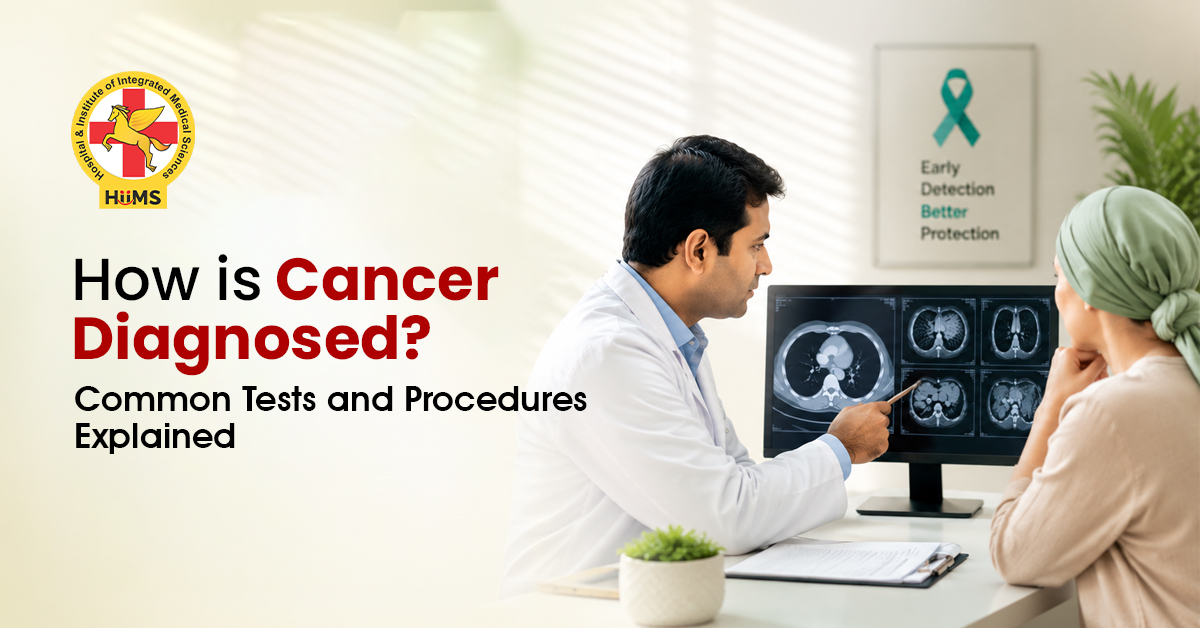
To check soft tissue or organs, a simple X-ray or ultrasound is usually the first stop. To get a clearer view, CT scans and MRIs layer hundreds of cross-section pictures together like a 3D model. This gives a precise size and location of a lump in various cancers. Then there are PET scans; these scans show areas where cells are dividing faster than usual and help locate active growth.
Understanding Different Types of Cancer
How a doctor evaluates a growth often depends on where it started in the body. Cancers are broadly grouped into a few main categories:
- Carcinomas
The most common form, starting in the skin or tissues that line internal organs like the breasts, lungs, prostate, or colon.
- Sarcomas
These are cancers that arise in supporting tissues such as bone, muscle, fat, or blood vessels.
- Leukemias & Lymphomas
Cancers of the blood and immune system originating in bone marrow or lymphatic tissue.
- Central Nervous System Cancers
Cancers that develop specifically within brain or spinal cord tissue.
Integrated Cancer Recovery at Jeena Sikho HiiMS
Getting a diagnosis can feel like a heavy load to carry, but standard treatments aren’t the only support available to you. As an integrated cancer treatment hospital, Jeena Sikho HiiMS works alongside your regular health monitoring to offer simple, natural care for your body while you recover. Instead of just chasing symptoms, their main focus is on helping your body clear out buildup, calm down inflammation, and rebuild its natural everyday energy.
They combine lifestyle changes and plant-based eating with gentle Ayurvedic detox therapies, golden therapy, and the GRAD protocol. They also pay close attention to your daily stress levels through breathing and light yoga sessions. The goal is to help you feel stronger, eat better, and regain your comfort and peace of mind during recovery.
Conclusion
Asking how is cancer diagnosed is the first step toward taking proactive charge of your physical health. Understanding the testing process replaces fear with clarity. Remember, noticing a body signal or going in for a test is not the end of your story; it is simply the start of making informed choices for your body.
If you are experiencing unexplained symptoms or looking for holistic recovery support after a diagnosis, contact Jeena Sikho HiiMS today. You can connect with their experts through HiiMS VOPD (video consultation). Explore how our integrated, natural therapies can help restore your strength, balance, and natural vitality.

FAQs
Q1. What is cancer screening?
It is a test performed on healthy people without symptoms to find early signs of cancer.
Q2. Can blood tests diagnose cancer?
Blood tests help detect tumor markers and organ health, but a biopsy is needed for a final diagnosis.
Q3. How long do cancer diagnostic results take?
Most blood tests and imaging take 1 to 3 days, while biopsy lab results usually take 5 to 7 days.
Q4. Are all lumps a sign of cancer?
No, most lumps turn out to be benign cysts, non-cancerous tumors, or normal tissue swelling.
Q5. When should I see a doctor about symptoms?
You should consult a doctor if any unusual symptom lasts for more than two to three weeks.
Q6. What is an integrated cancer treatment hospital?
It is a facility like Jeena Sikho HiiMS that combines standard diagnosis along with natural therapies, nutrition, and lifestyle care.