

That sharp twinge going down the stairs, or the dull ache that shows up after sitting too long, knee pain sneaks into daily life in more ways than people expect. It’s the largest joint in your body, carrying most of your weight through every step, so when something’s off, you feel it fast.
Understanding knee pain symptoms properly, rather than just pushing through them, genuinely changes how quickly things get better. This blog covers what’s usually behind the pain, what to watch for, and what actually helps.
Common Knee Problems: What’s Usually Behind the Pain
The knee’s a complicated joint, with bones, cartilage, ligaments, and tendons, all working together. When one part gets damaged, that’s when trouble starts. Some of the most common knee problems:
- Osteoarthritis: cartilage wears down with time and use over time and with age
- Rheumatoid arthritis is a disease in which the immune system causes inflammation and swelling of the joints.
- Sprained or strained ligaments, typically from a sudden twist or direct blow
- Torn cartilage (meniscus tears) are common with sprains
- Tendinitis, inflammation due to overuse, common for runners and cyclists
- Bursitis (inflammation of the small cushioning sacs around the joint)
Knee Pain Causes: The Root Reasons Worth Knowing
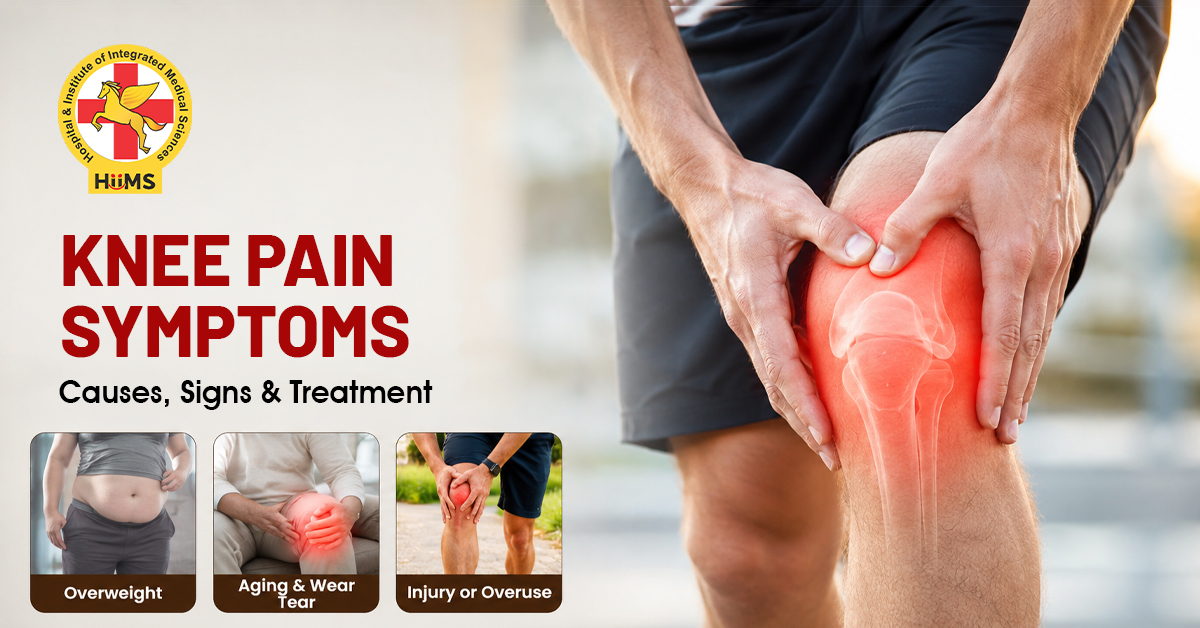
Beyond specific conditions, Knee pain symptoms causes generally fall into a few broader categories. Age plays a big role; cartilage naturally wears down over decades of use. Carrying extra weight puts significantly more stress on the joint with every step.
Repetitive movement, kneeling, running, cycling, without proper rest, wears down tendons and tissue over time. And of course, direct injury, a fall, a sudden twist, a sports-related impact, can damage ligaments or cartilage in an instant.
Signs of Knee Pain Worth Paying Attention To
Not every ache needs a doctor’s visit, but certain signs of knee pain genuinely do:
- Swelling, warmth, or stiffness that doesn’t ease up
- Difficulty fully straightening or bending your knee
- A popping or grinding sound with movement
- Your knee giving out or feeling unstable while walking
- Fever accompanying the swelling, which could point to infection
Knee Pain Symptoms: When It’s More Than Just Soreness
Regular soreness after activity is normal and usually fades within a day or two. But Knee pain symptoms that stick around, worsen, or come with visible deformity in the knee or leg, that’s a different territory entirely.
If your knee feels weak, unstable, or simply can’t bear weight anymore, that’s your body telling you something that actually needs a proper look, not more rest and hoping it passes.
Is It Time to See a Doctor for Knee Pain?
Honestly, if pain has lasted more than a few days without improving, or if you’re noticing any of the signs mentioned above, yes.
Doctors will typically begin with a physical exam, and may also order imaging, such as X-rays, MRIs or ultrasounds, to get a better picture of what is actually happening inside the joint. Waiting too long to treat a genuine injury often leads to a longer, more complicated recovery later.
Knee Pain Treatment: What Doctors Actually Recommend
Knee pain treatment depends entirely on the underlying cause. For mild to moderate cases, doctors usually start patients on rest, physical therapy and anti-inflammatory medication. Corticosteroid injections may help with flare-ups from arthritis, for a few months sometimes.
Hyaluronic acid injections help lubricate the joint for smoother movement. In more severe cases, involving significant ligament or cartilage damage, surgery becomes the more effective route for restoring function.
Knee Pain Relief: Simple Things That Help at Home
A few practical steps genuinely support knee pain relief alongside any prescribed treatment:
- Rest the joint, but don’t stop moving entirely, gentle motion helps circulation
- Ice for swelling, heat for stiffness, know which one your knee needs
- Compression and elevation during flare-ups
- Strengthening exercises for the muscles supporting the knee, once acute pain has settled
Ayurvedic Treatment for Knee Pain: A Different Lens
When we are talking about natural treatment for knee pain, Ayurveda ties most knee pain to an aggravated Vata dosha, the energy associated with dryness, stiffness, and the cracking sensation people often notice.
Ayurvedic treatment for knee pain at Jeena Sikho HiiMS Sonipat includes warm oil massage (Abhyanga) to ease stiffness and improve circulation, herbal support with Guggul and Ashwagandha to reduce inflammation, and dietary changes favouring warm, cooked foods over cold or raw meals. This approach generally works alongside conventional care rather than replacing it.
Conclusion
Knee pain rarely improves by simply ignoring it; understanding what’s actually causing it makes all the difference in how quickly and completely you recover. For anyone looking into Knee pain symptoms, it’s worth finding a place that actually takes the time to understand your specific pattern of pain, whether that’s arthritis, an old injury, or general wear and tear, rather than offering the same generic advice to every patient who walks in.
If you like a more personalised approach combining conventional guidance with Ayurvedic support, feel free to book a VOPD consultation with Jeena Sikho HiiMS Sonipat and get a proper read on what your knee actually needs.

FAQs
1. Can knee pain go away on its own without treatment?
Mild soreness often does, but persistent or worsening pain usually needs proper evaluation rather than just waiting it out.
2. Does walking worsen knee pain?
Usually this is not so and gentle movement will often help more than complete rest unless a doctor has specifically advised rest for an injury.
3. How to differentiate osteoarthritis from rheumatoid arthritis in knee?
Osteoarthritis is a degenerative disorder of the cartilage and rheumatoid arthritis is an autoimmune disease resulting in joint inflammation.
4. Does weight loss help to reduce knee pain?
Yes, even a little bit of weight loss can take a lot of pressure off your knee joint with every step you take.
5. Can Ayurveda help with persistent knee stiffness?
Yes, oil massage and Vata – balancing diet are commonly used along with conventional treatment for persistent stiffness .