
For many couples, trying to have a baby does not always go the way they imagined. At first, it feels simple, something that will happen with time. But as months pass, small doubts start coming into the mind. There are questions, quiet comparisons, and sometimes a feeling that the body is not responding the way it used to. It is not always one clear reason, which makes it even harder to understand.
Because of this, people slowly start exploring different options, not just quick solutions but something that feels more natural and steady. At Jeena Sikho HiiMS Sonipat, many couples come with a similar thought process and look into Uttar Basti Therapy in Sonipat as part of their journey. It is not presented as a shortcut or quick solution, but as a method that works slowly with the body.
In this blog, we will go through how this therapy fits into fertility care and what you can realistically expect from it.
Understanding Fertility Challenges in Today’s Lifestyle
Fertility is often understood in a very basic way, but the reality behind it is hardly ever simple. When conception does not happen after consistent effort, people start looking for infertility treatment in Sonipat, trying to understand what might be going wrong.
For women, concerns like irregular cycles or hormonal imbalance often lead them toward female infertility treatment in Sonipat. For men, issues related to sperm health bring attention to male infertility Ayurvedic treatment.
At the same time, everyday life quietly adds to the problem. Skipped meals, late nights, stress that doesn’t really switch off, and a routine that keeps changing, all of this slowly affects the body. It does not happen suddenly, but over time, it starts showing up in ways people don’t expect.
What is Uttar Basti Therapy?
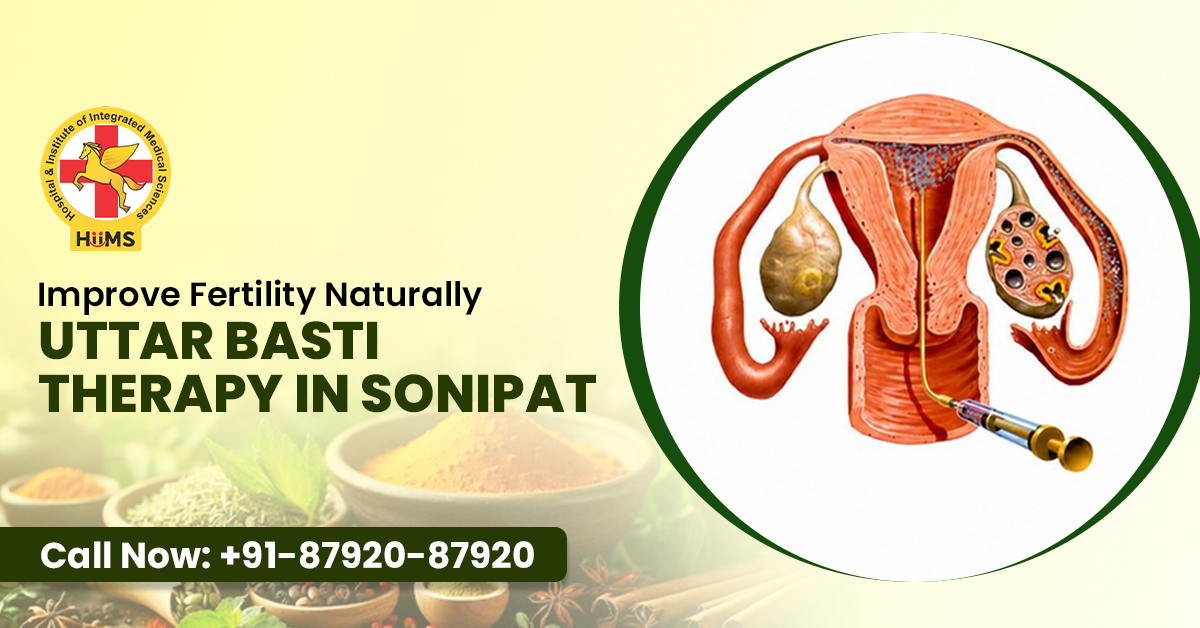
Uttar Basti is not something most people hear about early on. It usually comes up when someone starts looking deeper into Ayurvedic options. The term itself is simple, where “Uttar” or “superior” points toward the upper part of the body and “Basti” refers to a therapeutic process using herbal preparations.
It is considered a part of Panchakarma therapy in Sonipat, but it works differently from general treatments. Instead of acting through digestion, it focuses more directly on the reproductive area.
That’s one reason many people recognise Uttar Basti Therapy in Sonipat. The approach feels more targeted, and at the same time, it still follows the broader principles of Ayurveda.
How Uttar Basti Therapy is Done (Step-by-Step Process)
1. Body Preparation Phased
The process does not start suddenly. They start by gently preparing the body using oil and steam so it can relax and respond in a better way.
2. Main Therapy Process
After that, they slowly put in the medicated oils, and someone experienced stays there the whole time so nothing goes wrong.
3. Aftercare and Support
After the session, rest becomes important. Food habits and daily routine are adjusted slightly so the body can respond properly to the therapy.
Why Uttar Basti is Considered for Fertility Support
Fertility is not just about one organ or one function working correctly. It is about the overall internal condition. That is where Uttar Basti for infertility starts making sense.
The therapy is used to support the reproductive system in a slow and steady way. It works on improving the internal environment and helping the body move toward a more balanced state. Because of this, Uttar Basti Therapy in Sonipat is often chosen by those who prefer a steady approach instead of treatment that is something harsh in nature.
Uttar Basti Therapy Benefits for Reproductive Health
When people talk about Uttar Basti therapy benefits, they usually mention changes that build slowly rather than instantly.
With time, the uterus starts feeling more settled, small blockages may ease, periods can come a bit more regularly, and the tissues slowly get better.
It is not really about quick results, but more about creating a better environment where natural conception can happen more easily.
Role of Uttar Basti in Female Fertility Conditions
In conditions like PCOS, endometriosis, or blocked tubes, this therapy is often included within female infertility treatment in Sonipat.
The approach here is not assertive. It focuses on improving function step by step, allowing the body to adjust at its own pace. That is why many women find it easier to continue with this method over time.
Does It Help in Male Fertility, Too?
Fertility always involves both partners, even if the focus sometimes changes more toward one side. This is where male infertility Ayurvedic treatment becomes equally important.
Uttar Basti is more specific in its use, but it is often combined with other therapies that help support male reproductive health, making the overall plan feel more balanced.
The Approach Followed at Jeena Sikho HiiMS Sonipat
At Jeena Sikho HiiMS Sonipat, the process does not feel kind of rushed or pressured. Each case is looked at individually before deciding what should come first.
Usually, it starts with cleansing, then moves toward strengthening the body, and finally focuses on preparation for conception. Because of this structured flow, many people consider it for infertility treatment in Sonipat when they want something more organised yet natural.
Things to Keep in Mind Before Starting Therapy
This therapy should always be done under proper guidance. It is not something to try casually.
Also, results vary from person to person. What works faster for one individual may take longer for another. Staying consistent is often more important than expecting quick results.
Conclusion
Taking a natural path for fertility is not about rushing. It is more about understanding what the body is going through and supporting it the right way. With Uttar Basti Therapy in Sonipat, the focus stays more on slow improvement than quick results, and many couples find it easier to continue with this over time.
If you are thinking about this, you can also talk to the doctors at Jeena Sikho HiiMS Sonipat through an online video consultation (VOPD) and see what might actually suit your condition.

FAQs
1. Who should consider Uttar Basti therapy?
People having trouble conceiving, or dealing with ongoing reproductive issues, often end up looking into it after talking to a doctor.
2. How long does the therapy take?
How long it takes depends on the person’s condition and what plan the doctor suggests.
3. Is the procedure uncomfortable?
It is performed carefully, and most people describe it as manageable.
4. Can it be combined with other treatments?
It is usually combined with other Ayurvedic therapies for better overall results.
5. When do changes start showing?
Changes develop slowly over time as the body becomes able to respond over time.
Disclaimer: The information provided on this blog is for general educational and informational purposes only. It is not intended to replace professional medical advice, diagnosis, or treatment. Always consult a qualified healthcare professional before making any changes to your diet, lifestyle, or treatment plan. Individual results may vary.