
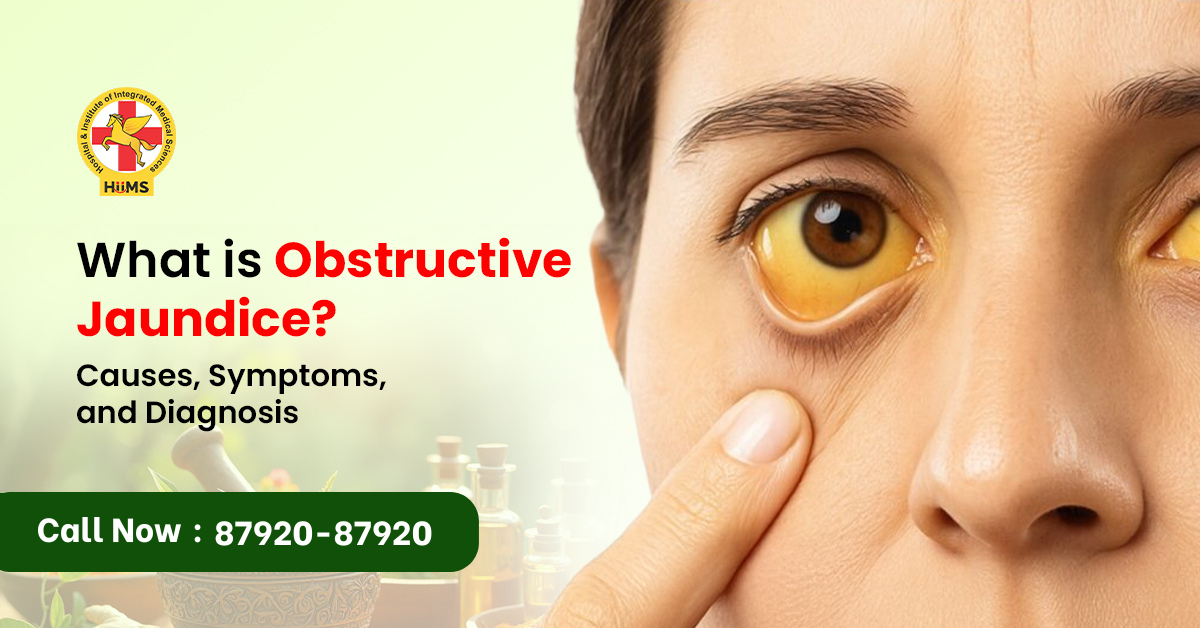
You might have seen someone’s eyes looking slightly yellow or their skin carrying a dull yellow shade that wasn’t there before. And after seeing that, the first reaction is usually confusion rather than concern because it does not always come with pain or discomfort directly.
This noticeable change is usually linked to jaundice, which is not a disease in itself but more like a signal that the body is trying to show from within. Sometimes the reason stays subtle, but in certain situations, the cause goes deeper and involves a blockage in the natural flow of bile inside the body.
This is where obstructive jaundice becomes important to understand, as it connects visible symptoms with an internal disturbance that needs attention. In this blog, you will understand how it begins, what leads to it, and how it is identified step by step.
What Is Obstructive Jaundice?
When doctors talk about obstructive jaundice treatment, they mean a condition where bile, which normally travels from the liver to the intestine, gets stopped somewhere along the way. You can think of bile ducts like small pipes that carry this fluid, and even a minor blockage can interrupt the flow, making bile move back instead of going forward. When this happens, it starts mixing into the bloodstream, which increases bilirubin levels and slowly gives the skin and eyes a yellow color.
Unlike other types of jaundice that develop due to liver weakness or problems in the blood, this condition usually starts because something physically blocks the bile flow, which is why understanding obstructive jaundice causes becomes important from the beginning.
How the Body Reacts When Bile Flow Gets Blocked
Once bile stops moving the way it should, the body begins to show changes instead of staying quiet. The liver still keeps producing bile, but when it cannot pass forward, it starts building pressure inside, which slowly begins to affect how the liver normally works.
At the same time, digestion starts to feel slightly off because bile plays a role in breaking down fats, and without it, the body struggles to process food the usual way.
This internal disturbance slowly starts showing on the outside, which is why people begin noticing bile duct blockage symptoms without always connecting them to the root cause.
What Actually Blocks the Flow? (Obstructive Jaundice Causes)
The whole problem usually starts with a blockage, but what creates that blockage can vary from person to person. The most common among the obstructive jaundice causes are gallstones, which are small, hardened deposits that can slip into the bile duct and stop the flow.
In some cases, growths such as tumors near the pancreas or bile ducts press on the pathway and limit the flow. Inflammation from conditions like pancreatitis or certain infections can also cause swelling that makes the ducts narrower. At times, past injuries or surgeries leave behind scar tissue, which gradually reduces the space through which bile can pass.
There are also rare situations where infections or birth-related structural changes play a role, making each case slightly different in how it develops.
Early Signs People Often Miss (Obstructive Jaundice Symptoms)
One thing that often confuses people is that obstructive jaundice symptoms do not appear all at once. These changes don’t come all at once; they take time, so in the beginning, they are easy to ignore. A person may first notice the eyes or skin turning slightly yellow, and along with that, the urine can look darker, while the stools may start appearing pale or clay-like.
Some people experience itching that feels unusual and persistent, while others notice tiredness that does not match their daily activity. These are common bile duct blockage symptoms that quietly signal something deeper.
As the condition moves ahead, pain may start in the abdomen, mostly on the right side, and in some cases, fever or chills can also show up, which can point towards an infection.
When These Symptoms Start Affecting Daily Life
As these changes keep going on, the daily routine starts feeling a little more difficult than before. Eating doesn’t feel that comfortable, digestion feels slow, and even after taking rest, the body still feels low on energy. Many people slowly begin to avoid certain foods without really understanding why, just because their body does not react the same way as it used to.
This stage often pushes individuals toward seeking help, especially when obstructive jaundice treatment becomes necessary to manage both the cause and the symptoms together.
How Doctors Find the Cause (Obstructive Jaundice Diagnosis)
Doctors don’t just look at yellowing and conclude. They begin with a careful physical check, observing the eyes, skin, and abdomen to understand what might be happening internally. After that, blood tests help measure bilirubin levels and evaluate liver function, which gives the first clear indication.
This process forms the base of obstructive jaundice diagnosis, helping doctors move from suspicion to confirmation in a structured way.
Tests That Help Confirm the Blockage Clearly
Once initial tests suggest a blockage, imaging methods help locate it more clearly. Ultrasound is usually the first step because it quickly shows whether the bile ducts are enlarged or blocked. If more detail is needed, other scans provide a clearer view of surrounding organs.
In certain cases, procedures like MRCP or ERCP are used, which not only help in obstructive jaundice diagnosis but can sometimes assist in relieving the blockage as well.
When to Seek Medical Help Without Delay
It becomes important to act when the yellowing deepens, weakness increases, or symptoms like fever and pain appear together. Waiting in such situations can make the condition more complicated, especially when the blockage remains untreated.

Conclusion
Understanding obstructive jaundice at the right time helps people respond before the condition affects the liver and digestion more deeply, and this awareness often makes a clear difference in recovery and comfort.
When people notice the symptoms early and get the right diagnosis on time, it becomes easier to handle the situation without adding extra worry. At Jeena Sikho HiiMS, the approach is to look at the condition carefully and support the body with natural methods that work gently while also focusing on the root cause.
If you or someone close to you is noticing these changes, you can reach out for guidance at +91 82704-82704 or write to care@jeenasikho.com for further support.
FAQs
Q1. What is obstructive jaundice in simple words?
It refers to a condition where bile flow gets blocked, leading to yellowing of the skin and eyes.
Q2. What are common bile duct blockage symptoms?
Dark urine, pale stools, itching, and yellow skin are commonly noticed signs.
Q3. How do doctors perform an obstructive jaundice diagnosis?
They use physical examination, blood tests, and imaging methods like ultrasound or MRI.
Q4. What are the main causes of obstructive jaundice?
Gallstones, tumors, infections, and narrowing of the bile ducts are common reasons.
Q5. Is obstructive jaundice treatment possible without surgery?
Treatment depends on the cause, and some cases can be managed without surgery under proper care.