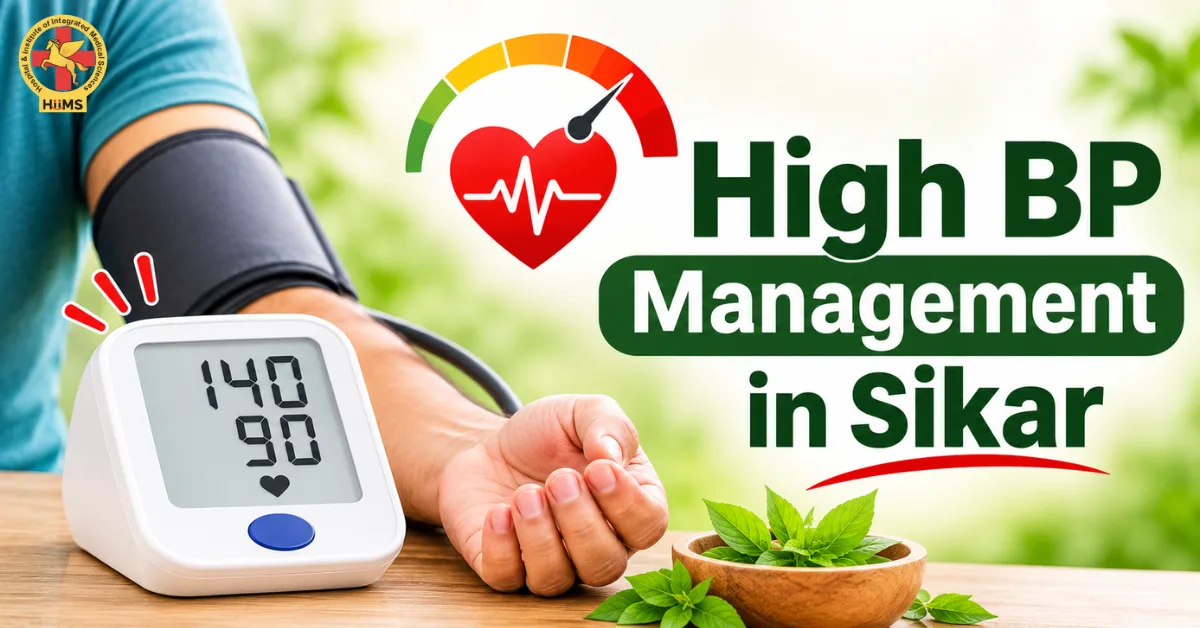

High BP is common across India, yet most people never feel it. Many find out during a routine check-up or a sudden health scare. By then, it may have been rising for years.
A national study shows how big the problem is. The ICMR-NCDIR study found that 28.5% of Indian adults had high BP. In fact, 72.1% of them did not know it.
This blog explains the symptoms, causes and daily habits that matter. It also covers High BP Management in Sikar, from modern medicine to Ayurvedic care.
What Is High BP?
Blood pressure is the force of blood against your artery walls. It has two numbers. The top one is systolic pressure, when the heart beats. The bottom one is diastolic pressure, when the heart rests.
Doctors generally diagnose high BP when readings stay at 140/90 mmHg or above on repeat checks. Over time, this extra force strains the heart, brain, kidneys and eyes. That is why even a mild but steady rise deserves attention.
High BP Symptoms
Most people with high BP feel nothing. That is why it is called a silent condition. Some people do notice headaches, dizziness, blurred vision, or a pounding heartbeat. However, these signs are easy to ignore. As a result, many people live with high BP for years without a diagnosis.
Severe headache, chest pain, or confusion needs urgent care. In that case, see a high BP doctor in Sikar or go to the nearest emergency room right away.
Symptoms alone cannot confirm high BP. A simple BP reading is the first step in any high BP diagnosis.
High BP Causes
Several everyday factors push blood pressure up. Some you can change, and some you cannot.
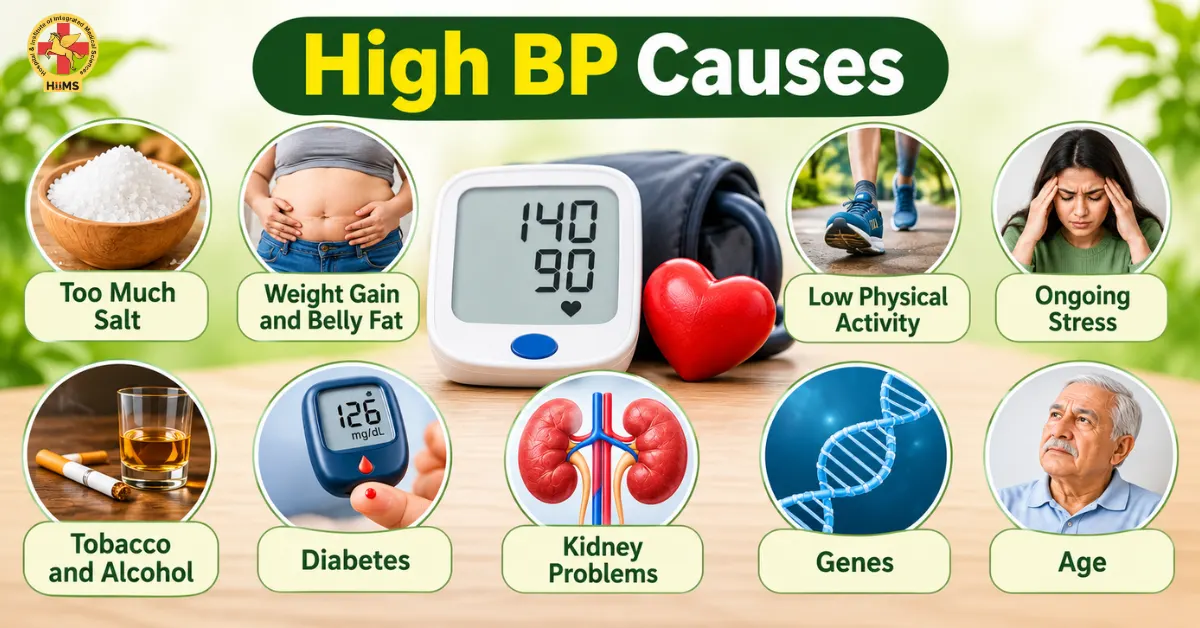
Too Much Salt
Salt makes the body hold extra water, which raises pressure. Pickles, papad, and packaged snacks can quickly add a lot of sodium. Even food that does not taste salty can hide a lot of sodium.
Weight Gain and Belly Fat
Extra weight makes the heart work harder to pump blood. Belly fat is a special concern because it is linked to higher BP and other metabolic problems.
Low Physical Activity
Long hours of sitting make weight gain easier. As a result, BP can creep up over time.
Ongoing Stress
Stress can raise BP for a short time. When it lasts for months, BP may stay high too. Poor sleep adds to this risk.
Tobacco and Alcohol
Smoking and chewing tobacco strain your arteries. Too much alcohol can also raise BP.
Diabetes
Diabetes and high BP often go together. Both affect blood vessels.
Kidney Problems
The kidneys help control BP. So kidney disease can raise it, and high BP can strain the kidneys in turn.
Genes
A family history of high BP raises your risk. So regular checks matter even if you feel well.
Age
BP tends to rise as you get older.
Now that you know the high BP causes, it is time to know how to manage BP.
High BP Management: Daily Habits That Help
Lifestyle is the first and most useful step. Start with these habits.
Cut Down on Salt
Use less salt while cooking and skip extra salt at the table. Choose fresh food over pickles, papad and packaged snacks. Also, read food labels, since sodium hides in bread, sauces and namkeen.
Eat Plant-Based, Fibre-Rich Meals
Build meals around vegetables, fruits, dal, oats and whole grains. These foods give you fibre and potassium which support healthy BP. Bananas and spinach are good potassium sources.
Move Every Day
Aim for a brisk 30-minute walk on most days. Start with 10 minutes if 30 feels hard, and build up slowly. Yoga also helps especially gentle poses and slow breathing.
Manage Your Weight
Even a small drop in weight can help your heart. Track your waist size, eat smaller portions, and avoid late-night meals.
Sleep Well and Manage Stress
Poor sleep and stress can keep BP high. So keep a fixed sleep time and avoid screens before bed. Also, try ten minutes of Pranayama or meditation each day.
Avoid Tobacco and Limit Alcohol
Quit smoking and avoid chewing tobacco, because both strain your arteries. Also, limit alcohol, because too much of it can raise BP.
Check BP at Home
Sit calmly for five minutes, then check your BP at the same time each day and note the readings. This helps your doctor see the pattern.
Sometimes habits alone are not enough. In that case, seeking help from expert doctors is required.
High BP Management in Sikar: What Modern Medicine Offers
Doctors begin by confirming the reading. A proper high BP diagnosis needs checks on more than one day. A physician or a high BP specialist in Sikar may then order blood tests to look for causes. Next, they advise lifestyle changes and often prescribe BP medicines.
This approach works well for many people. However it has limits. Treatment is often long-term and needs regular check-ups. Some people also notice side effects, such as dizziness. For this reason, many look for supportive care alongside their medicines.
Ayurvedic View of High BP
Ayurveda adds a different lens to High BP Management in Sikar. Ayurveda links high BP to an imbalance of Vata, which governs movement in the body. Stress, irregular routines and poor digestion are seen as triggers. Ayurveda also focuses on a steady daily routine, called Dinacharya.
So the traditional focus is on calming the mind, improving digestion, eating light food, and using herbs. Arjuna is one herb traditionally used to support the heart.
Research has looked at it. In a 2019 study, 100 patients with coronary artery disease took Arjuna bark powder for one month. Their systolic BP fell by 10.28% and diastolic BP by 4.8%. However, the control group took no medication, and the patients had heart disease, not only high BP.
Ayurveda works best as supportive care alongside regular BP checks and expert guidance.
Curious how Ayurveda can support your BP care? Ask our experts.
Care for High BP at Jeena Sikho HiiMS Sikar Clinic
BP care works best when stress, sleep, food, and routine are looked at together. Jeena Sikho HiiMS is an integrated healthcare network that combines Ayurveda, Naturopathy, Homeopathy, Unani, and modern medical science.
Jeena Sikho HiiMS Sikar Clinic follows this approach for high BP management. As a high BP clinic in Sikar, it aims to support High BP Management in Sikar with natural, integrated care. The clinic provides diet & lifestyle guidance, Ayurvedic herbal medicines and regular follow-ups to manage BP.
Each plan is personalised after a consultation. If you need advanced therapies, your doctor may refer you to a nearby HiiMS hospital. You can start with a consultation with a high BP doctor in Sikar at the clinic. HiiMS therapies for supportive BP care include:
- Hriday Basti: Warm medicated oil is held over the chest. Traditionally this helps calm stress and ease chest tightness.
- Panchkarma: Basti (herbal enema) and Nasya (herbal oil through the nose) are traditionally used for cleansing.
- Herbal support: Herbs such as Arjuna, Ashwagandha, Brahmi and Shankhpushpi are traditionally used for heart and stress support.
- pH-balanced diet: Fresh, mostly plant-based meals support digestion and a healthy weight.
- Mind & Body Healing: Yoga and meditation help manage stress, which affects BP. You also receive practical guidance on daily routine, sleep and movement.
Want a care plan built around your BP readings? Visit Jeena Sikho HiiMS Sikar Clinic for personalized guidance.
Conclusion
High BP rarely gives a warning, so a simple check can make a big difference. Small habits like less salt, daily walks, and better sleep support healthy readings over time. And if you want more support, High BP Management in Sikar can combine integrated Ayurvedic care. Jeena Sikho HiiMS offers that integrated approach.
Get a care plan built around your BP readings from our Ayurvedic experts. Book a VOPD (video consultation) with HiiMS experts to receive a personalized care plan.

FAQs
Q1. What is a normal BP reading?
A reading around 120/80 mmHg is generally seen as normal. Readings of 140/90 or above on repeat checks usually need medical attention.
Q2. Can young people have high BP?
Yes. Stress, weight gain, salt, and low activity can raise BP at any age.
Q3. Can high BP cause no symptoms at all?
Yes. Many people feel fine, so regular checks matter.
Q4. Can I take Ayurvedic care along with my BP medicine?
Many people do, but tell your doctor first. Never stop BP medicine on your own.
Q5. Is there a high BP clinic in Sikar for Ayurvedic support?
Jeena Sikho Sikar Clinic is built on HiiMS Ayurvedic approach. For advanced therapies, your doctor may refer you to a nearby HiiMS hospital.