

Managing diabetes starts with making the better food choices. Keeping a regular meal routine, choosing suitable foods and staying active may help maintain the healthy blood sugar levels. With a Diabetes Diet Chart Indian plan, you can eat a variety of foods in the right portions. The idea is to eat sensible portions at regular times and include vegetables, whole grains, pulses and fresh fruits in the right measure.
Sugary drinks, packaged snacks and refined-flour foods should be kept in check. Ayurveda likewise treats food and daily habits as important for overall health, encouraging fresh, seasonal, plant-based meals and a consistent eating pattern. Even so, individual needs depend on age, activity level, medicines and any other health concerns. This blog explains which foods to eat and avoid, shares a simple Indian meal chart, and explains how Ayurvedic dietary guidance can be part of daily diabetes care.
Why Food Matters in Diabetes
Your body turns food into sugar for energy. When you eat too many refined foods, sugar enters the blood too quickly. Over time, this puts a strain on the body.
The ICMR INDIAB study showed that diabetes now affects over 100 million people in India. The World Health Organization says a healthy diet, regular activity, and a healthy weight are key parts of diabetes care.
Best Foods for Blood Sugar Support
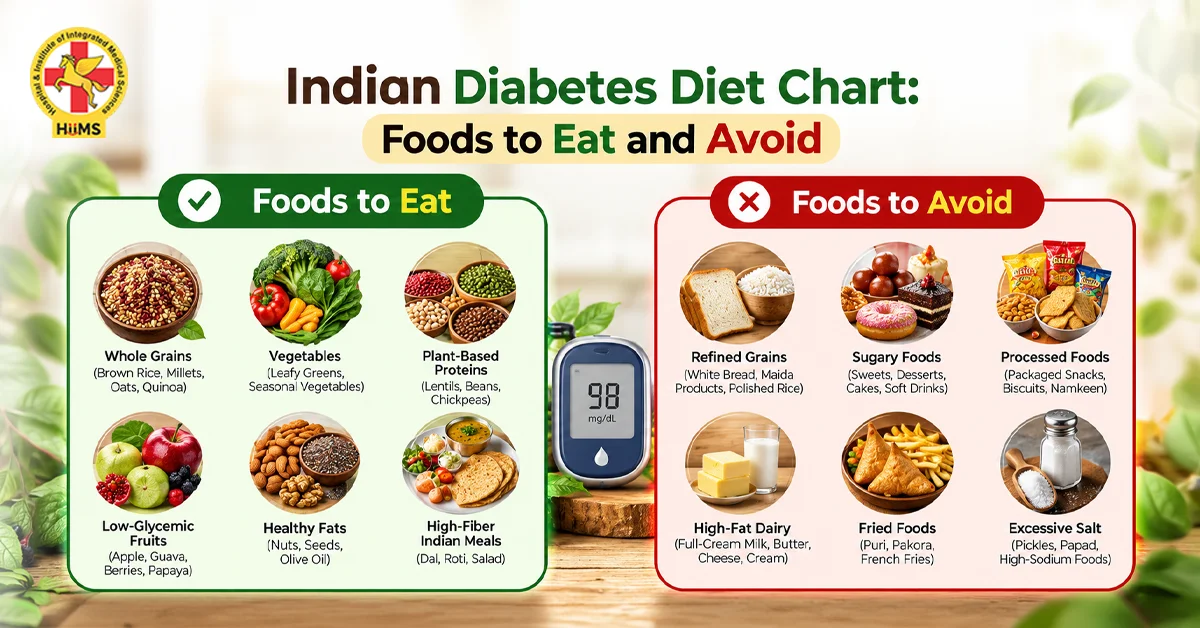
You do not need special or expensive foods to prepare balanced meals. Many common Indian foods can be part of your daily diet. Foods to eat with diabetes include
- Vegetables: Spinach, fenugreek leaves, bottle gourd, ridge gourd and bitter gourd.
- Fruits: Guava, papaya, apples, pears and berries in suitable portions.
- Grains and millets: Ragi, jowar, bajra, oats and barley.
- Pulses: Moong dal, masoor dal, chickpeas, rajma and sprouts.
- Nuts and seeds: Almonds, walnuts, flaxseeds and pumpkin seeds.

These foods provide different nutrients that the body needs. Prefer fresh, home-cooked meals and keep added sugar and excess oil to a minimum.
Foods to Avoid in Diabetes
Some foods can cause sudden rises in blood sugar. Foods to avoid in diabetes include,
- White bread, maida products, cakes, and biscuits
- Sugary drinks and packaged fruit juices
- Fried snacks, samosas, and fast food
- Packaged foods high in salt
- White sugar, sweets, and mithai
Doctors often observe that hidden sugar in packed snacks surprises many patients. Reading labels and choosing fresh home food solves much of this problem.
Diabetes Diet Chart Indian: A Simple Daily Plan
The following plan follows a pH-balanced eating pattern. It focuses on fresh plant foods and light meals. Please adjust portions with your doctor’s advice.
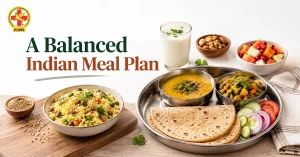
Breakfast (7:00 AM to 9:00 AM)
- Plate 1: Eat 3 to 5 varieties of seasonal fruits.
- Plate 2: Follow with millet poha, daliya or upma.
Lunch (1:00 PM to 2:00 PM)
- Plate 1: Start your meal with a salad of 3 to 5 seasonal vegetables.
- Plate 2: Have millet khichdi or whole grain chapati with sabzi.
Dinner (before 7:00 PM)
- Plate 1: Include fresh fruits and raw salad.
- Plate 2: Eat a bowl of fresh vegetable soup.
- Plate 1 (Without Plate 2): If you skip the vegetable soup, have fruits and raw salad in a quantity of around 10 grams per kilogram of your body weight.
Avoid the long breaks between meals. Try to eat dinner early so you can follow the regular daily routine. Along with healthy eating for blood sugar management, daily habits and proper guidance also matter.
Why Natural Care Makes Sense
Medicines can control sugar for a short time. However, some people notice side effects such as stomach upset, tiredness or weight changes with long use. Medicines also do not fix poor eating habits.
Ayurveda takes a different path. It looks at digestion, food, sleep and stress together. It aims to support the body gently and build habits that last. This is why many people choose natural care as a safe and steady way to live well.
Ayurvedic Care at Jeena Sikho HiiMS

At Jeena Sikho HiiMS Ranchi, doctors begin with a full talk about your health, routine, and food habits. They then suggest meals, herbal support and lifestyle steps that suit your body.
Where suitable, Panchakarma therapies are also used. These are cleansing treatments that help the body reset. Results differ from person to person, so each plan stays personal.
Lifestyle Tips for Managing Diabetes
Food works best with good habits. Try these:
- Eat at the same time every day.
- Drink enough water.
- Walk or practise yoga daily.
- Sleep seven to eight hours.
- Eat slowly and avoid overeating.
- Manage stress with deep breathing or meditation.
The American Diabetes Association also stresses regular meals and mindful portions.
Conclusion
A good diabetes diet chart Indian is the easiest first step toward steady blood sugar. Fresh vegetables, fruits, millets, and plant protein can make a real difference over time. Daily walks, good sleep, and a calm routine also help.
At Jeena Sikho HiiMS, doctors guide you with a personal Indian diet chart for diabetes. Book a VOPD consultation today and start building a healthy routine you can follow for life.

FAQs
1. What is a diabetes diet chart?
It is a meal guide that helps you eat the right foods at the right time.
2. Can I eat fruit with diabetes?
Yes, in small portions of seasonal fruit.
3. Are millets good for diabetes?
Yes, they release energy slowly compared to the refined grains.
4. Why should people with diabetes avoid sugary drinks?
Sugary drinks can raise blood sugar quickly. Water and unsweetened drinks are generally better choices.
5. Does Ayurveda help in diabetes care?
It supports diet, digestion, and lifestyle changes for better health.