


A migraine is never just a severe headache. Anyone who has been affected by this knows the difference the moment it hits.
The throbbing pain, the sudden need for a dark room, the way ordinary light or noise feels unbearable. What makes migraines so irritating is that they very rarely come out of nowhere.
Somewhere in your daily routine, a migraine trigger is slowly building pressure long before the pain actually shows up, and once you know what that trigger looks like for you, prevention becomes far easier than treatment ever is.
This blog guides you through what a migraine actually is, the everyday habits and situations that commonly set one on edge, and simple, practical ways to keep those triggers under control.
You will also find a quick look at how Ayurveda approaches migraine care, because sometimes lasting relief comes from understanding the whole body rather than chasing the pain by itself.
What Is a Migraine?
A migraine is a neurological condition, not a simple ache that fades with rest. It usually shows up as an intense, one-sided, pulsing pain that can last anywhere from a few hours to three full days.
Along with the pain, most people notice a cluster of migraine symptoms such as nausea, sensitivity to light, sensitivity to sound, and sometimes visual disturbances known as ‘aura’.
A migraine attack does not just affect your head. In fact, it disrupts work, sleep, mood, and the small daily routines most people take for granted.
Even simple tasks like reading a message or sitting under normal lighting can feel exhausting once an attack sets in, and the accompanying migraine pain often makes basic concentration impossible.
What Is a Migraine Trigger?
A cause and a trigger are not quite the same thing. A cause is the underlying reason your nervous system reacts strongly in the first place, while a migraine trigger is the specific event or habit that sets off an individual attack on a particular day.
Two people who suffer from migraine can have completely different triggers, which is why a pattern that affects your friend may never bother you at all.
Learning your own triggers, rather than relying on a general list, is what actually makes prevention possible over time.
Common Migraine Triggers You Should Know
1. Stress and Emotional Pressure
Work pressure, constant anxiety, and mental fatigue keep the nervous system on edge, and for many people, this alone is enough to bring on sudden migraine pain.
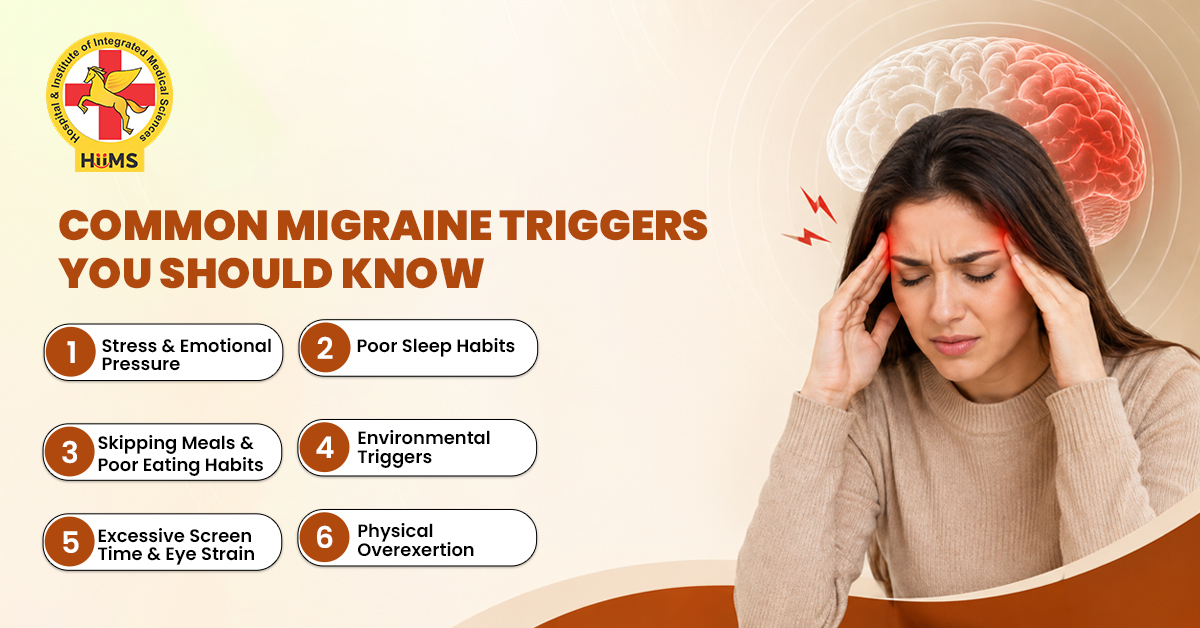
2. Poor Sleep Habits
Sleeping too little, oversleeping, or simply keeping an irregular schedule confuses the body’s natural rhythm and often leads straight into an attack the next day.
3. Skipping Meals and Poor Eating Habits
Long gaps between meals, processed food, excess caffeine, and dehydration all place stress on digestion, and weak digestion is closely tied to recurring headaches.
4. Hormonal Changes
Changes around the menstrual cycle, pregnancy, or menopause change hormone levels quickly, and this fluctuation is one of the most consistent triggers reported by women.
5. Environmental Triggers
Bright lights, loud sounds, strong smells, and sudden weather changes can overwhelm an already sensitive nervous system and worsen migraine symptoms within minutes.
6. Excessive Screen Time and Eye Strain
Long hours on mobile phones and laptops strain the eyes and, over time, contribute heavily to more frequent attacks.
7. Physical Overexertion
Intense exercise without enough rest, ongoing fatigue, and general overexertion can also trigger an experience of severe head pain.
How to Avoid Migraine Triggers Naturally
- Keep your daily routine steady, never skip meals, and drink enough water throughout the day.
- Improve your sleep quality by going to bed and waking at the same time, and cut down screen exposure wherever you can.
- Learning to manage stress through small breaks, walks, or breathing exercises also helps considerably, and it supports genuine naturally migraine relief over the long run.
- One of the most useful habits is keeping a simple migraine diary, noting food, sleep, stress levels, and weather each day, because this is often the fastest way to identify your personal migraine trigger and act on it before the next attack builds.
How Jeena Sikho HiiMS Looks at Migraine Management
At Jeena Sikho HiiMS, migraine care starts with understanding the person, not just the pain.
Every case starts with an individual health assessment that looks at your routine, digestion, sleep, and stress levels together, followed by an effort to understand your personal triggers rather than applying a generic list.
Guidance is built around Ayurvedic lifestyle principles, along with diet, daily routine adjustments, and Panchakarma-based therapy support where appropriate, directed at steady migraine treatment and lasting migraine relief rather than short-term solutions.
Conclusion
Migraine can feel unpredictable, but it hardly ever is once you pay attention. Identifying your migraine trigger early, whether it is poor sleep, stress, irregular meals, or hormonal changes, can meaningfully reduce how often attacks happen and how severe they become.
Small, steady habits around routine, hydration, and rest go a long way toward real relief, far more than reacting only after the pain has already set in. Ayurveda adds another useful perspective here, looking at the whole person rather than treating the headache only.
If migraine keeps disrupting your life, you can opt for a VOPD consultation with expert doctors at Jeena Sikho HiiMS to understand your body better.

FAQs
Q1: What is the most common migraine trigger?
Ans: Stress and irregular sleep are among the most frequently reported triggers, though the exact pattern differs from person to person.
Q2: Can stress trigger migraine attacks?
Ans: Ongoing mental pressure and anxiety raise tension in the nervous system, which often becomes enough to bring on a sudden attack.
Q3: Does skipping meals increase migraine pain?
Ans: Long gaps between meals weaken digestion and disturb blood sugar levels, both of which are commonly linked to worsening head pain.
Q4: How can I identify my personal migraine trigger?
Ans: Keeping a simple diary of food, sleep, stress, and weather over a few weeks usually reveals a clear pattern behind your attacks.
Q5: Can Ayurveda help manage recurring migraine symptoms?
Ans: Ayurveda looks at diet, daily routine, and overall balance together, offering personalised guidance that supports long-term relief alongside medical care.