

Most people don’t really notice when their blood pressure starts to fluctuate. Because it doesn’t interrupt a normal meeting, it doesn’t stop daily work, and it never gives a clear warning that something needs attention. Instead, it slowly adjusts itself around lifestyle patterns such as eating late meals, long sitting hours, constant screen time, and irregular sleep. Over time, the body starts adapting in ways that don’t feel obvious at first but begin to show up as fatigue, restlessness, or mild pain.
What makes this more complicated is the way people approach it. Many focus only on the readings, assuming that managing numbers means managing the condition. But that leaves the root untouched. A more practical view looks beyond just control and focuses on balance, which is where hypertension therapy becomes relevant in a deeper sense.
In this blog, you will understand how different therapies work, and which approach actually supports long-term balance in a simple and effective way.
Why Most People Keep Searching for a Better Solution
There is a common pattern you will notice. Someone gets diagnosed, starts medication, feels better for a while, and then begins to wonder if this is going to continue forever. That question itself pushes people to explore other options.
The issue is not that medicines don’t help. They do, especially in managing immediate spikes. But they are not good for health in the long run and often don’t address the daily habits and internal imbalances that created the condition in the first place. That difference leads many people to look for a therapy for high blood pressure that works beyond temporary relief.
At the same time, the number of options available can feel confusing. From diets to exercises to therapies, everything claims results. The real change happens when one starts thinking that maybe the solution is not one single method, but a change in approach itself.
Understanding What’s Really Happening Inside the Body
When you look at high blood pressure closely, it is not just about force in the arteries. It reflects how the body is handling stress, circulation, and internal balance together.
In simple terms, when daily routines stay uneven and the mind keeps carrying pressure, the body slowly loses its natural rhythm. In Ayurveda, this is seen as a disturbance in Vata and Pitta, along with a buildup of Ama, or internal toxins, which can make blood flow less smooth.
Here, the idea of therapy for hypertension begins to open up a bit. It is not only about bringing the pressure down. It also involves calming the body, improving blood flow, and helping it settle back into a steadier and more balanced state over time.
Looking Beyond One Single Method
When people ask which method works best, the answer rarely comes down to just one therapy. The body doesn’t work in isolated parts, so expecting a single solution to handle everything often leaves the results incomplete.
A more effective high blood pressure therapy usually combines multiple approaches that work together like some that relax the system, some that cleanse it, and others that support it over time.
This combination-based approach creates a more stable and lasting impact, which is why integrated care has started gaining attention.
Therapies That Actually Help
Lower Leg Immersion That Calms the Body
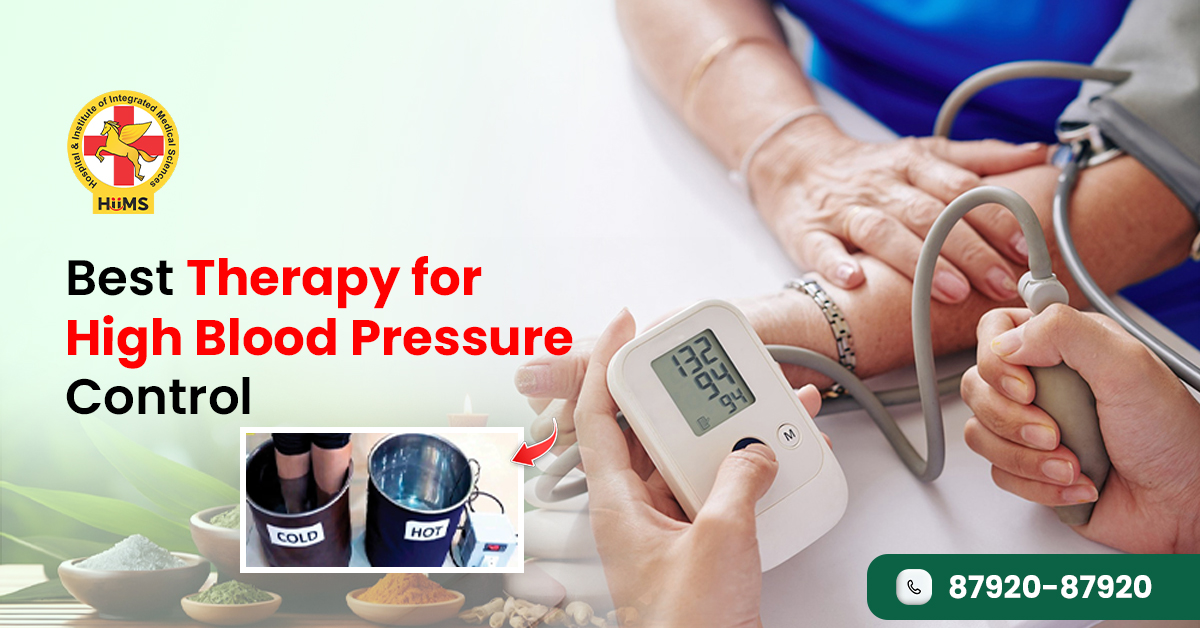
Warm water therapies, especially lower leg immersion, are simple yet effective. Sitting with feet in warm water for a specific time at a specific temperature helps blood vessels relax and improves circulation. This type of therapy for hypertension works gently, without putting pressure on the body, and also supports mental relaxation.
Panchakarma: Cleaning What the Body Holds
Rather than staying limited to symptoms, Panchakarma looks at clearing out what the body has been carrying over time. This way, it supports high blood pressure therapy by settling digestion, easing the internal burden, and allowing the body to work in a smoother and more steady manner.
Breathing That Slows Everything Down
Simple breathing practices can create noticeable changes. Left nostril breathing, for example, activates the body’s relaxation response. When practiced regularly, it becomes an easy and accessible therapy for high blood pressure that connects breathing with emotional balance.
Grounding and Nature-Based Practices
Walking barefoot on green grass may sound basic, but it allows the body to settle down in a subtle way. This practice helps release built-up tension and supports nervous system stability, adding a natural layer to therapy for hypertension.
Herbal Support That Works Gently Over Time
Herbs like Arjuna, Ashwagandha, and Sarpagandha do not act instantly, but they support the body gradually. They help maintain heart function, reduce stress levels, and improve internal balance, making them a steady part of any high blood pressure therapy plan.
What Makes an Approach Actually Work Long-Term
No method works in isolation if daily habits remain the same. Consistency plays a bigger role than intensity. Small changes in food, sleep, and routine create a stronger foundation for any therapy for high blood pressure to work effectively.
How Jeena Sikho HiiMS Mumbai-Panvel Approaches Hypertension Differently
At Jeena Sikho HiiMS Mumbai-Panvel, the focus remains on using a mix of therapies in a planned and balanced way instead of relying on a single method. The approach includes detox support, calming techniques, and guided lifestyle changes, all carried out under proper supervision.
Instead of rushing results, the system works gradually, allowing the body to respond at its own pace. This balanced method makes hypertension therapy more practical and sustainable for long-term care.
Conclusion
There is no single answer to which therapy works best, because the body rarely responds to one-sided solutions. Real improvement comes when different methods come together and support each other in a steady way. A thoughtful hypertension therapy focuses on balance, not just control, and that shift makes a visible difference over time.
If you are dealing with ongoing concerns, you can also call 87920-87920 for consultation about your health issue with expert doctors at Jeena Sikho HiiMS Mumbai-Panvel , where guidance stays simple, structured, and focused on your individual needs.

FAQs
1. What is the most effective therapy for high blood pressure?
A combination of detox, relaxation, and lifestyle changes usually works better than a single method.
2. Can natural therapies help in managing blood pressure?
Natural methods support balance in the body and can improve long-term stability when followed consistently.
3. How does breathing help in controlling BP?
Slow breathing calms the nervous system, which helps reduce internal pressure and stress levels.
4. Is Panchakarma useful for hypertension?
It helps remove internal buildup and supports better circulation, which can assist in managing BP.
5. Do lifestyle changes really make a difference?
Daily habits directly affect body balance, so consistent changes often improve overall results.