
Ever picked up a cholesterol report and looked at the letters HDL and LDL, wondering what they even mean?. Most people see these names on a blood test and just skip past them. Here is the thing though, cholesterol is not actually bad for you. Your body needs it, since it helps build your cells and makes certain hormones work properly.
What is more important is how this cholesterol moves around your blood, and that job is done by small carriers called lipoproteins. HDL and LDL are the two main carriers doctors always check. Once you get a basic idea of HDL vs. LDL cholesterol, food choices and daily habits start to make a lot more sense.
This blog will guide you through both of them in simple words, why they act so differently and why this difference is so important for your heart.
What Is Cholesterol and Why Does Your Body Need It?
Cholesterol is a waxy, fat-like substance found in every cell you have. It helps build cell walls and supports hormone production in your body. Most of it comes from your liver, and the rest comes from food, mainly meat, dairy, and fried snacks.
On its own, cholesterol is not simply good or bad. What decides that is which lipoprotein is carrying it around your blood. This is where HDL cholesterol vs LDL cholesterol comes into the picture, since both act in opposite ways once they enter your bloodstream.
What Is HDL Cholesterol?
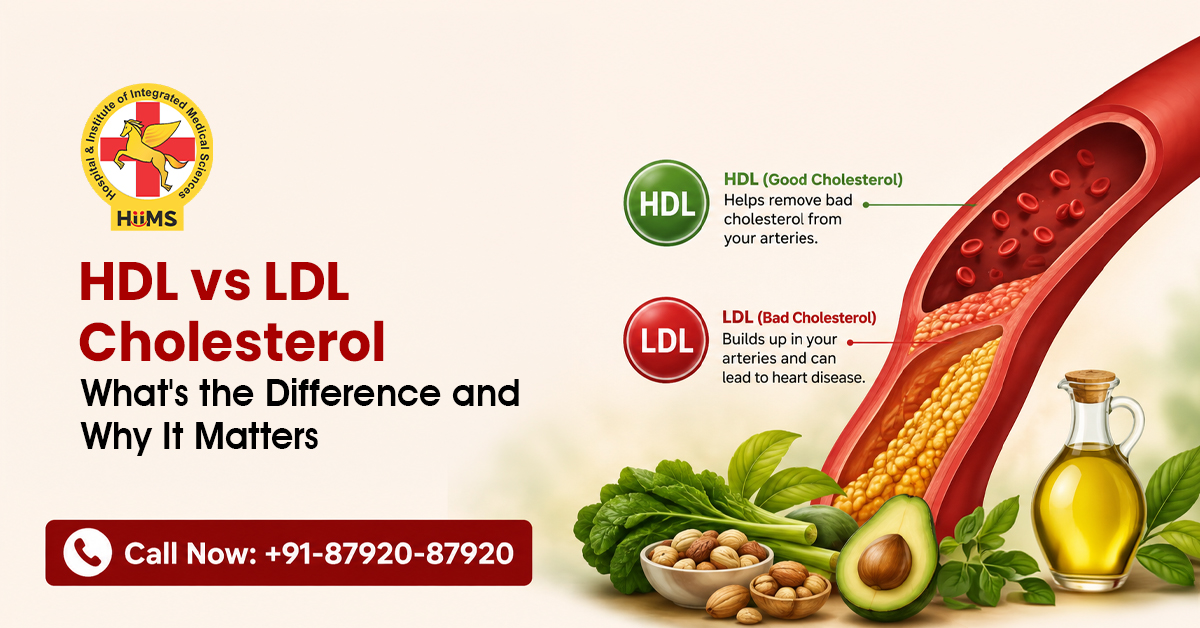
So, what is HDL cholesterol exactly? Okay so think of it as a cleanup worker. It picks up extra cholesterol floating around in your blood and drops it back at the liver, where it gets broken down and removed. Because of this cleaning job, having a higher HDL number is usually seen as a good sign for your heart. But do not think of HDL as some magic protection shield either. It helps, but it does not fully stop every heart problem on its own.
What Can Affect HDL Levels?
- Staying physically active
- What you eat daily
- Smoking or using tobacco
- Body weight and metabolism
- Family genetics
What Is LDL Cholesterol?
Now, what is LDL cholesterol? It is another cholesterol carrier, and your body does need a small amount of it too. The problem starts when there is too much LDL floating around. Extra LDL tends to stick to the walls inside your arteries and slowly builds up there as plaque.
Over time, this narrows your arteries and creates cholesterol-related problems for your heart. Your diet, how active you are, your genes, and your overall health all play a part in whether your LDL stays high or low.
HDL vs. LDL Cholesterol: What Is the Difference?
- HDL picks up extra cholesterol and takes it back to the liver.
- LDL carries cholesterol to different parts of the body, but too much of it sticks inside artery walls.
- A higher HDL number is usually a good thing.
- A lower LDL number is usually better, though it depends on your health and risk factors.
- HDL vs LDL cholesterol are not just two versions of the same thing. They move in opposite directions and do very different jobs.
Knowing the difference between HDL and LDL cholesterol helps you a lot more than just remembering which one is “good” and which one is “bad.”
Why Does the Difference Between HDL and LDL Cholesterol Matter?
Here is something worth knowing: your cholesterol numbers have significance even when you feel fine. High LDL can quietly build up plaque for years without any warning signs. Checking just one number will not tell you the whole truth either. A proper lipid test looks at HDL, LDL, triglycerides, and total cholesterol together, along with your health history.
What Can Influence Your HDL and LDL Levels?
- Eating a lot of fried and processed food
- Sitting for long hours without moving
- Smoking or tobacco use
- Carrying extra body weight
- Poor sleep and constant stress
- Family history
- Certain medicines or health conditions
How Ayurveda Looks at Cholesterol Balance
Ayurveda looks at this differently. It focuses on how well your digestion and metabolism are working. Two ideas guide this thinking, Aahar, which means food, and Vihar, which means daily lifestyle. Eating fresh meals and staying active are both part of this approach. Simple habits like yoga, mindful eating, and a steady routine also help. Ayurvedic care is never one-size-fits-all, since what works for one person may not work the same way for another.
The Jeena Sikho HiiMS Panvel Approach to Cholesterol Care
At Jeena Sikho HiiMS Panvel, care is built around four healing pillars: Aahar, Vihar, Shaman, and Shodhan. This approach blends Ayurvedic thinking with modern diagnosis, giving a more complete overview of your cholesterol health.
Conclusion
HDL and LDL do very different jobs in your body, and neither one should be judged just by looking at a single number. A full lipid report, read along with your health history, tells a much clearer story than one figure ever could. Good food habits, daily movement, and timely health care guidance all play a role in keeping this balanced over the years.
At the end of the day, understanding HDL vs LDL cholesterol is really about understanding your own body a little better. If you want personal guidance on this, you can opt for a VOPD (online video consultation) with the expert doctors at Jeena Sikho HiiMS.
 FAQs
FAQs
1. What is the main difference between HDL and LDL cholesterol?
HDL takes extra cholesterol back to the liver for removal, while LDL carries cholesterol to your cells and can build up in artery walls when it stays high.
2. What is a healthy HDL cholesterol level?
A higher HDL number is usually seen as favourable, though doctors prefer to check it along with your full lipid report rather than on its own.
3. What is a healthy LDL cholesterol level?
A lower LDL number is generally preferred, but the exact target changes based on your age, daily habits, and existing heart risk.
4. What lifestyle changes help improve cholesterol balance?
Daily movement, eating fewer fried foods, sleeping well, and managing stress together support better HDL and LDL numbers over time.
5. Does Ayurveda help in managing cholesterol naturally?
Ayurveda works on improving digestion and daily routine, which can support your overall metabolism alongside regular health care.