
Your liver works all day quietly. It cleans the blood, makes bile, and helps digest food. When the eyes or skin turn yellow, the body is telling you that the liver needs attention. Knowing the early signs makes it easier to act in time. It also helps when you look for jaundice care in Panvel.
Jaundice is a common sign of liver infections, and India carries a large share of them. A global analysis of Global Burden of Disease data estimated about 45.5 million cases of acute viral hepatitis in India in 2021, the highest in the world. This blog explains what jaundice is, how it shows up, what causes it, and how Ayurvedic care supports the liver.
What is Jaundice?
Jaundice is a sign, not a disease on its own. It means that a yellow pigment called bilirubin has built up in the blood. Doctors see it as a signal that something is affecting the liver, the bile ducts or the blood.
Here is how the process normally works. Old red blood cells break down every day, and bilirubin is left behind. The liver then processes this pigment. Finally, bile carries it out of the body through the stool.
Jaundice appears when any one of these three steps goes wrong. First, the body may break down too many red blood cells. It then makes more bilirubin than the liver can handle. Second, the liver itself may be damaged, so it cannot process the pigment. Third, the bile ducts may be blocked, so bile cannot carry the pigment out. In all three cases, bilirubin stays in the blood. It then settles in the eyes and skin and turns them yellow.
Jaundice Symptoms and Signs: What to Look For?
Some changes are visible to others. Some are felt only by you. Both matter, so it helps to know each group.
Signs of Jaundice You Can See
The whites of the eyes usually turn yellow first. This happens because bilirubin settles easily in that tissue. Later, the skin, palms and nails may look yellow too.
Urine often turns dark, like strong tea. The kidneys are pushing out the extra pigment. Stool, on the other hand, may turn pale or clay-coloured. Bile is not reaching the gut, so the stool loses its usual brown shade.
Jaundice Symptoms You May Feel
Many people feel tired and weak for days before any yellow colour appears. Appetite drops, and the thought of oily food can cause nausea. Some people feel a dull ache in the upper right side of the belly, where the liver sits.
Itching is common, too. Bile salts build up under the skin and irritate it. A mild fever may also appear, especially when an infection is behind the jaundice. Symptoms differ from person to person because the cause decides the pattern. For example, some people have no pain at all. Signs of jaundice can also fade slowly, so a person may still look yellow after feeling better.
Warning Signs That Need Urgent Care
Some signs mean you should not wait. Go to a hospital at once if you feel confused or very drowsy. The same applies if you vomit blood, pass black stool, or have severe belly pain. High fever or swelling in the belly or legs also needs quick attention.
These signs point to a serious problem, and quick medical care matters here. A family member should stay with the patient and take the person to the nearest hospital without delay. Once you know the signs, the next question is what causes them.
What are the Causes of Jaundice?
Many different problems can lead to jaundice. Some start in the liver, some in the bile ducts, and some in the blood. Here are the most common ones.
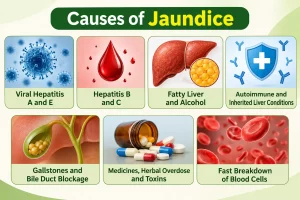
Viral Hepatitis A and E
Both viruses spread through contaminated food and water. They are common in places where drinking water mixes with sewage, and cases often rise in the monsoon. A 2014 report from Lalkuan, Uttarakhand recorded 240 cases of acute viral hepatitis, an attack rate of 8.61%. Of 13 patients tested, 10 were positive for hepatitis E. The team traced the source to sewage in the drinking water pipes.
Most people recover with rest and proper care. Even so, the liver needs time to heal, so they should not rush back to heavy food or alcohol.
Hepatitis B and C
These viruses spread through infected blood and body fluids. Shared needles, unsafe blood transfusions, and unprotected sex are common routes. A mother can also pass hepatitis B to her baby at birth.
Both infections can stay in the body for years. Over time, they may damage the liver quietly, so jaundice can appear late.
Fatty Liver and Alcohol
Extra fat, or regular heavy drinking, harms liver cells. Damaged cells cannot process bilirubin well. As a result, the pigment slowly rises in the blood.
Fatty liver often gives no signs for a long time. Because of this, jaundice may be the first clear warning.
Autoimmune and Inherited Liver Conditions
In some people, the body’s own defence system attacks the liver. In others, a gene problem affects how the liver handles bilirubin. These causes are less common. Still, doctors consider them when the usual causes do not fit.
Gallstones and Bile Duct Blockage
Stones or swelling can block the tubes that carry bile out of the liver. When bile cannot leave, bilirubin flows back into the blood. People in this group often have pale stool, strong itching, and pain in the upper belly. They may also feel the pain after a fatty meal.
Medicines, Herbal Overdose and Toxins
Some medicines strain the liver, especially when taken in high doses or for a long time. Certain painkillers and antibiotics are examples. Unregulated herbal mixes can do the same, because their ingredients and amounts are unknown.
So never start or stop a medicine on your own when you have yellow eyes.
Fast Breakdown of Blood Cells
Sometimes the liver is healthy, but the body makes too much bilirubin. Malaria and blood disorders such as thalassaemia destroy red blood cells quickly. The liver then gets more pigment than it can handle.
With so many possible causes, a doctor must find the exact cause to identify the real problem.
Noticing any of these causes? Speak with our experts.

How Is Jaundice Checked?
A yellow eye alone does not tell the cause. The cause decides the care, so testing comes first.
A liver function test is usually the first step. It measures total and direct bilirubin, along with liver enzymes such as SGOT, SGPT and ALP. Blood tests for hepatitis viruses show whether an infection is behind the problem. An ultrasound of the belly shows the liver, gallbladder, and bile ducts. It can reveal stones or swelling.
These results guide every decision that follows, including diet and routine. Repeat tests also show whether the liver is recovering. For this reason, keep all your reports and take them to every visit. A clear record helps the doctor compare changes over time and adjust the plan with confidence.
How Ayurveda Understands Jaundice?
Ayurveda calls jaundice ‘Kamala’. It calls the liver Yakrit. According to the classical texts, the liver is the main seat of Pitta, the dosha linked with heat, digestion, and blood. One form of Pitta, called Ranjaka Pitta, gives blood its colour.
When Pitta rises too much, the liver and bile flow can get disturbed. Weak Agni, or digestive fire, adds to the problem. Poorly digested food then forms Ama, a sticky waste that burdens the body. Alcohol, very spicy or sour food, fried meals, and irregular eating habits can all push Pitta up.
For this reason, Ayurveda does not focus only on the yellow colour. It asks what is disturbing the liver. Care then aims to calm Pitta, strengthen digestion and reduce the load on the liver. Classical texts also favour bitter and cooling foods and herbs for this purpose. They are thought to settle excess heat in the body.
Some research has looked at this approach. A hospital study at TU Ayurveda Teaching Hospital in Nepal, published in 2025 followed 44 patients with Jaundice for 45 days. One group took Rohitkyadi Churna and the other took Phaltrikadi Kwatha. Total bilirubin improved by about 67% in the first group and about 70% in the second. It shows how Ayurveda can support jaundice care.
Ayurvedic Care for Jaundice: Diet, Herbs and Routine
Ayurvedic care for jaundice rests on three habits: gentle food, liver-friendly herbs and a calm routine.
Diet for a Tired Liver
Light, warm, and freshly cooked meals are easier to digest. Moong dal khichdi, vegetable soups, and boiled vegetables are suitable for weak digestion. Drink only boiled or filtered water, because unsafe water can bring infection back. Sip fluids throughout the day as well. Warm water, thin buttermilk, and clear soups keep you hydrated without taxing digestion.
Avoid oily, very spicy, fermented, and packaged food. Stay away from alcohol completely. Eat at fixed times, and keep dinner small. If you have diabetes, check with your doctor before you change your diet.
Herbs Under Doctor Supervision
Ayurveda has long used certain bitter herbs for the liver. Bhumi Amla is traditionally used to support liver health and healthy bile flow. Kutki supports digestion and the liver’s work in processing waste. Kalmegh is another bitter herb that Ayurveda uses to cool Pitta.
However, herbs are not harmless just because they are natural. The wrong dose or a poor-quality product can strain the liver further. Hence, take them only with a trained doctor’s advice.
Rest and Routine
The body heals better with enough sleep. Aim for a fixed bedtime and avoid late nights. Light walking is fine when your energy allows, but heavy exercise can wait.
Keep meal times regular, and skip heavy food at night. Gentle breathing practice may also help you feel calmer while the liver recovers. These small steps work best when you also prevent the next infection.
How to Lower the Risk of Jaundice
You can avoid many causes of jaundice. A few steady habits can help a lot.
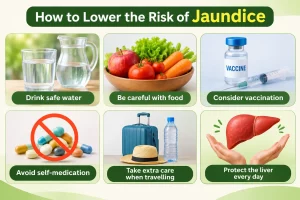
- Drink safe water: Boil or filter water, especially in the monsoon. Boiling water makes a large difference.
- Be careful with food: Skip raw street food and cut salads when outbreaks are common. Wash your hands before eating and after using toilet. Clean hands stop the viruses behind hepatitis A and E from spreading.
- Consider vaccination: Vaccines exist for hepatitis A and hepatitis B. A doctor can tell you who should take them.
- Avoid self-medication: Do not take painkillers or herbal mixes for long periods without advice. Many liver injuries begin this way.
- Take extra care when travelling: Carry your own boiled water on long trips. Eat freshly cooked food and avoid ice and cut fruit from roadside stalls.
- Protect the liver every day: Limit alcohol, keep your weight in a healthy range and stay active. These habits also lower the risk of fatty liver.
With the basics covered, many people ask where to find Ayurvedic liver care nearby. Here is what Jeena Sikho HiiMS offers in Panvel.
Jaundice Care in Panvel at Jeena Sikho HiiMS Mumbai-Panvel Hospital
Jeena Sikho HiiMS is an integrated hospital, it takes the same root-cause view of liver health and turns it into one care plan. The hospital provides care for liver conditions such as fatty liver, hepatitis, cirrhosis, and bile duct problems. This makes it a practical choice for jaundice care in Panvel and nearby areas of Navi Mumbai.
What the Integrated Approach Includes
- Doctor assessment: The doctor listens to your history and reads your reports. Pulse and tongue checks add to the picture. The plan is built around you.
- pH-balanced diet: Every plan comes with a diet chart. The food is fresh, simple, and low in processed items, and it is made to suit your needs.
- Herbal support: Under the doctor’s supervision, herbs such as Bhumi Amla, Kutki and Kalmegh may be added. They aim to support the liver and ease the load on it.
- Panchakarma: This is a detoxification therapy and the doctor decides on it only after assessment. The hospital has dedicated therapy rooms for it.
- Yoga and routine guidance: Gentle yoga, breathing practice and sleep habits help the body recover. They also help you maintain the benefits you have gained.
- In-house Ayurvedic pharmacy: Medicines are available on site which makes follow-up easier.
People who may benefit include those recovering from hepatitis and those with fatty liver. Others want a long-term diet and routine plan. The team also helps family members learn how to prepare liver-friendly meals at home.
Conclusion
Jaundice is a sign that bilirubin has built up in the blood. Yellow eyes and skin, dark urine, pale stool, and tiredness point toward a cause. Ayurveda reads jaundice as ‘kamala’ and looks at Pitta, Agni, and Ama as the roots. It supports the liver through gentle food, herbs, and routine. Clear knowledge of all this is the first step toward good jaundice care in Panvel.
Get guidance from Jeena Sikho HiiMS doctors through VOPD (video consultation). The doctor will guide you on diet, routine and next steps for jaundice care in Panvel.

FAQs
1. What is jaundice, and is it a disease?
Jaundice is a sign, not a disease. It appears when a yellow pigment called bilirubin builds up in the blood, and it points to a problem in the liver, bile ducts, or blood.
2. What are the first signs of jaundice?
Yellow whites of the eyes are usually the first sign. Dark urine, pale stool, tiredness and itching often follow.
3. How can Ayurvedic care for jaundice support the liver?
Ayurveda looks at Pitta, digestion and the load on the liver. Light food, supervised herbs, and a steady routine aim to support the liver.
4. Which foods suit a liver that is recovering from jaundice?
Warm, freshly cooked meals such as moong dal khichdi and clear soups are easy to digest. Boiled water helps too while oily, spicy food and alcohol are best to avoid.
5. What jaundice care can I get at Jeena Sikho HiiMS Panvel?
The Mumbai-Panvel Hospital offers consultation, diet & lifestyle guidance, herbal support, and Panchakarma if needed.