
The skin forms the outer covering of the body and works quietly to protect it. Every day it faces sunlight, dust, and heat. Usually, we do not pay much attention to it. But with time, minor damage may continue to collect. This can slowly affect the skin cells, and such changes may sometimes lead to conditions like skin cancer.
The problem is, it does not always look serious in the beginning. A small mark, a patch, or a mole may seem normal. Many people ignore these early signs, thinking they will go away on their own. That delay can make things complicated later.
Understanding the types of skin cancer becomes important here. Not all types behave the same way. Some grow slowly and stay limited, while others may spread faster. Along with this, traditional approaches also look at the internal balance, not just outer symptoms. This way of thinking focuses more on daily habits, food, and routine, which slowly shape how the body reacts to such conditions.
What is Skin Cancer?
Skin cancer happens when the skin cells start growing in an unusual and uncontrolled way. Normally, the body replaces old cells with new ones in a proper cycle. But when this cycle breaks, damaged cells do not die and keep multiplying.
Sun exposure over many years is one of the main reasons behind this. The skin gets affected slowly, and the changes may not be visible immediately. Apart from this, internal factors like weak digestion, low immunity, and an imbalance in the body can also play a role.
The early signs of skin cancer are often simple. It can be a small bump, a patch, or a mole that starts changing slowly. Because there is usually no pain, many people ignore it in the beginning.
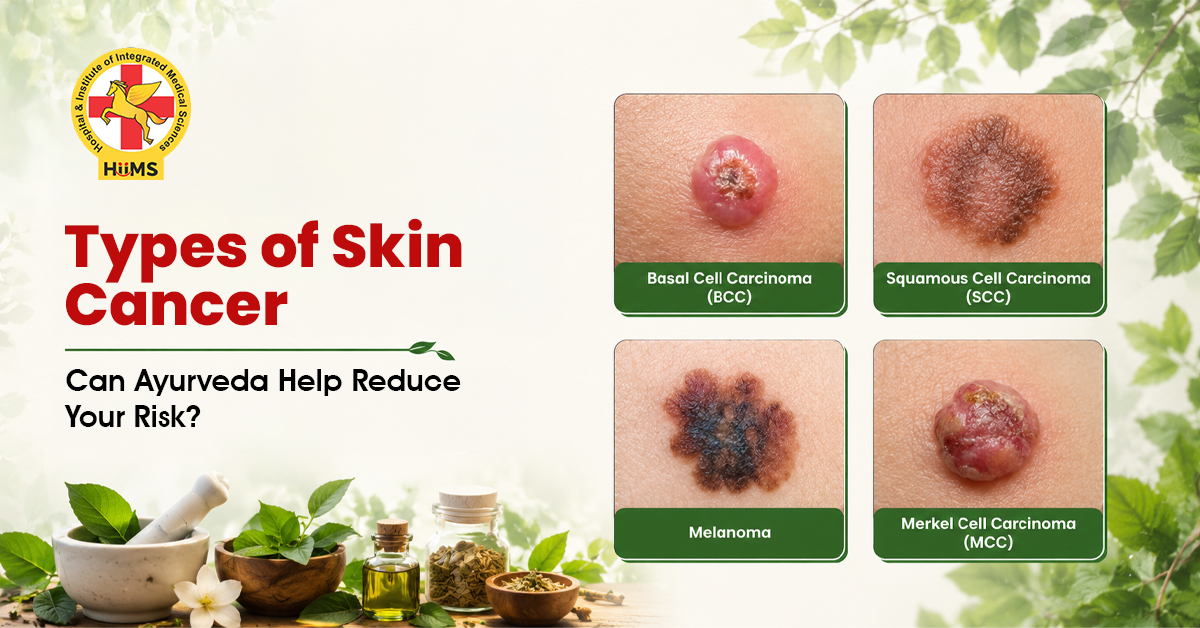
Types of Skin Cancer and How They Appear
Different types of skin cancer show different patterns on the skin, so understanding each one helps in the early detection.
1. Basal Cell Carcinoma
It is a slow-growing type that usually appears on sun-exposed areas and mostly remains limited.
- Small shiny bump or a smooth patch
- May look pale or scar-like
- Grows slowly and rarely spreads
2. Squamous Cell Carcinoma
It is a more aggressive type that can grow deeper into the skin if ignored.
- Rough, scaly patch on the skin
- Red firm lump or thickened area
- Sore that does not heal properly
3. Melanoma
It is a serious type that often starts from a changing mole or a new dark spot.
- Mole changes in size, shape, or color
- Uneven borders or multiple shades
- Can spread faster if not noticed early
Understanding these types of skin cancer helps in identifying which skin changes need attention and should not be ignored.

Factors That May Lead to Skin Cancer Over Time
Some skin cancer risk factors develop their effect slowly and are often ignored in the beginning.
- Long hours under the sunlight without any protective measures
- Use of chemical-based skin products and daily exposure to polluted surroundings
- Weak skin barrier, which may reduce the skin’s natural protection
- Irregular routine, including poor eating habits, disturbed sleep, and stress
- Internal imbalance that may affect the body’s response to damage
- Repeated injuries, burns, or continuous irritation on the skin
Individually, they may not seem serious, but together, over time, they can increase the chances if not managed properly.
Daily Habits That Support Skin Health
Skin cancer prevention is not about one big change. It is mostly built on small habits that are followed daily over time.
- Protect the skin from strong sunlight by covering the exposed body parts
- Avoid going outside during peak sun hours as much as possible
- Take fresh, simple, and balanced meals for inner nourishment
- Drink enough water so that the skin does not become dry
- Limit the use of strong or chemical-based skin products
- Keep the daily routine steady and not very irregular
- Give attention to digestion and overall body balance
- Follow natural care methods that support long-term wellness
These steps may seem very basic in nature, but when they are followed regularly, they can help in keeping the skin healthy and may also lower the overall risk.

How Ayurveda Supports Skin Health and Reduces Risk
Ayurveda looks at skin as a reflection of internal health, not just a surface condition.
- Work on digestion so toxins do not collect inside
- Keeping food habits simple and regular
- Using herbs and natural preparations in everyday life
- Applying oils for basic skin nourishment
- Including detox therapies in a mild and natural way
- Keeping stress low and mind relaxed
- It takes time; results are not immediate
Such an approach keeps the body balanced, which may support skin care prevention and reduce the chances of problems over a long period.
When Should You Pay Attention
Skin changes should not be ignored for too long, even if they look small, as they may be linked with underlying skin cancer risk factors.
If a mole changes in size, shape, or color, it should be noticed carefully. A wound that does not heal or keeps returning also needs attention.
Unusual itching, bleeding, or sudden growth on the skin can be signs that should not be delayed.
It is always better to observe early rather than wait for the condition to become serious.

Conclusion
Understanding the types of skin cancer helps in noticing early warning signs that are often ignored. Skin health is not only about what is seen outside, but also about how the body is functioning inside. Simple habits, a balanced routine, and natural care can slowly support the overall well-being and may help in reducing the risk.
If you are dealing with any kind of skin problem or feel the need of proper guidance, you may consider going for a VOPD consultation at Jeena Sikho HiiMS.
FAQs
Q1. What is skin cancer?
It is when the skin cells grow in an unusual and uncontrolled way.
Q2. What are the types of skin cancer?
The main types are the basal cell, squamous cell, and melanoma.
Q3. What are the early signs of skin cancer?
Small bumps, patches, or changes in moles can be the early signs.
Q4. What causes skin cancer?
Long exposure to the sunlight and skin damage are the common reasons.
Q5. Can Ayurveda help in skin care?
Ayurveda focuses on the internal balance and routine.