


Acidity is very common, but still many people do not clearly understand what is happening inside their body. That burning feeling in the chest after meals, a sour taste in the mouth, or discomfort when lying down is often ignored in the early stage. But slowly, these small signs begin to affect everyday life. That is when people start asking, what is acid reflux and why it keeps returning again and again.
In simple language, acid reflux happens when stomach acid flows back into the food pipe instead of staying in the stomach. At first, it may not seem serious, but if it continues for a long time, it can lead to regular heartburn or GERD. Food habits, stress, and lifestyle are closely connected to this issue.
In this blog, we will explain what acid reflux is, its causes, symptoms, and how you can manage it in a simple way
What Is Acid Reflux?
To understand what is acid reflux, think of your stomach as a place where food gets broken down with the help of acid. This acid is strong and needed for digestion. There is a small valve between the stomach and the food pipe that keeps this acid in place.
When this valve becomes weak or does not close properly, acid starts moving upward into the food pipe. This backward flow is called acid reflux. It creates a burning feeling in the chest, which is commonly known as heartburn.
People often feel this after having heavy food, spicy dishes, or lying down right after meals. If it happens once in a while, it usually does not seem like a big issue. But when it becomes regular, knowing what is acid reflux becomes important to handle it properly.
What Causes Acid Reflux?
Many people ask about the causes of acid reflux, and in most cases, it is linked to simple daily habits. Some of the main acid reflux causes include:
- Eating spicy or oily food often
- Overeating or rushing meals
- Lying down immediately after eating
- Being overweight
- Drinking excess tea, coffee, or carbonated drinks
- Smoking or alcohol use
- High stress levels
Another point behind what causes acid reflux is weak digestion. When digestion slows down, acid stays in the stomach longer and increases reflux chances.
Understanding these acid reflux causes can help you adjust your routine and reduce discomfort.
Symptoms of Acid Reflux You Should Not Ignore
The symptoms of acid reflux can feel different for each person, but some signs show up again and again. It is important to understand them clearly so you do not ignore early warnings.
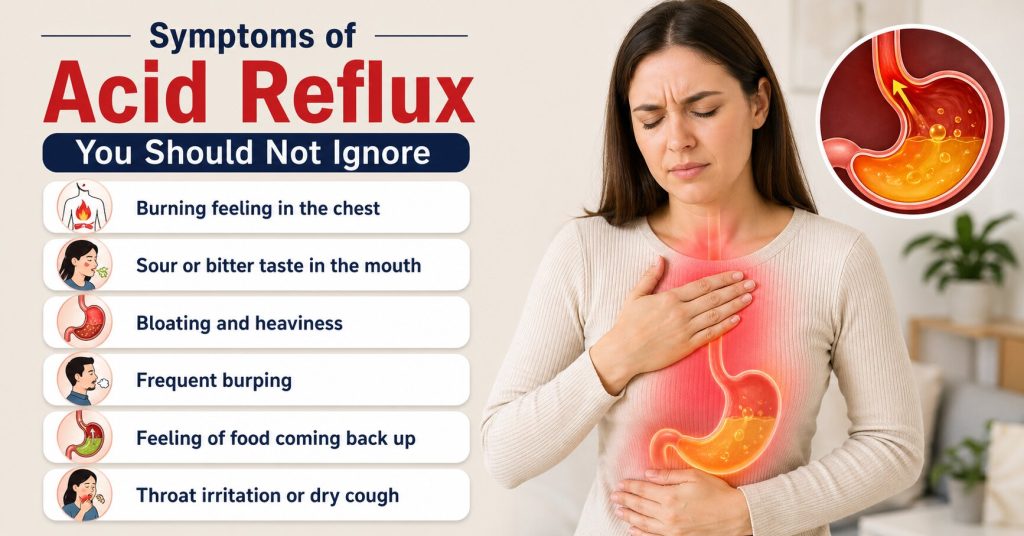
- Burning feeling in the chest
This is the most common sign. It usually starts after eating and feels like heat rising from the stomach toward the chest. It may get worse when you lie down or bend forward. - Sour or bitter taste in the mouth
When acid moves upward, it can reach the throat and mouth. This leaves a sour or bitter taste, especially after meals or during the night. - Bloating and heaviness
Many people feel their stomach is full or tight even after eating a small amount. This discomfort is often linked with slow digestion. - Frequent burping
Regular burping or gas is another sign. It may happen more after meals and can bring temporary relief, but the issue keeps coming back. - Feeling of food coming back up
Some people feel like food is rising back toward the throat. This can be uncomfortable and sometimes causes a choking or stuck feeling. - Throat irritation or dry cough
Acid can irritate the throat lining, leading to a dry cough, hoarseness, or a constant need to clear the throat.
These symptoms of acid reflux may seem small at first, but if they happen often, they should not be ignored. Over time, they can affect sleep, eating habits, and overall comfort.
If you notice these signs regularly, it is better to take them seriously and start making simple changes early.
How Ayurveda Connects with Acid Reflux
In Ayurveda, acid reflux is linked to an imbalance of Pitta dosha, which controls heat and digestion in the body. When Pitta increases, it leads to excess acid and a burning feeling.
Poor eating habits, stress, and irregular meals can disturb this balance. Ayurveda focuses on calming digestion with simple diet changes, better routine, and natural methods, instead of just temporary relief.
Simple Home Remedies That Help Manage Acidity
You do not always need complicated solutions to feel better. Some easy habits and natural options can make a big difference if followed daily.
- Drinking a glass of cold milk can calm down the burning feeling
- Chewing fennel seeds after meals helps digestion and reduces gas
- Tulsi leaves or tulsi tea can soothe stomach irritation
- Amla juice supports digestion and helps control acid levels
- Coconut water keeps the stomach cool and balanced
These small remedies may look simple, but when used regularly, they can be part of your acid reflux treatment and help reduce discomfort in a natural way.
Daily Habits That Can Prevent Acid Reflux
Preventing acid reflux is not difficult if you follow a few simple habits consistently:
- Eat slowly and chew food properly
- Keep a gap of at least 2 to 3 hours before sleeping
- Avoid late night heavy meals
- Stay physically active
- Drink enough water throughout the day
These small changes help your digestive system work better and reduce the chances of acid moving upward.
Conclusion
Understanding what is acid reflux is the first step toward managing it in a simple and practical way. It is not just about one meal or one bad day, but about daily habits that slowly affect your digestion. By noticing early signs, improving your routine, and making better food choices, you can reduce discomfort and feel more at ease.
If symptoms continue for a long time, it is better to seek proper guidance. At hospitals like Jeena Sikho HiiMS Manesar Gurugram, the focus is on natural ways and lifestyle based care that look at the root cause instead of just temporary relief.

FAQs
Q1. Are acid reflux causes linked to lifestyle?
Ans. Yes, daily habits like late eating, stress, and unhealthy food choices are common causes of acid reflux.
Q2. Is acid reflux the same as heartburn?
Ans. Heartburn is one of the main symptoms of acid reflux, not a separate condition.
Q3. Are home remedies helpful for acid reflux?
Ans. Simple remedies like milk, fennel seeds, and coconut water can help when used regularly.
Q4. Does Ayurveda help in acid reflux?
Ans. Ayurveda focuses on balancing digestion and correcting the root cause naturally.
Q5. Is acid reflux a long-term problem?
Ans. It can become long-term if not managed properly with lifestyle changes.