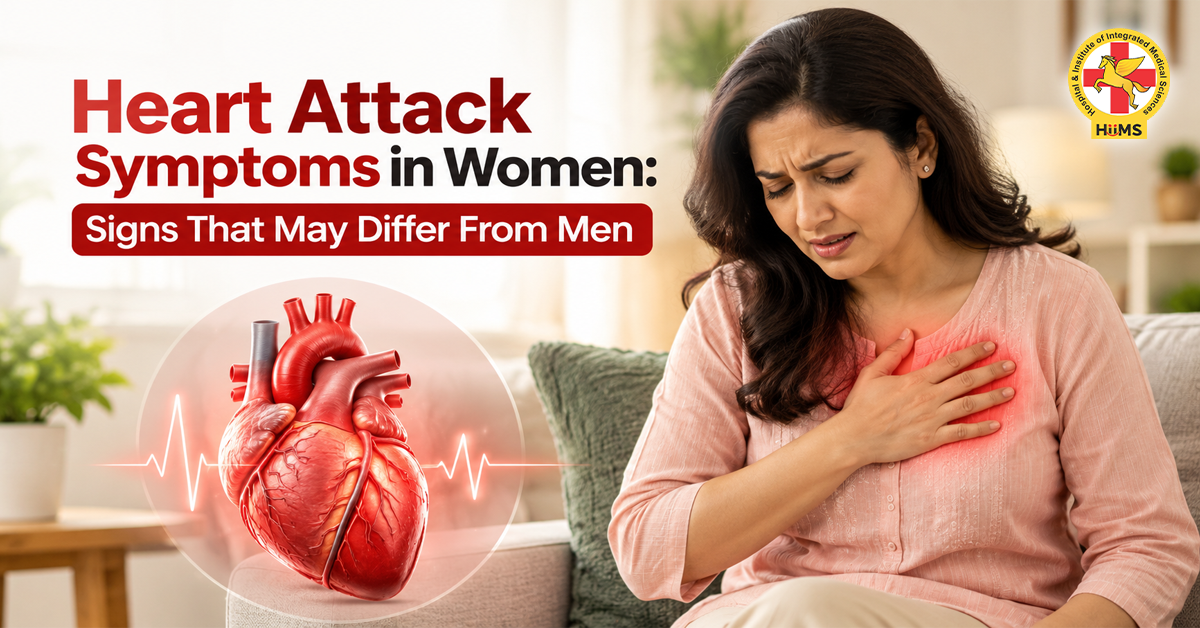

We have all watched films in which a heart attack is shown as a sudden attack of intense chest pain causing one to clutch the chest. However, real life is often very different. While some experience chest tightness or pressure, others may suffer from unexplained fatigue, nausea, breathlessness, or back and jaw pain.
When it comes to women, the signs might be taken to be acidity, stress, or just tiredness. It may thus delay treatment. Knowing about the heart attack symptoms in women is important because by understanding the symptoms, one can seek emergency treatment at the right time.
According to University of Utah Health, women may experience symptoms that are not always recognised as typical heart attack signs. However, chest pain or discomfort remains the most common symptom in both women and men. In this blog, we will explore the common symptoms, how they may differ between women and men, and when to seek emergency help.
What Are the Common Heart Attack Symptoms in Women?
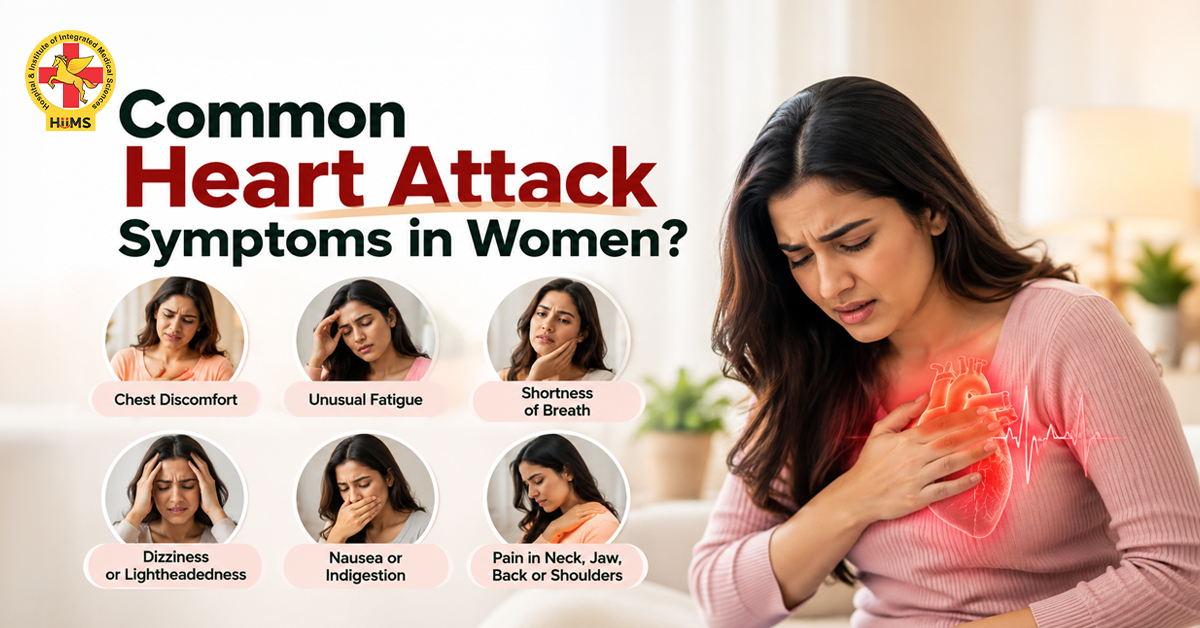
A heart attack is caused by a lack of blood flow to a certain area of the heart muscle. When there is insufficient blood flow, the heart muscle gets injured because there is not enough oxygen-rich blood. Heart attack symptoms differ among individuals and may be sudden or gradual. These heart attack symptoms in women include:
1. Chest Pain or Discomfort
Chest discomfort is the most common warning sign in both women and men. It may feel like the pressure, squeezing, fullness, heaviness, or tightness in the centre of the chest. The discomfort may last for several minutes or disappear and return. It does not always feel like the severe pain shown, so unusual chest discomfort should not be ignored.
2. Shortness of Breath
Both women and men could have problems with their breathing during a heart attack. The problem with breathing might be experienced along with pain in the chest area or even without any chest pains at all.
3. Unusual Tiredness or Weakness
Some women experience unusual tiredness or weakness before or during a heart attack. This will seem different from ordinary tiredness after work or exercise. Being tired is not necessarily a symptom of any heart disease. But when you experience sudden or unusual tiredness along with other symptoms, you should consider this seriously.
4. Pain in the Back, Neck, Jaw, or Arms
The discomfort during a heart attack may affect the arm(s), back, neck, jaw, or upper stomach in addition to the chest. Some of the accompanying symptoms, in addition to the chest pain, can vary among women. Since this discomfort can be assumed as muscular pain or some ordinary thing, it is important to take note of any new or unusual sensation.
5. Nausea, Vomiting, or Indigestion
Some people experience the nausea, vomiting, or stomach discomfort during a heart attack. Women may be more likely to report these accompanying symptoms. Since they can feel similar to acidity or indigestion, it may be tempting to wait for them to pass. However, when they occur with chest discomfort, sweating, breathlessness, or unusual weakness, seek emergency medical help.
6. Dizziness or Cold Sweating
Sudden lightheadedness, feeling faint, or breaking out in a cold sweat can also occur during a heart attack. These symptoms alone do not confirm a heart attack. However, when they appear alongside other warning signs, they should not be ignored.
Want to learn more about heart attack symptoms. Book your appointment now.

How Do Heart Attack Symptoms Differ in Women and Men?
Women and men share many heart attack symptoms, including the chest discomfort, breathlessness, and sweating. The differences are mainly in the symptoms that may accompany chest discomfort. Not every woman experiences unusual symptoms, and not every man experiences severe chest pain. A heart attack can occur in either sex without the symptoms people commonly expect.
Why Can Heart Attack Symptoms in Women Be Overlooked?
Some unusual heart attack symptoms in women resemble common health problems. Unusual fatigue could be attributed to lack of rest, while tooth pain could be mistaken as a problem of the teeth. Nausea could be misinterpreted to be due to digestive problems.
These can complicate the identification of a potential myocardial infarction. Nonetheless, these may not necessarily be signs of a heart condition, and their source cannot be established from symptoms alone.
The important thing is to pay attention when symptoms are new, unexplained, severe, or occur together. Do not dismiss warning signs simply because they do not match what you have seen in movies or heard about from others.
Heart Attack Warning Signs in Women: When to Seek Emergency Help
The heart attack warning signs in women need immediate attention when a heart attack is suspected.
Seek help from emergency services if you have any of the following symptoms: pressure on the chest or discomfort, sudden difficulty breathing, discomfort in the upper body region, or a combination of various symptoms, including sweating, feeling nauseated, and being dizzy.
Do not wait for your symptoms to worsen; do not attempt to drive yourself to the hospital. Relax and take instructions from the emergency operator. Take your medicine according to the advice of emergency personnel or a healthcare professional.
If you suspect a heart attack, emergency medical care must come before a routine appointment or online consultation.

How Can Women Support Their Heart Health?
Not every heart attack can be prevented, but managing risk factors can support long-term heart health.
- Monitor blood pressure and cholesterol levels: Regular check-ups could reveal the risk factors.
- Manage blood sugar levels: Take the medical practitioner’s advice in case of a diabetes diagnosis.
- Perform physical exercises: Select appropriate exercises for your health condition.
- Adopt a healthy diet plan: Include vegetables, fruits, whole grains, pulses, and other healthy food products.
- Stop smoking: Smoking is known to increase chances of having cardiovascular diseases.
- Identify personal risk factors: The following can influence your cardiac state – age, genetic history, pre-existing disorders, and certain issues during pregnancy.
The above recommendations contribute to maintaining overall cardiovascular well-being but can’t guarantee that a heart attack won’t happen.
How Does Ayurveda Support Heart Health at Jeena Sikho HiiMS kharar?
Any Ayurvedic approach could involve dietary guidelines, daily routine suggestions and an assessment by a qualified practitioner. Interested people at Jeena Sikho HiiMS can consult for available consultation services in relation to lifestyle guidance in the field of Ayurveda.
Any medications or traditional processes have to be considered only after analysing the health conditions of the person. Anyone with an existing heart condition should consult their treating healthcare professional before starting additional therapies or changing prescribed medication. Jeena Sikho HiiMS Kharar also provides consultation and personalised health guidance.
Conclusion
Recognising heart attack symptoms in women can help people seek emergency care without delay. Chest discomfort remains the most common symptom in both women and men, but other warning signs may include breathlessness, nausea, unusual fatigue, dizziness, or discomfort in the back, neck, jaw, or arms.

If you suspect a heart attack, seek the emergency medical help immediately. For non-emergency heart health guidance, you can also enquire about a VOPD consultation with Jeena Sikho HiiMS. Remember, an online consultation should never delay emergency care.
FAQs
1. Is it possible for a woman to experience heart attack symptoms without chest pain?
Yes, since there are some women who feel difficulty in breathing, nausea, and extreme tiredness but do not experience chest pain.
2. What are the early symptoms of heart attack in women?
These can include the chest pain, difficulty breathing, extreme fatigue, nausea, or back and jaw pain.
3. Are heart attack symptoms different from those of women to men?
Most symptoms are similar; however, there might be additional accompanying symptoms among women such as nausea and unusual fatigue.
4. Is unusual fatigue a symptom of a heart attack?
Indeed, abnormal fatigue may be a symptom of heart attack, particularly along with other symptoms.
5. What should a woman do if she has any symptoms of heart attack?
In case you have some discomfort or any symptoms of a heart attack, you should not be panic and call for emergency medical service immediately.