


Do you notice a burning feeling in your chest once a meal ends? Does a sour taste or frequent burping follow you after you eat? These are common signs of acidity. In some cases, they correlate to acid reflux or gastroesophageal reflux disease (GERD).
For many people, acidity is more than an occasional problem. Irregular meals, overeating, late dinners and stress can all make symptoms return. According to the National Institute of Diabetes and Digestive and Kidney Diseases (NIDDK), acid reflux happens when stomach contents flow back into the esophagus. GERD is the more persistent form.
This article covers the causes of acidity, simple daily habits that help, and the Ayurvedic treatment for acidity offered at Jeena Sikho HiiMS Kanpur. You will also learn when it is time to see a doctor.
What Is Acidity?
People use the word “acidity” for several symptoms, including heartburn, sour belching and burning in the upper abdomen.
Stomach acid is not the enemy. It supports every meal by helping your stomach digest food. The actual problem starts when stomach fluids move upward again and again, or when digestive symptoms become frequent.
Heartburn is the most recognisable sign. It feels like a burning sensation behind the breastbone that can travel toward the throat. Regurgitation, where a sour taste returns to the mouth, is also common. Therefore, acidity is not always a simple case of “too much acid”, and persistent symptoms need proper evaluation.
Common Symptoms of Acidity
Symptoms differ from person to person. Common ones include:
- Burning in the chest or upper abdomen
- A bitter or acidic taste in your throat or mouth
- Food or fluid coming back toward the throat
- Frequent burping
- Bloating and nausea
- Discomfort after heavy meals
- Burning that gets worse when lying down
- Discomfort while swallowing, in some cases
GERD may also cause a chronic cough or hoarseness. However, indigestion and gastritis can cause similar symptoms. For this reason, recurring or severe symptoms should never be self-diagnosed.
Why Does Acidity Happen?
There is never a single reason for this. Several habits can work together, so it helps to look at each one.
- Eating too much at once. Large meals make discomfort more likely. When you chew slowly and eat less at one time, your stomach feels lighter.
- Late-night meals. If you lie down soon after eating, acid can flow back up more easily. NIDDK also advices finishing meals at least three hours before bed.
- Trigger foods. Spicy and high-fat foods, chocolate, caffeine, mint, citrus and tomatoes are commonly reported triggers. Not everyone needs to avoid all of them, though. But finding your personal triggers is more useful.
- Irregular eating habits. Skipping meals and then eating a very large one can upset digestion.
- Stress and a poor routine. Stress may not cause every case of acidity. Even so, stress and digestion influence each other. When you eat calmly, sleep enough and move daily, your gut works better.
- Excess body weight. For people who are overweight, weight loss may minimise GERD symptoms.
Acidity Through an Ayurvedic Perspective
Ayurveda has placed great importance on Agni (the digestive fire). In addition, it links heat and burning symptoms with an imbalance of Pitta. The traditional concept of Amlapitta describes acid-related digestive discomfort.
However, Ayurvedic terms and modern medical diagnoses are not interchangeable. Frequent heartburn is more than a Pitta imbalance, so get it checked. The doctor of Jeena Sikho HiiMS Kanpur’ approach looks at what you eat, when you eat, how you eat, and how your daily routine affects digestion. As a result, the focus moves from temporary relief to long-term balance.
Simple Daily Habits That May Help With Acidity
Small, consistent changes often work better than one extreme fix.
- Eat slowly and chew well. Eating mindfully helps you notice when you feel full.
- Avoid heavy dinners. Finish dinner early, and give your body three hours to digest before you rest.
- Keep a food diary. Note what you eat and when symptoms appear for a few days. Patterns usually show up quickly.
- Stay active. Regular movement supports digestion. Still, avoid lying down right after meals. You can do vajrasana instead of that for at least 5-10 minutes.
- Manage your weight. Slow, sustainable weight management may reduce reflux.
- Create a calm meal routine. Put away your phone and laptop while eating.
Ayurvedic Treatment for Stomach Acid at Jeena Sikho HiiMS Kanpur
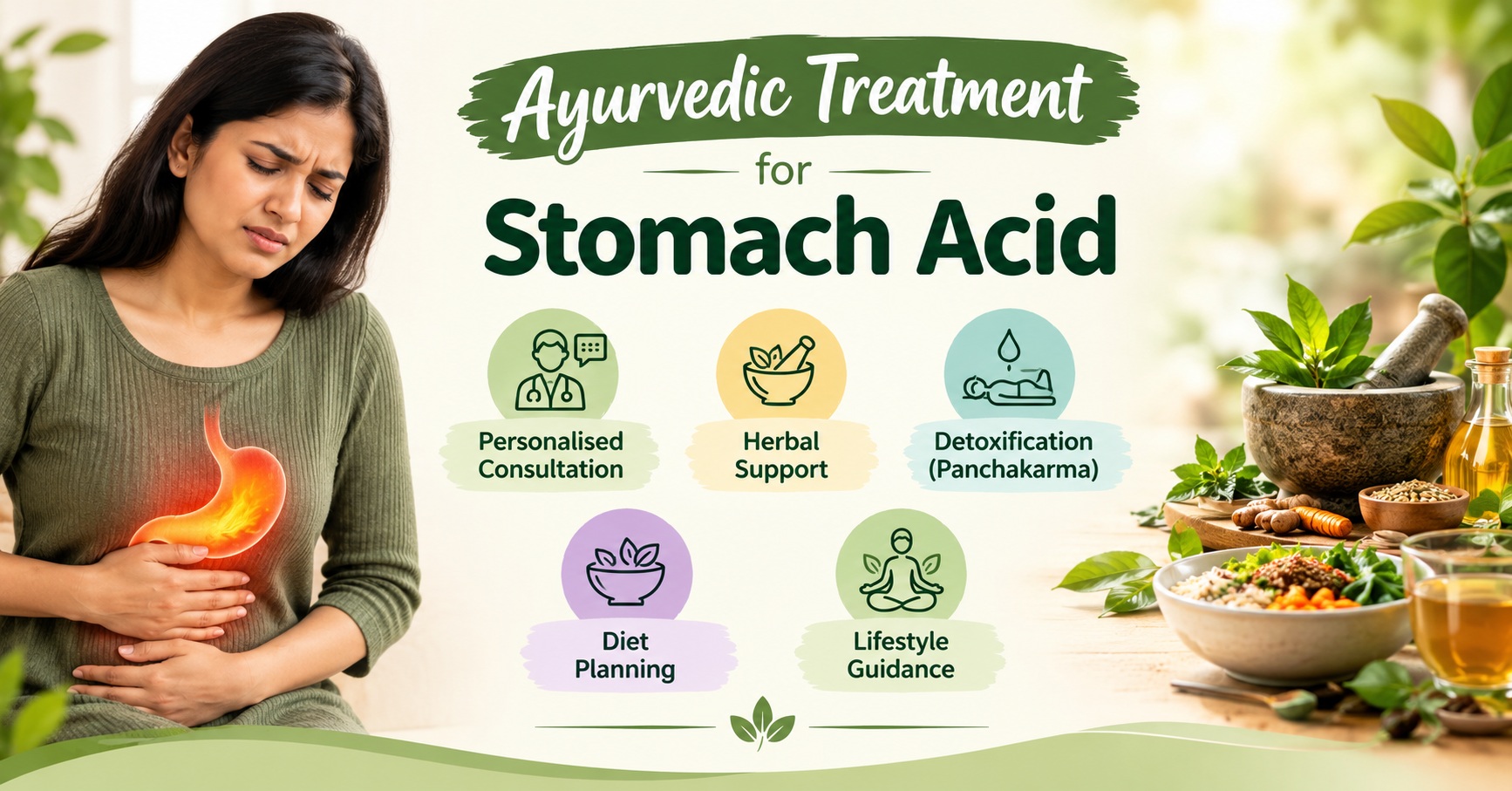
Simple habits at home can ease acidity, but they do not always fix the cause on their own. Ayurveda says good digestion depends on Jatharagni, your inner digestive fire. When this fire turns weak or uneven, acidity starts to show up.
At Jeena Sikho HiiMS Kanpur, our doctors look at what is causing your symptoms. Then they build a plan around you. Their goal is to bring your digestion back to its natural balance.
-
Personalised Consultation
First, doctors assess your symptoms, medical history, lifestyle, and body type (Prakriti). Consequently, the plan is made for you, not copied from a standard format.
-
Herbal Support
Traditional herbs such as hing, ajwain, and trikatu are used to support the digestive fire. Your practitioner selects herbs based on your needs and existing medicines.
-
Detoxification (Panchakarma)
Panchakarma therapies help the body clear accumulated toxins (ama) from the gut. As a result, your digestion works more smoothly.
-
Diet Planning
Your plate can calm your stomach. The doctors at HiiMS create a simple, pH-balanced diet for your body type. You eat fresh seasonal produce, and they show you the right time and portion for each meal.
-
Lifestyle Guidance
Finally, you receive guidance on sleep, stress, movement, and eating routines. When you follow these habits, you give your digestion a better chance to stay calm.
Jeena Sikho Organics Pet Yakrit Pleeha Shuddhi Kit: Gut Support at Home

Alongside clinical care, many people look for a simple routine at home. The Jeena Sikho Organics Pet Yakrit Pleeha Shuddhi Kit is an Ayurvedic gut detox kit made for this purpose.
Basically, the kit supports the main areas:
- Improves digestion
- Supports liver detoxification
- Helps relieve acidity
What Is in the Kit?
- Pet Shuddhi Granules
- Yakrit Pleeha Shuddhi Shots
Key Ingredients and Their Traditional Uses
The granules combine herbs such as Amla, Baheda, Harad, Bilva, Ajwain, Saunth, Saunf, Lavang, and Kala Namak, etc. The shots contain Amaltas, Harad, Baheda, Sanaya, and Amla, etc.
- Amla supports digestion and gut health.
- Baheda helps maintain intestinal balance.
- Harad supports natural detoxification and digestive strength.
- Saunf helps reduce bloating.
- Ajwain is traditionally used to relieve gas and improve the digestive fire.
How the Kit May Help
- Supports digestion and may ease bloating and acidity
- Encourages regular bowel movements
- Supports liver and spleen health
- Helps maintain appetite
- May ease stomach discomfort and cramps
How to Use the Kit (Adults)
- Take ½ to 1 teaspoon (2–2.5 g) of granules with half a glass of lukewarm water at bedtime for 6 days in continuation.
- On the 7th day, take one 30 ml Liver Shuddhi Shot at bedtime. Do not take the granules on this day.
- From the 8th day, repeat the same schedule. The full kit is designed for 28 days.
Store it in a cool, dry place. Furthermore, follow the directions of your Ayurvedic practitioner.
Important: The kit is for adults. Children, older adults, pregnant women, and people on regular medicines should consult an Ayurvedic expert first. Likewise, do not stop any prescribed medicine without speaking to your doctor.
Can Acidity Be Completely Cured?
It depends on what is causing it. Occasional heartburn often fades once you spot your triggers and fix your habits. Long-lasting GERD is different, and a doctor needs to check it. Depending on how severe it is, doctors may prescribe antacids, H2 blockers or proton pump inhibitors (PPIs). The NHS also explains these treatment options.
But remember one thing that the main goal should be to understand why symptoms keep returning, not just to suppress them each time.
When Should You See a Doctor?
Do not ignore acidity that keeps coming back or gets worse. Look for a doctor if you notice any of these warning signs:
- Pain or trouble while swallowing
- Vomiting that does not stop, or vomiting blood
- Severe stomach pain that lasts
- Weight loss without any reason
- Chest pain, especially if it feels severe
Chest pain does not always come from acidity. Sometimes the heart is the cause. So never ignore severe chest pain as gas.
A Practical Acidity-Friendly Daily Routine
- Morning: Start calmly and choose a breakfast that suits your digestion.
- Daytime: Eat balanced meals at regular times and chew well.
- Evening: Keep dinner light if heavy meals worsen your symptoms.
- Night: Leave enough time between dinner and bed. If reflux continues, speak to a healthcare professional.
Above all, consistency works better than switching between home remedies.
Conclusion
Acidity keeps coming back when we ignore the small things. Such as eating late, skipping meals, stress and too much spicy food can all bring the burning back again. The good news is that simple habits help. Like: Eat slowly, Keep regular meal times, finish dinner early, and notice which foods upset your stomach. Ayurveda also looks at digestion and daily routine, which makes it easy to follow. But if the burning stays for long, please do not ignore it. Get it checked by a doctor as soon as you can. Taking care of your gut today can save you from bigger health problems later. Need help with acidity? You can also opt for book an appointment at Jeena Sikho HiiMS Kanpur.

FAQs
Q1: Is acidity the same as GERD?
Ans. No, they are not the same. Acidity is a common word people use for burning, sour burps and an upset stomach. GERD is a medical condition where stomach acid keeps flowing back up and causes ongoing problems.
Q2: Can eating late at night worsen acidity?
Ans. Yes. Finishing meals at least three hours before lying down may help.
Q3: Which foods trigger acidity?
Ans. Triggers vary. Spicy foods, high-fat foods, chocolate, caffeine, mint, citrus and tomatoes are common ones.
Q4: What is the Ayurvedic treatment for acidity?
Ans. It usually combines diet changes, herbal support, detoxification therapies and lifestyle guidance. A qualified practitioner should individualise it.
Q5: Should I stop my acidity medicine if I choose Ayurveda?
Ans. No. Never stop prescribed medicine without your doctor’s advice. Ayurvedic care should work alongside your existing medical care.
