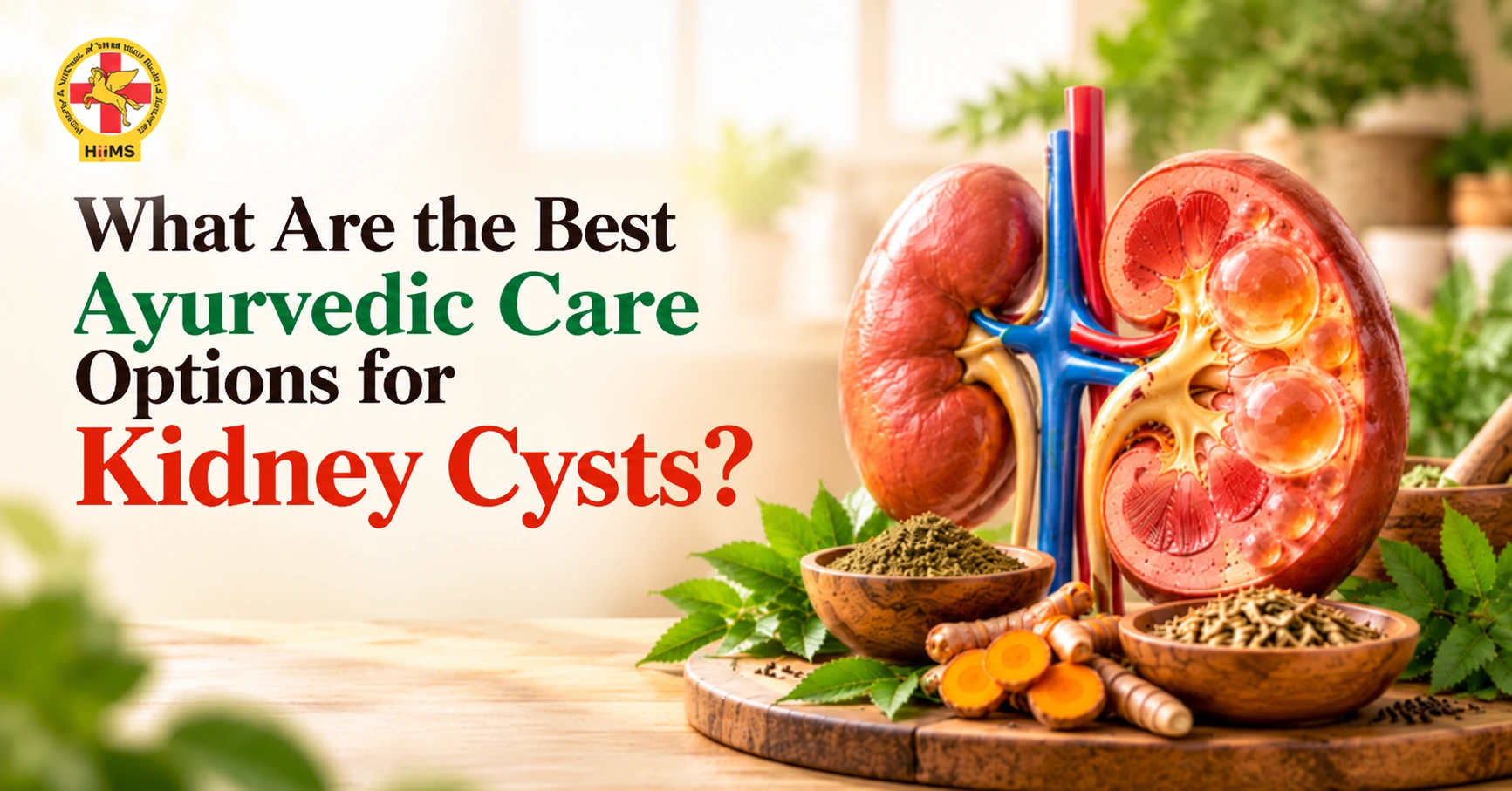

Many people first hear about kidney cysts by chance. A routine ultrasound for something else shows a small sac on the kidney. Most of these sacs are harmless. Still, the news can feel worrying. So people want to know what it means and whether natural care can help.
The good news is that simple cysts are common, mainly with age. A 2016 screening study in the Urology Journal checked 1,000 adults. It found simple cysts in 7.7% of them. They showed up in 2.7% of people under 40, but in 23.9% of those over 60. This blog explains the types of kidney cysts, when they need care and the Ayurvedic options that support kidney health.
What Are Kidney Cysts?
Kidney cysts are round sacs filled with fluid. They form on or inside the kidney. Doctors usually group them into three types:
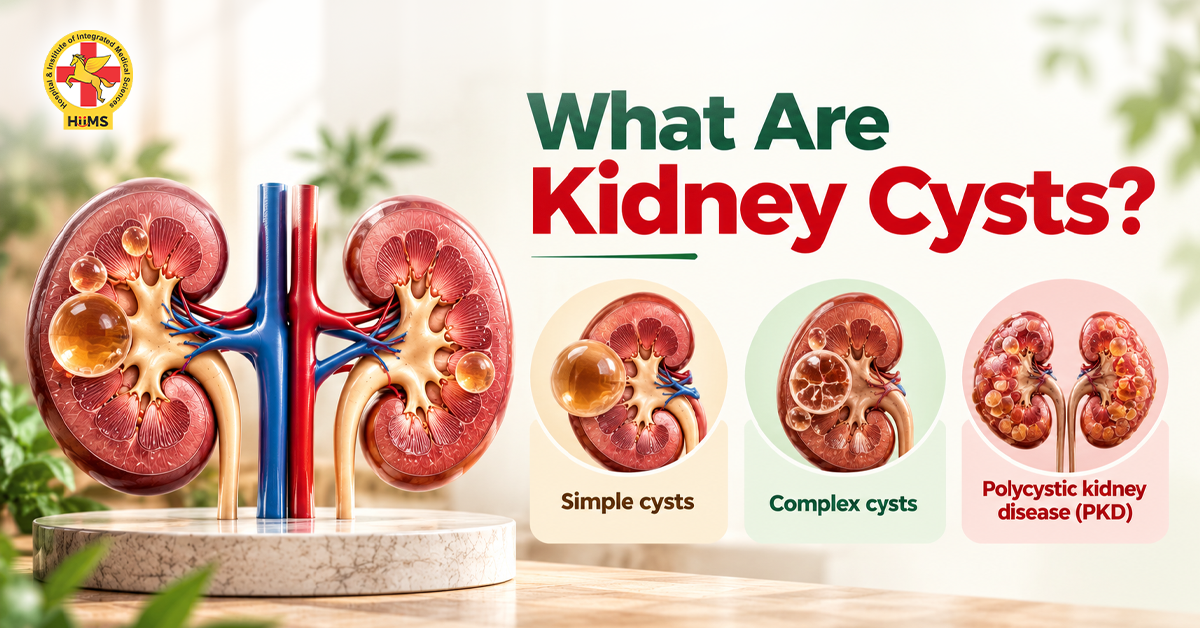
- Simple cysts: These are the most common type. They have thin walls and are usually harmless.
- Complex cysts: These have thick walls or solid parts, so doctors watch them more closely.
- Polycystic kidney disease (PKD): This runs in families. Many cysts grow over time, and they can slowly affect how the kidneys work.
Most cysts cause no trouble at all. However, some do give signs, as the next section shows.
Found a cyst in your ultrasound report and not sure what it means? Talk to our experts.
Symptoms and Causes to Know
Small cysts rarely cause any symptoms. Because of this, many people only learn about a cyst during a scan for another problem. But when a cyst grows large, you may notice:
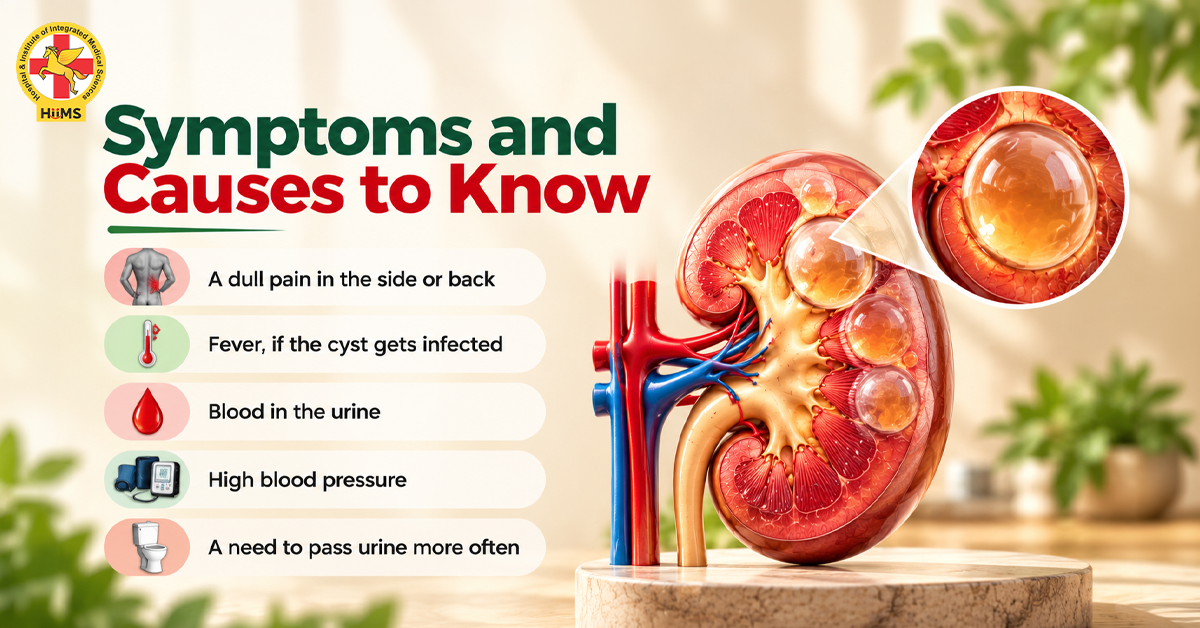
- A dull pain in the side or back
- Fever, if the cyst gets infected
- Blood in the urine
- High blood pressure
- A need to pass urine more often
Overall, age is the biggest risk factor. In addition, cysts are more common in men and in people with high blood pressure or diabetes. A family history also matters, especially in PKD.
Did you know? In the same study, about 14% of simple cysts went away on their own. The follow-up lasted about 3.5 years.
Conventional Care for Kidney Cysts and Its Limits
For small, simple cysts doctors often suggest a “watch and wait” approach. This means repeat ultrasounds to check the size. If a cyst grow large or causes pain, doctors may drain it with a needle; this is called aspiration. Sometimes, they also add a liquid after draining to stop the cyst from filling again. For bigger cysts, surgery through small cuts can remove the cyst wall. For PKD care the focus is on controlling blood pressure and using specific medicines.
However, these options have limits. For example, a drained cyst can fill up again. Surgery carries the usual risks, and PKD has no cure yet. Also, “watch and wait” can leave people anxious, with nothing active to do. Even so, regular check-ups remain important in every case.
The best Care for kidney cyst depends on its type and size. That is why many people also look for natural care that supports the kidneys along with regular check-ups.
Want to support your kidneys naturally while keeping an eye on your cyst? Speak with our doctors for expert guidance.
How Ayurveda Views Kidney Cysts
Ayurveda calls the kidneys Vrikka. They are part of Mutravaha Srotas, the channels that carry urine. In Ayurveda, a cyst is a type of Granthi, or swelling. It forms when Kapha and Meda (fat tissue) build up, while Vata adds to it.
According to Ayurveda the root cause is weak digestion (Agni). When digestion is weak, toxins (Ama) build up and block these channels. So Ayurvedic care aims to clear this block, balance Kapha and Vata, and support the kidneys as a whole. For this reason, it looks at digestion, diet, and daily routine, not just the cyst itself.
Kidney Cyst Care in Ayurveda: Best Options
Ayurveda does not depend on one remedy alone. Instead it combines several steps that work together.
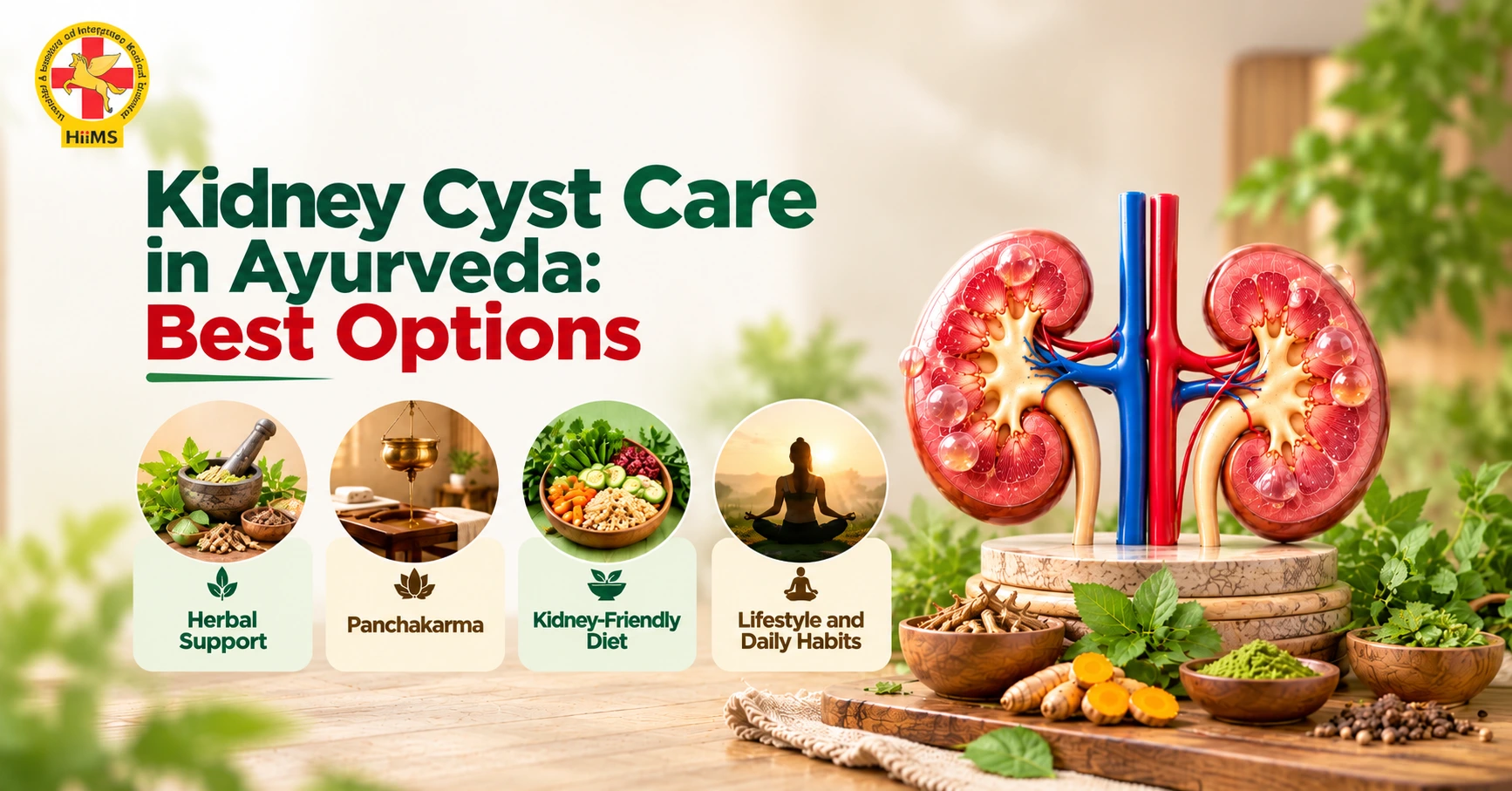
Herbal Support
First, herbs form the base of care. Punarnava supports fluid balance and helps ease swelling. Gokshura and Varuna support healthy urine flow. Kanchnar Guggulu is a classic formula that Ayurveda has long used for Granthi. Moreover herbs work best along with diet and routine changes.
Panchakarma
Next, Panchakarma offers deep cleansing therapies. Virechana, a guided gut cleanse, helps clear toxins and extra Kapha. Basti, a medicated enema helps calm Vata. The doctor picks the right therapy after a full check-up.
Kidney-Friendly Diet
Food also plays a big role in kidney care. Fresh, plant-based meals with less salt put less load on the kidneys. Also, drink the right amount of water throughout the day. Barley water and bottle gourd are traditional, light choices. On the other hand, packaged and fried foods are best to avoid.
Lifestyle and Daily Habits
For anyone wondering how to treat kidney cyst naturally, daily habits matter as much as herbs. Keep your blood pressure and sugar under control. Gentle yoga and walking help, too. Avoid smoking and the frequent use of painkillers. Finally, keep up with regular ultrasounds so you can track any change.
Some early reports support this approach. For example, a 2022 case study in the Journal of Ayurveda described one patient. This person had a 15 × 16 mm cyst in the kidney. After 6 months of Ayurvedic medicines including Kanchnar Guggulu and Gokshuradi Guggulu, the cyst had disappeared.
Wondering which Ayurvedic option suits your kidney cyst? Get personalised guidance from our expert team.
How Jeena Sikho HiiMS Hospital Derabassi Supports Kidney Health
If you are looking for an Ayurvedic hospital, Jeena Sikho HiiMS Hospital Derabassi brings these options together in one plan. As an integrated Ayurvedic kidney hospital network it combines root-cause care with modern diagnosis. Along with herbs, Panchakarma, and diet, it also offers GRAD Therapy for kidney care.
GRAD Therapy has three parts —
- Hot water immersion: Patients sit in warm water up to the neck, at about 42°C. This aims to support blood circulation and encourage sweating which some believe helps ease the overall load on the kidneys.
- Head-down tilt therapy: Patients lie on a tilted bed with their head lower than their feet. This position is used with the aim of supporting blood flow toward the kidneys.
- pH-balanced diet: It uses fresh, plant-based meals including fresh fruits and raw vegetables that are easy on the kidneys. The goal is to support digestion and reduce strain on the kidneys.
A kidney doctor at HiiMS Derabassi plans each step after studying your reports. As a result every plan fits the person, not just the scan.
Looking for natural, root-cause care for your kidneys? Visit Jeena Sikho HiiMS hospital Derabassi or book a VOPD (video consultation) with experts today.
Conclusion
Most kidney cysts are simple, harmless, and more common with age. A few grow large or form part of PKD, and these need modern care. Ayurveda looks at the root cause through herbs, Panchakarma, diet and daily habits. Jeena Sikho HiiMS hospital Derabassi adds GRAD Therapy and regular checks to this approach, so the kidneys get steady, whole-body support.
Take your first step towards lasting kidney health today. Visit Jeena Sikho HiiMS or book a VOPD (video consultation) with HiiMS experts to get the right guidance from home.

FAQs
1. Are kidney cysts dangerous?
Most simple cysts are harmless and cause no symptoms. Complex cysts and PKD, however, need regular checks by a doctor.
2. Can a kidney cyst go away on its own?
Sometimes, yes. In one study about 14% of simple cysts disappeared during follow-up.
3. How to treat kidney cysts naturally at home?
Eat fresh, low-salt meals and drink enough water. Also, control blood pressure and blood sugar, and take herbs only with expert advice.
4. Which foods are good for kidney health?
Barley water, bottle gourd, and fresh seasonal vegetables and fruits are light on the kidneys. Packaged and fried foods are best avoided.
5. Does Jeena Sikho HiiMS offer care for kidney cysts?
Yes. HiiMS offers herbs, Panchakarma, a pH-balanced diet and GRAD Therapy, planned after a doctor reviews your reports.