
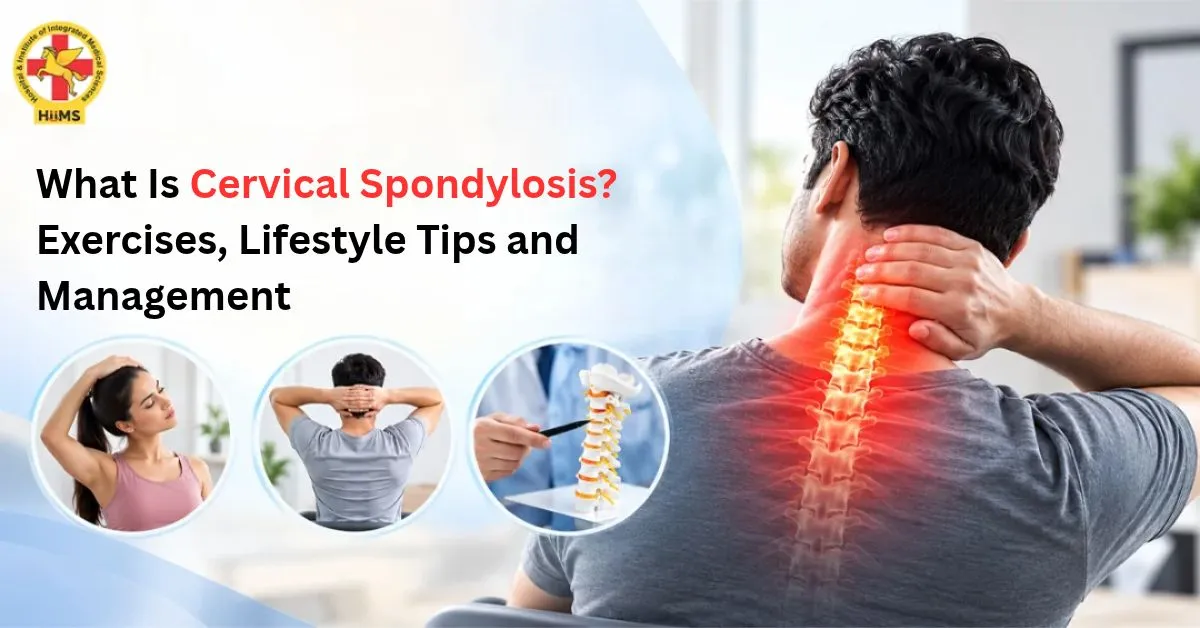

Neck stiffness after long hours on a phone or laptop is now very common. Often, the reason is cervical spondylosis. In short, this is the slow wear of the bones and discs in the neck. The good news is that exercises, better habits, and the right cervical pain management can make life much easier.
In fact, neck pain affects millions of people. A global study on neck pain found that about 203 million people had it in 2020. Moreover, this number may rise to 269 million by 2050. This blog explains what cervical spondylosis is, helpful exercises, lifestyle tips, and management options.
What Is Cervical Spondylosis?
The neck has seven small bones with soft discs between them. These discs act like cushions. With age, however, they lose water and shrink. At the same time, the small joints of the neck slowly wear down.
This can lead to the formation of small bony growths known as bone spurs in the body. These can narrow the space for the nerves. So some people feel pain, while others feel tingling in the arms.
Cervical spondylosis is very common after 40. Still, it now shows up earlier because of screens and poor posture. At first, many people have only mild stiffness. Others, though, get pain, headaches, or arm symptoms. Knowing the causes helps you protect your neck.
Neck stiffness bothering you every morning? Speak to our experts about it.
Causes and Symptoms of Cervical Spondylosis
Several things add strain to the neck over time:
- Age: The discs and joints naturally wear down after 40.
- Text neck: Bending over phones and laptops puts a heavy load on the neck. In fact, the head feels much heavier when it tilts forward.
- Poor sleep posture: A high pillow or sleeping on the stomach twists the neck for hours.
- Heavy loads: Carrying weight on the head or one shoulder strains the neck.
- Old injuries and less movement: Past neck injuries and a lack of exercise also add to the risk.
Generally, the symptoms build slowly. They include neck pain and stiffness, pain that spreads to the shoulders, and headaches at the back of the head. Some people also feel a grinding sound when they turn their neck. Similarly, others notice tingling in the arms or hands.
However, some signs require prompt attention. See a joint pain doctor in Bikaner soon if you notice weakness in the arms or hands, numbness, or trouble with balance. Changes in bladder control also need urgent attention.
For most people, though, gentle exercise is the best place to start.
Exercises for Cervical Spondylosis
Gentle, regular movement keeps the neck flexible. It also strengthens the muscles that support it. As a result, these exercises offer steady joint pain relief. Do them slowly, once or twice a day.
Chin Tucks
Sit or stand tall. Then gently pull your chin straight back, as if making a double chin. Hold for 5 seconds and repeat 10 times. Above all, this exercise corrects the forward-head posture that phones cause.
Side Neck Stretch
Slowly tilt your right ear toward your right shoulder. Hold for 15–20 seconds, then switch sides. This stretch eases tight muscles along the sides of the neck.
Slow Neck Turns
Turn your head to the left as far as you feel comfortable. Hold for a few seconds, then turn to the right. Likewise, repeat 5–10 times. This keeps the neck moving and reduces stiffness.
Shoulder Rolls and Blade Squeezes
Roll your shoulders backwards in slow circles 10 times. Next, squeeze your shoulder blades together and hold for 5 seconds. Together, these relax the upper back and support good posture.
Isometric Neck Holds
Place your palm on your forehead. Press your head into your hand without moving it. Hold for 5 seconds. Then repeat with your hand on each side of the head. Thus, it builds neck strength safely, without strain.
Yoga Poses
Bhujangasana, Marjariasana and Makarasana gently stretch the spine. Research supports yoga too. A randomised trial included 51 adults with long-term neck pain. After 9 weeks the yoga group had less pain than the home exercise group. They also showed better movement and quality of life.
Safety tip: Move slowly and avoid rapid neck circles. Also, stop if pain or tingling gets worse.
Along with exercise, small daily habits make a big difference.
Lifestyle Tips to Protect Your Neck
Equally, your daily routine can either strain your neck or protect it. These simple changes help:
- Fix your screen height: Keep your laptop screen at eye level. Similarly, hold your phone up instead of bending your head down.
- Take short breaks: Get up and stretch for 2 minutes after every 30–40 minutes of desk work.
- Choose the right pillow: Use a low, firm pillow. Also, sleep on your back or side not on your stomach
- Carry loads evenly: Use a backpack with both straps instead of a heavy bag on one shoulder.
- Use warm compresses: A warm towel on the neck eases morning stiffness.
- Eat warm, fresh food: Ayurveda suggests warm meals to keep Vata calm. Besides, staying active helps your joints.
Even so, some people need more support to manage their pain.
Want an exercise and posture plan that suits your neck? Our team can guide you.
Cervical Pain management: Conventional and Ayurvedic Views
Doctors usually suggest physiotherapy, painkillers or muscle relaxants. Sometimes, they suggest a soft collar for short periods. Surgery is needed only when the nerves face serious pressure. However, medicines mostly give short-term relief, and the stiffness often comes back.
Ayurveda takes a different route to joint pain management. It calls neck stiffness Manyastambha. It links the problem to aggravated Vata, the dosha that controls movement. Also, weak Asthi dhatu, or bone tissue, adds to it. In addition, poor digestion creates ama, or toxins, which can block the body’s channels.
So the Ayurvedic goal is to calm Vata, nourish the joints, and ease stiffness. Jeena Sikho HiiMS Bikaner builds its neck care on this same root-cause idea.
Cervical Pain management at Jeena Sikho HiiMS
Jeena Sikho HiiMS is an integrated hospital that combines Ayurveda, Naturopathy and modern science. It follows a root-cause approach to support cervical pain. Their joint pain specialists check your daily routine, posture, reports, pulse, and digestion. Then they plan your care. The care plan includes:
Greeva Basti
In Greeva Basti, the therapist places a ring of dough on the back of the neck. Then they fill it with warm herbal oil and leave it there for some time. The warmth and oil ease stiffness and nourish the tissues around the neck.
Abhyanga and Swedana
Abhyanga uses warm herbal oil to massage the neck, shoulders, and back. Then Swedana, or herbal steam, follows. Together they relax tight muscles and calm Vata.
Patra Potli
Patra Potli uses cloth bundles filled with fresh herbal leaves. The therapist heats them in herbal oil and gently presses them on the neck and shoulders. As a result, pain and muscle spasms ease.
Panchakarma
Panchakarma helps cleanse the body and balance the doshas.
- Nasya: The therapist puts herbal oil drops into the nose. Ayurveda uses Nasya for head and neck conditions. Thus, it helps ease neck stiffness and headaches linked to the neck.
- Basti: This medicated enema balances Vata from within. In fact, Ayurveda considers it the main therapy for Vata problems.
The doctor picks the right procedure after a check-up.
Herbal Support
Ayurveda has long used Shallaki, Guggul, Ashwagandha, Nirgundi and Rasna for joint health. These herbs help ease swelling, calm Vata, and support the muscles. Take them only with a doctor’s advice.
pH-Balanced Diet
pH-Balance diet is rich in fresh fruits and raw vegetables. The diet stays warm, fresh and mostly plant-based. Warm soups, cooked vegetables, whole grains and a little ghee help calm Vata. On the other hand, cold, dry and packaged food can make stiffness worse. Also, fixed meal times support better digestion.
Lifestyle Balance
Daily yoga and gentle neck exercises keep the joints moving. Meanwhile, good posture at the desk and a low pillow at night protect the neck. Besides, regular sleep and short stress breaks help the muscles relax.
Every plan comes after a check-up, and results vary. With the right cervical pain management, many people move more freely again. However, weakness or numbness in the arms always needs urgent attention.
Conclusion
Cervical spondylosis is the slow wear of the neck bones and discs. Screens, poor posture, and age worsen it. Gentle exercises, yoga, and simple posture habits help a lot. On top of this, Ayurveda adds Greeva Basti, Nasya, Basti, herbs, and a warm diet. Overall, cervical pain management works best when it combines daily care with the right expert guidance.
Talk to a Jeena Sikho HiiMS doctor via VOPD (video consultation) about your neck pain. The doctor will guide you on exercises, diet, and care.

FAQs
1. Can cervical spondylosis be managed without surgery?
Yes, most people manage it well with exercises, posture changes and supportive care. Surgery is needed only in a few serious cases.
2. Which exercise is best for cervical pain?
Chin tucks are one of the most useful. They correct forward-head posture and ease strain on the neck.
3. Which pillow is good for cervical spondylosis?
A low, firm pillow that keep your neck in line with your spine work best.
4. When should I see a joint pain specialist?
See one if the pain lasts for weeks or spreads to your arms. Also, get checked quickly for numbness or weakness.
5. Is Greeva Basti helpful for neck pain?
Greeva Basti uses warm herbal oil to ease stiffness and nourish the neck. The doctor decides if it suits you after a check-up.