
Heart disease is something most people only give thought to if there is a serious problem. But in fact, it is slowly built up over time through daily habits. Many people assume that it only affects older age but small lifestyle patterns can start affecting heart health much earlier. What makes it confusing is that there are often no clear warning signs in the beginning. You may feel normal, continue with your routine, and still be moving towards a problem without realizing it. That is why understanding what heart disease is and how to prevent it becomes important before things get serious.
The purpose of this blog is simple. To understand heart disease in a practical way, notice the early signs of heart disease, and focus on simple things you can start today to reduce the risk and support long-term heart health.
What Is Heart Disease?
Let us understand what heart disease is in simple terms. “Heart disease” is a term that refers to conditions that affect how the heart works. It can block blood flow, weak heart muscles, or rhythm problems. The heart works continuously to pump the blood through the body. Lifestyle or other factors can disrupt this process, leading to discomfort or serious complications over time.
Signs of Heart Disease
Although heart disease may not exhibit clear symptoms initially, some early signs can still be detected:
- Shortness of breath during simple activities.
- Chest discomfort or tightness.
- You may experience fatigue for no apparent reason.
- Irregular heartbeat.
- Swelling in legs or feet.
These signs may seem small at first, but paying attention early can help avoid bigger problems later.
What Leads to Heart Problems in Daily Life?
Usually, it is not one single reason. It is a mix of everyday habits:
- Unhealthy eating patterns.
- Lack of physical activity.
- Stress and poor sleep.
- Smoking or alcohol.
- Being overweight.
These factors slowly affect heart health if not managed in time.
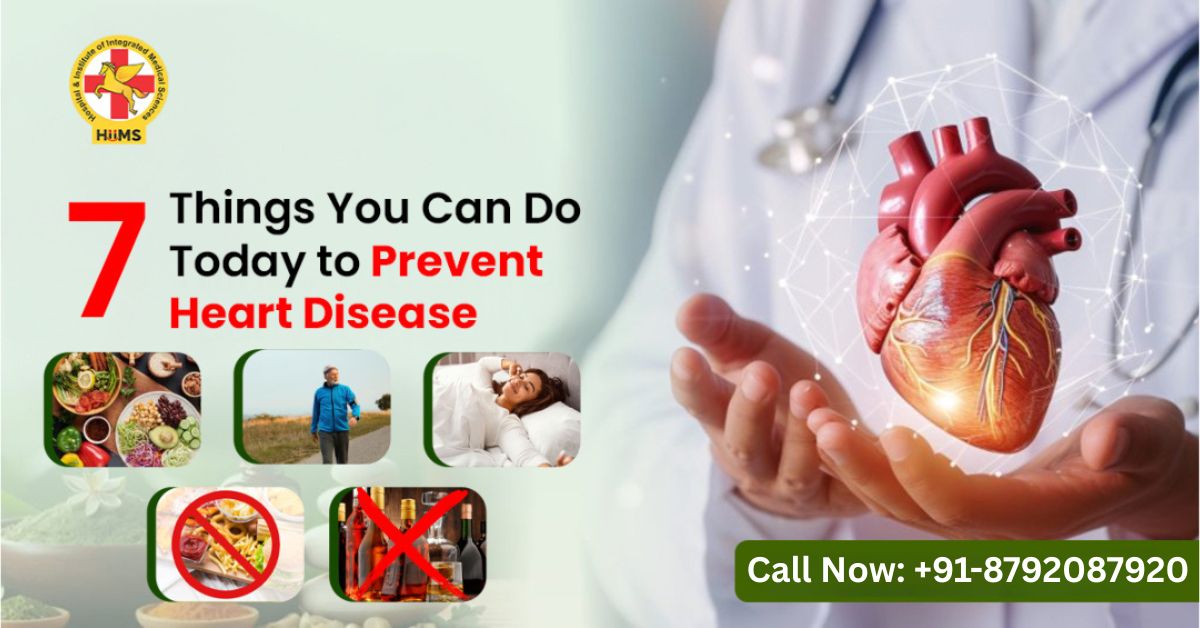
7 Things You Can Do Today to Prevent Heart Disease
You do not always need complicated changes. Simple steps done consistently can make a real difference.
- Keep Your Diet Simple and Balanced
What you eat daily directly affects your heart. Focus on fresh food, include fruits and vegetables, and avoid excess oily or processed items. A balanced diet helps maintain better heart function over time. - Stay Physically Active
You do not need intense workouts. Even simple walking or light activity daily helps improve circulation and keeps the heart active. - Manage Stress
People often overlook stress, a crucial factor in heart health. Spending time off, maintaining a schedule, and not being in a hurry to always perform can assist. - Maintain Healthy Weight
Extra weight exerts pressure on the heart. Keeping weight under control by eating right and being active helps to maintain overall health. - Avoid Smoking and Limit Alcohol
These habits can have a direct impact on heart health over time. Reducing or avoiding them can significantly reduce the risk. - Get Proper Sleep
Sleep helps the body to recuperate and maintain balance. Poor sleep over time can impact heart function. - Pay Attention to Early Signs
Do not ignore small symptoms. The complications can be avoided by knowing the symptoms of heart disease and acting in time.
Heart Care at Jeena Sikho HiiMS
Often, people only take action when the condition becomes serious. Acting in time can make things easier to handle later. At Jeena Sikho HiiMS, the focus is on natural and practical heart disease treatment, where doctors usually:
- Guide patients on diet and daily routine.
- Simple lifestyle changes can help keep your heart functioning well.
- Use Ayurvedic support to maintain internal balance.
- The aim is to understand what is causing the problem, not just manage how it feels.
This approach helps support heart health in a more structured and long-term way.
When to Seek Guidance?
- You notice signs of heart disease regularly.
- You tend to be breathless or tired.
- There is pain in the chest.
- Lifestyle changes are not working.
Getting guidance early helps to manage the condition better.
Conclusion
Heart disease doesn’t occur overnight, but the good news is that a few simple daily habits can often prevent it. Understanding what heart disease is, and recognizing early signs can help you to take action at the right time. Small changes in diet, routine and lifestyle can help in the long run with heart health. If you feel lost, or need some guidance about heart disease treatment, you can call +91 8792087920 or email care@jeenasikho.com to know what steps may work best for you.

FAQs
1. Heart disease in simple terms?
It refers to conditions that affect the way the heart works and pumps the blood in the body.
2. What are the early signs of heart disease?
Commonly noticed signs are shortness of breath, chest discomfort and unusual tiredness.
3. Can heart disease be prevented naturally?
Healthy lifestyle habits such as proper diet, activity and stress control help to reduce risk.
4. What kind of diet is good for the heart?
Fresh food, fruits, vegetables and low-processed foods help maintain the better functioning of the heart.
5. When should medical advice be considered?
If the symptoms are appearing regularly or begin to impact daily life, then proper guidance becomes important.