

Heavy head in the morning. Sharp pain on one side of the forehead. Sensitivity to light. Sudden nausea during work. Migraine slowly affects daily life more than most people expect. Many people try painkillers for temporary comfort, but the discomfort often keeps returning after some time. This is why many families now explore therapy for migraine through Ayurveda and supportive wellness methods.
Migraines are not just normal headaches. It’s not just “a bad headache.” Migraine is actually a neurological issue that quietly affects daily life, mood, focus, sleep, and even digestion for many people. Sometimes the pain feels like throbbing pressure on one side of the head.
Other times, people deal with irritation, vomiting, weakness, heaviness around the eyes, or extreme sensitivity to light and sound. Stress, poor sleep, too much screen exposure, emotional pressure, irregular eating, and disturbed body balance often make things worse without people fully noticing it at first.
At Jeena Sikho HiiMS, many people now explore therapy for migraine through Panchkarma, supportive Ayurvedic therapies, relaxation-focused wellness methods, lifestyle correction, and herbal guidance. The idea in Ayurveda is not to simply block discomfort for a few hours. Instead, the focus usually stays on helping the body slowly regain better internal balance and calmer nervous system support over time.
Understanding Migraines and Why People Explore Therapy for Migraine
Some people experience episodes once in a while, while others struggle every few days. For some, the pain lasts a couple of hours. For others, it completely disturbs the whole day. A few common signs people often talk about include:
- Throbbing pain in the head
- Sensitivity to light or sound
- Nausea or vomiting
- Eye heaviness
- Irritation or restlessness
- Neck stiffness
- Weakness or fatigue
- Difficulty focusing
Stress quietly plays a major role.Poor sleep, irregular eating habits, dehydration, mental stress, hormonal imbalance and overexposure to screens could gradually provoke recurring episodes. Painkillers can relieve pain for a short period, but many patients find that the problem recurs again and again. Because of this, people now explore supportive migraine solution approaches that focus on long-term balance naturally.
This is one reason many people now explore therapy for migraine through Ayurveda because it focuses on the whole body rather than temporary relief only. At Jeena Sikho HiiMS, supportive wellness approaches focus on detoxification, body balance, stress support, and overall wellness.
How Panchkarma Works as a Therapy for Migraine
Ayurveda believes that toxins, stress, disturbed digestion, and dosha imbalance can slowly affect the nervous system and the head region. Panchkarma is traditionally used to support internal cleansing and naturally improve body balance.
Many people now consider Panchkarma as a supportive migraine relief approach because the therapies focus on both physical and emotional wellness.
Vamana Therapy
This supportive cleansing therapy is traditionally associated with removing excess toxins from the upper body region. Ayurveda links it to balancing Kapha-related imbalances.
Virechana Therapy
Virechana focuses on internal cleansing through controlled detox support. It is commonly explored for body heat balance and digestive cleansing.
Basti Therapy
Basti is often explored to balance Vata dosha, which Ayurveda strongly connects with headaches, nervous system imbalance, and stress-related discomfort.
Nasya Therapy
Nasya is one of the most commonly explored therapies for head-related wellness. Medicated oils or drops are carefully administered through the nose under guidance. Ayurveda considers the nasal pathway closely connected with the head region.
Many people exploring therapy for migraine often prefer Nasya because it is traditionally associated with head cleansing and mental calmness.
Raktamokshana
In some chronic cases, supportive detox methods like Raktamokshana may also be explored under proper Ayurvedic supervision for internal cleansing support.
Special Ayurvedic Therapies for Migraine Management
At Jeena Sikho HiiMS, supportive Ayurvedic therapies are often explored alongside Panchkarma to help people feel calmer, lighter, and mentally more relaxed.
Shirodhara Therapy
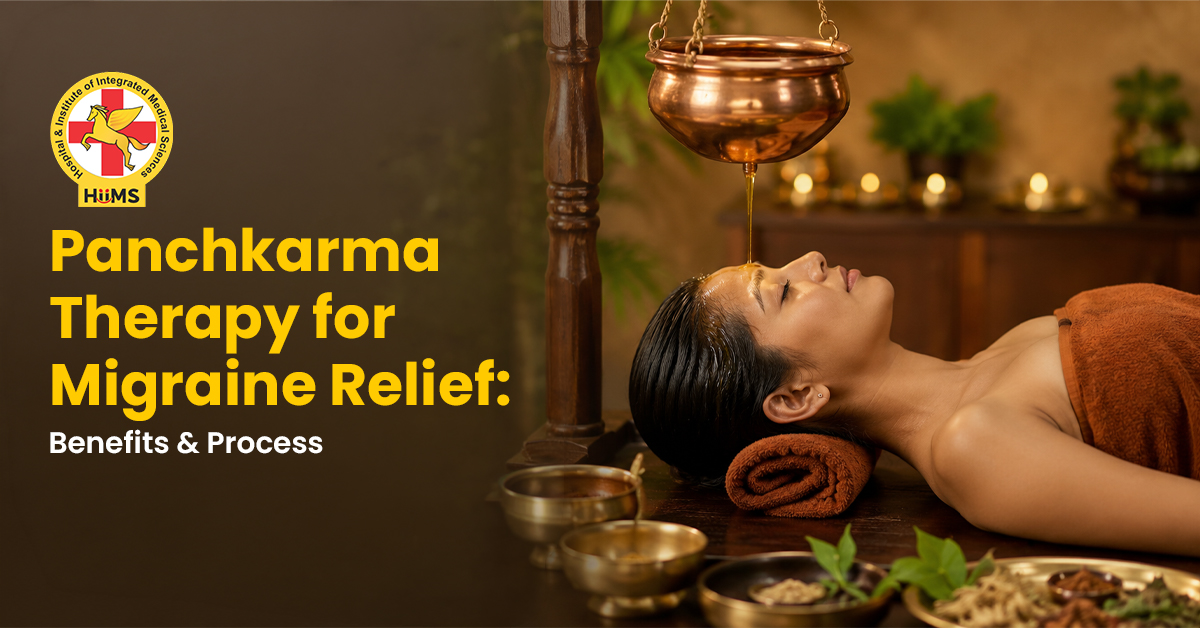
Shirodhara is one of the most commonly explored supportive therapies for migraine wellness. In this therapy, warm, medicated oil is continuously applied to the forehead for a specified duration.
Many people describe the therapy as deeply relaxing. Stress reduction and mental calmness are often associated with this process.
Abhyanga Therapy
Abhyanga is a warm, herbal-oil massage therapy that supports circulation, relaxation, and emotional calm. Many migraine sufferers experience body stiffness and stress-related tension. Supportive massage therapies often help people feel physically lighter.
This is why people exploring migraine management through Ayurveda often combine Abhyanga with Panchkarma support.
Daily Habits Also Affect Migraines Deeply
Honestly, therapies alone may not help much if daily routines continue disturbing the body constantly. Migraines often respond slowly when lifestyle habits improve consistently. Supportive habits people commonly explore include:
- Sleeping on time
- Reducing screen exposure
- Staying hydrated
- Avoiding skipped meals
- Managing stress levels
- Walking regularly
- Limiting excessive caffeine
- Following balanced food habits
Many people also search for migraine cure methods online without understanding that long term balance usually needs consistent routine improvement too.
This is why Ayurveda focuses on food, sleep, digestion, stress, detoxification, and body balance together, rather than isolated symptom control.
Conclusion
Migraine slowly affects energy, focus, sleep, emotions, and daily life more deeply than many people realise. Stress, poor routines, emotional pressure, disturbed digestion, and excessive screen exposure often quietly worsen the condition over time. This is why many people today explore therapy for migraine through Ayurveda and Panchkarma for supportive long-term balance.
At Jeena Sikho HiiMS, supportive wellness approaches focus on naturally detoxifying, relaxing, balancing the body, and supporting the nervous system. Panchkarma therapies, Shirodhara, Nasya, Abhyanga, and herbal wellness support are commonly combined for overall wellness.
If you are still uncertain about which direction may be best suited to your condition, you may also explore a VOPD consultation with the specialists at Jeena Sikho HiiMS and get a deeper understanding of your health issue.

FAQs
1. What is Panchkarma therapy for migraine?
Panchakarma is a procedure of purification in Ayurveda used in migraine wellness care to cleanse, support with stress and bring the body to equilibrium.
2. What treatment is often studied for migraine relief?
Migraine related discomfort is often investigated with supportive therapies like Shirodhara and Nasya.
3. Can stress trigger migraines?
Yes emotional stress and poor sleep are commonly linked with repeated migraine episodes.
4. Which herbs are traditionally associated with migraine wellness?
Brahmi, Ashwagandha, Giloy, Ginger and Shankhpushpi are commonly investigated in Ayurveda.
5. What draws people to try ayurveda for migraine management?
The reason Ayurveda is popular with many people is its natural focus on purification, lifestyle adjustment, relaxation, and long-term balance.
Disclaimer: The information provided on this blog is for general educational and informational purposes only. It is not intended to replace professional medical advice, diagnosis, or treatment. Always consult a qualified healthcare professional before making any changes to your diet, lifestyle, or treatment plan. Individual results may vary.