

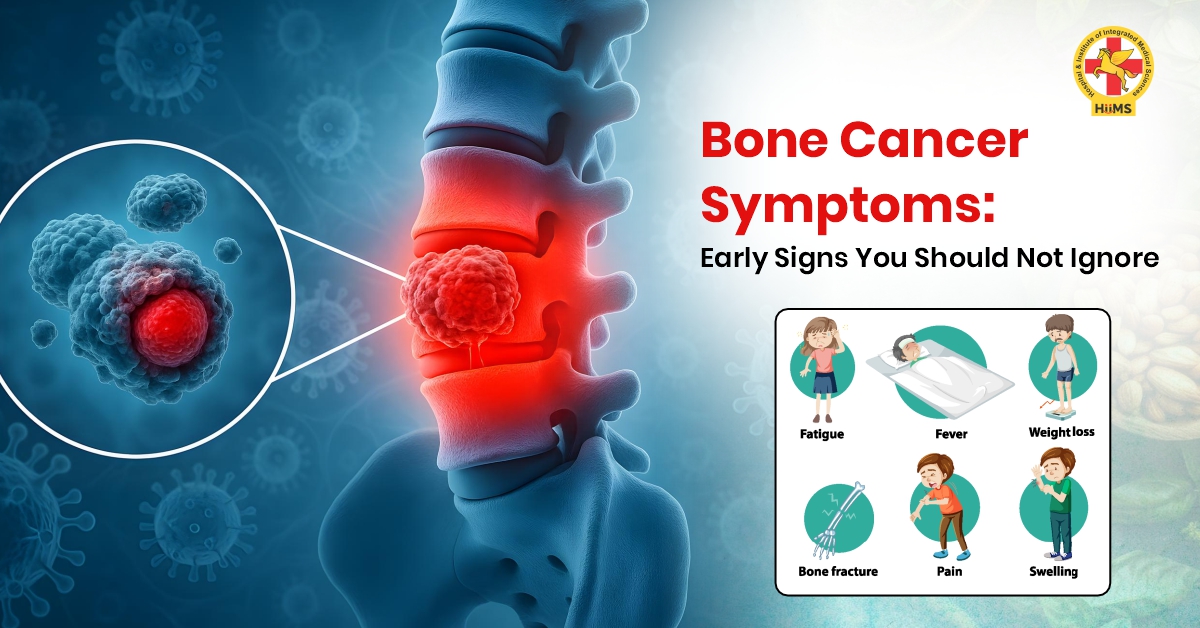
Most people do not think twice when they feel a sore patch in the leg, a stiff shoulder, or a strange ache that keeps coming back. They explain it as a strain, any kind of old injury, too much walking, or just a tired body after a long day. That is exactly why bone cancer symptoms often stay hidden for too long.
The early discomfort may look ordinary, but the pattern of symptoms usually tells a different story when the pain keeps returning, swelling slowly builds up, or movement starts feeling awkward without a clear reason. A person may keep waiting for it to settle, only to realize later that the signs were trying to say something important.
This blog helps you notice those changes early, understand what they may mean, and see why timely attention is so important before the condition gets harder to manage.
What Is Bone Cancer?
Bone cancer starts when some cells inside the bone grow in an unusual way and slowly weaken the bone’s normal structure. Sometimes the cancer starts in the bone itself, and sometimes it reaches the bone from another part of the body. People often miss the early signs of bone cancer because they do not look suspicious at the beginning. The pain may feel small at first, and the swelling may appear slowly, so it does not raise any kind of concerns right away.
Early Signs Of Bone Cancer You Should Not Ignore
Persistent Bone Pain That Does Not Settle
One of the most common bone cancer symptoms is pain that stays in one area and keeps coming back. It may start as a dull ache, then gradually become deeper and harder to ignore. Many people notice it more at night or after normal movement, while rest does not bring the kind of relief they expect. This is where the symptoms of bone tumor can get confusing, because the pain may feel similar to a strain or joint problem. The difference is that this discomfort stays with the body instead of fading away.
Swelling Or A Lump Near The Bone
Another sign people should not ignore is swelling near a bone or joint. It may feel firm, tender, or even warm when touched. In some cases, a small lump appears first and grows little by little over time. These bone cancer warning signs may show up after the pain has already started, which is why many people miss the connection.
Weak Bones And Sudden Fractures
Cancer can make a bone weaker from the inside, and that weakness may show up as a fracture after a small fall or even a simple movement. A break in the bone that seems too easy should never be ignored, especially if the person did not suffer a major injury. Repeated fractures can point to deeper symptoms of bone tumor rather than a random accident.
Difficulty In Movement Or Joint Stiffness
Some people begin to feel difficulty while bending, stretching, or walking like before. The joint may feel stiff, movement may become slower, and limping can start without any proper reason. These early signs of bone cancer often appear when the affected area is close to a joint. Normal daily activities such as climbing stairs, sitting for long, or raising the hand to pick something from above may slowly start feeling uncomfortable.
Constant Tiredness And Low Energy
Constant tiredness may also appear when the body is dealing with a serious health problem. Even after resting properly, some people may keep feeling low on energy, may not feel hungry like before, or may suddenly become thinner without changing anything in their routine. Some people may also experience fever or sweating during sleep in certain cases. These changes alone do not confirm cancer, but they may appear along with bone cancer symptoms and should not be ignored when they continue without any clear reason.
Causes Of Bone Cancer And Risk Factors
The causes of bone cancer are not always easy to trace, but certain factors can raise the risk. A family history of bone cancer, prior radiation exposure, Paget’s disease of bone, and some inherited genetic conditions can play a role. During teenage years, when bones grow quickly, the risk may also appear higher for some types. Even then, bone cancer can still develop in people who do not have any known risk factor, which is why symptoms are important just as much as history.
Symptoms Of Bone Tumor Often Confused With Other Problems
A lot of people mistake the early warning signs for arthritis, sports injuries, muscle strain, or normal growing pain. That delay happens because the body keeps functioning for a while, even when something is not right underneath. Pain that continues for more than two or three weeks, swelling that slowly increases, or movement that starts becoming difficult with time should not be ignored. Recognizing bone cancer symptoms early can make a real difference in how soon a person gets help.
When Should You See a Doctor?
Healthcare guidance becomes important when pain does not settle, a lump keeps growing, a bone breaks too easily, or stiffness starts affecting normal life. These changes should not sit in the “I will watch it for a few more weeks” category. The sooner a cause is found, the sooner the right care can get started. A calm evaluation is always better than letting uncertainty grow.
Conclusion
Bone pain, swelling, weakness, or stiffness may look ordinary in the beginning, but the body often leaves clues before a bigger problem develops. Noticing these changes on time may help a person seek support earlier before the discomfort starts affecting daily life more seriously. Bone cancer symptoms deserve care when they continue, return, or start disturbing normal movement and daily comfort.
Early attention does not create fear. It creates clarity, and that is usually the better path. For guidance on your health concerns, you can also opt for an online video consultation (VOPD) with the expert doctors at Jeena Sikho HiiMS.

FAQs
- What are the first signs that may point to bone cancer?
Long-lasting bone pain, swelling near a joint, stiffness, and unexplained weakness are among the first changes people often notice. - How does bone cancer pain usually feel?
In many people, the pain begins mildly at first and then slowly starts troubling more often with time. - Can bone cancer be mistaken for common body pain?
Yes, many people confuse it with arthritis, sports injuries, or muscle strain because the early symptoms can look similar. - Which risk factors are linked with bone cancer?
The chances may become higher in people who have someone in the family with this disease, received heavy radiation earlier, or already have certain long-term bone-related health problems. - When should bone pain be checked by a doctor?
If bone pain does not settle for many days, keeps troubling again after some time, or makes walking and movement difficult, then it becomes important to get it checked.
Disclaimer: The information provided on this blog is for general educational and informational purposes only. It is not intended to replace professional medical advice, diagnosis, or treatment. Always consult a qualified healthcare professional before making any changes to your diet, lifestyle, or treatment plan. Individual results may vary.