


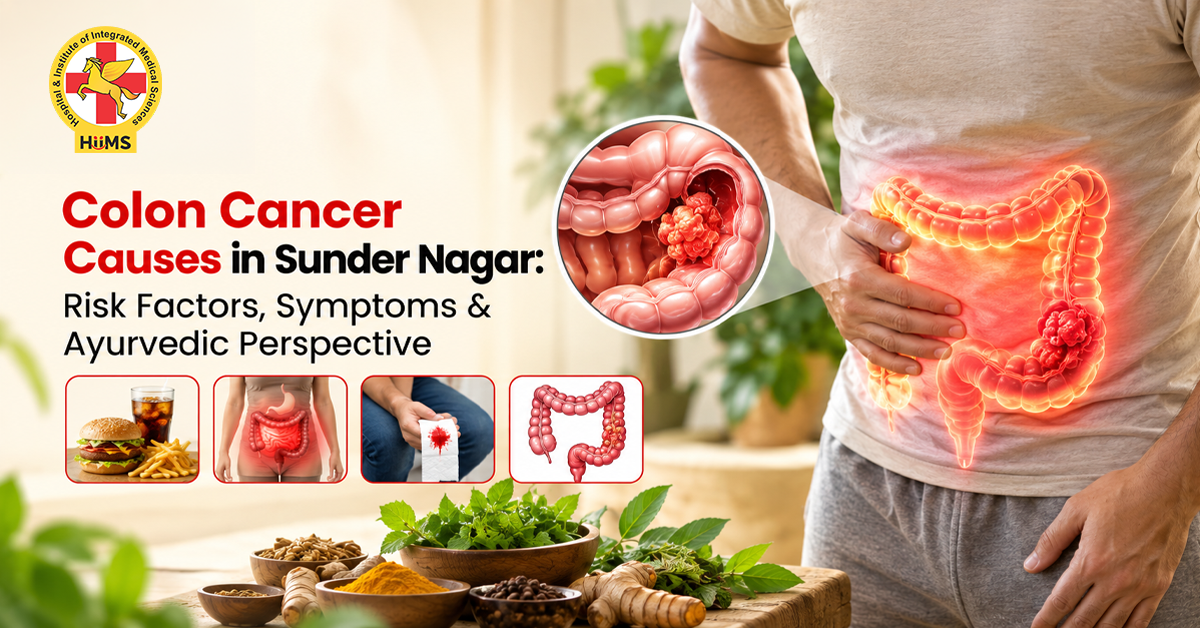
Colon cancer is often treatable when it is found early. Because of this, knowing the main colon cancer causes can make a real difference. First, it helps you spot your risks. It also helps you act on warning signs before they become serious.
Early action matters in Himachal too. A five-year study from IGMC Shimla followed 165 colorectal cancer patients from the state. Surprisingly, about one in three were under 50 years old. Moreover, nearly 7 in 10 patients reached the hospital only at stage III or IV. This blog explains the causes, risk factors, symptoms, and the Ayurvedic view of colon cancer.
What Is Colon Cancer? Understanding Colon Cancer Types
Colon cancer starts in the large intestine, also called the colon. In most cases, it begins as a small growth called a polyp. Generally, these polyps stay harmless. However, some slowly turn into cancer over several years.
Doctors group colon cancer types by the cells where they begin:
- Adenocarcinoma: This is the most common type. It starts in the gland cells that line the colon.
- Mucinous and signet ring cell types: These are less common, but they tend to grow faster. In fact, 15% of patients in the Himachal study had the signet ring type.
- Rare types: Carcinoid tumours, GIST, and lymphoma can also affect the colon, though rarely.
Have questions about your colon health? Talk to our experts for clear guidance.

Colon Cancer Causes and Risk Factors
There is rarely one single reason behind it. Instead, colon cancer causes usually include a mix of diet, habits, age, and genes. Here are the main risk factors of colon cancer.
Low-Fibre, Highly Processed Diet
Fibre keeps the bowel moving. So when the diet lacks fibre, waste stays in the colon for longer. As a result, harmful substances stay in touch with the colon lining. Processed food also adds to the risk. For example, the World Health Organization’s cancer agency, IARC, found a clear link here. Every 50 grams of processed meat eaten daily raises colorectal cancer risk by 18%.
Physical Inactivity and Excess Weight
Long hours of sitting can slow down digestion. Similarly, extra weight around the belly is linked to ongoing inflammation in the body. Eventually, both raise the risk.
Smoking and Alcohol
Tobacco and alcohol expose the gut lining to harmful chemicals. Therefore, the longer these habits continue, the higher the risk.
Age
Risk rises after the age of 50. Still, the Himachal study found that a third of patients were younger. So young adults should not ignore warning signs either.
Family History and Inherited Conditions
Your risk is higher if a parent, brother, or sister has had colon cancer. Besides this, inherited conditions such as Lynch syndrome and FAP raise the risk sharply.
Long-Term Bowel Inflammation and Diabetes
Ulcerative colitis and Crohn’s disease keep the colon swollen for years. Likewise, type 2 diabetes is linked to a higher risk.
Worried about your family history or lifestyle? Our experts can help you understand your risk.
Colon Cancer Symptoms You Should Not Ignore
Initially, colon cancer may cause no signs at all. However, as it grows, these colon cancer symptoms may appear:
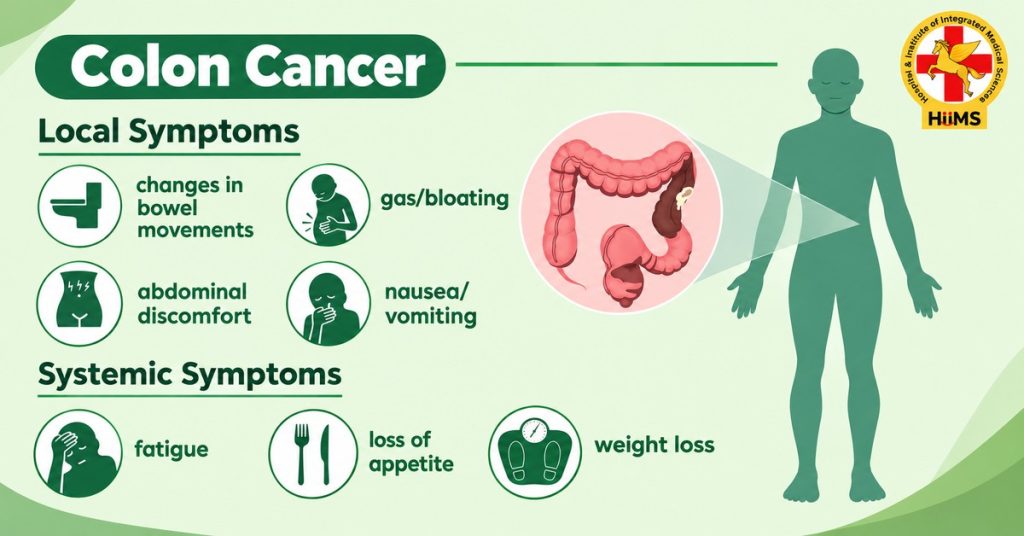
- Change in bowel habits: Constipation, loose motions or thin stools that last for weeks.
- Blood in the stool: Bright red blood or dark stools that look like tar.
- Stomach pain: Cramps, gas, or bloating that keeps coming back.
- A feeling that the bowel isn’t empty: even right after you pass stool.
- Weight loss and tiredness: Losing weight without trying or feeling weak due to low blood levels.
In the Himachal study 97% of patients had weight loss or low appetite, while 82% had anaemia. Sadly, many noticed these signs late.
Conventional Treatment for Colon Cancer and Its Side Effects
Doctors usually treat colon cancer with surgery first; during surgery, they remove the affected part of the colon. Then chemotherapy is often given to destroy any remaining cancer cells. In some cases, doctors also use radiation or targeted therapy.
These treatments are important, but they can be hard on the body. Common side effects include:
- Tiredness and weakness
- Nausea and poor appetite
- Changes in bowel habits
- Low immunity, so infections happen more easily
- Tingling in the hands and feet
Recovery can also take months. Because of this, many patients look for supportive care that helps the body cope during and after treatment.
Struggling with treatment side effects? Learn how supportive care can help.

Colon Cancer: An Ayurvedic Perspective
Ayurveda describes abnormal growths in the body as ‘Arbuda’ or ‘Granthi’. It also sees the colon, called Pakvashaya, as the main seat of Vata dosha. When digestive fire or Agni, becomes weak, food does not digest well. As a result, it leaves behind toxins called Ama. Over time, Ama and dosha imbalances are believed to disturb healthy tissue.
So Ayurveda looks at colon cancer causes through digestion and daily habits. Rather than focusing on one organ, its care works on the root. It aims to improve digestion, clear Ama, calm Vata, and build strength.
For people looking at the treatment of colon cancer through Ayurveda, it works best as supportive care.
Colon Cancer Care at Jeena Sikho HiiMS Sunder Nagar
Jeena Sikho HiiMS Sunder Nagar is an integrated hospital; it combines Ayurveda, Naturopathy, Homeopathy, Unani, and modern medicine. The hospital looks for the root cause of your problem. It then treats this with natural therapies and Ayurvedic support.
For cancer patients, it also offers these supportive therapies:
-
- Golden Therapy: A paste of neem, banyan, peepal & guava leaves, karela, raw turmeric, etc., is prepared. Then, the patients gently churn the paste with their feet. Traditionally, this method supports natural cleansing and relaxation.
- Cancer Detox Juice: This juice blends leafy greens, raw turmeric, ginger, beetroot, amla and other herbs. Since it is rich in antioxidants and vitamin C, it helps support nutrition and energy when appetite drops during chemo.
- Panchakarma: These classical cleansing therapies help support the body’s balance. However a doctor chooses the right procedure only after a check-up.
- Herbal Support: Doctors give herbs such as ashwagandha, curcumin, neem, and tulsi under close watch. Together, they help support strength, immunity, and digestion.
Research on turmeric adds weight to this. A trial in Cancer Prevention Research gave curcumin, the active part of turmeric, to 44 smokers. All of them had early pre-cancer spots in the colon. After 30 days at the higher dose of 4 grams a day, these spots dropped by about 40%.
- pH-Balanced Diet: This plan uses fresh, high-fibre, plant-based food including fresh fruits and raw vegetables. It creates an alkaline environment inside the system. Because it is easy to digest, it also helps keep the bowel regular.
- Lifestyle Changes: Yoga, pranayama, restorative sleep and stress management help patients feel calmer and more active.
Conclusion
Colon cancer often starts as a small polyp and grows slowly over years. The common colon cancer causes include a low-fibre diet, inactivity, smoking, alcohol, age, and family history. Its symptoms include bowel changes, blood in the stool, and weight loss. While standard treatment removes and controls the cancer, Ayurveda focuses on digestion, Ama, and Vata balance. Both together support the body through recovery.
Take the next step for your lasting health today. Book a consultation with Jeena Sikho HiiMS Sunder Nagar, or connect with a doctor from home through VOPD (video consultation). Get personalised guidance tailored just for you.

FAQs
1.What are the most common colon cancer causes?
The main causes are a low-fibre diet, too much processed food, smoking, alcohol and little physical activity. Age and family history also raise the risk.
2.Can young people get colon cancer?
Yes. In fact, a Himachal study found that about one in three patients was under 50, so younger adults should not ignore warning signs.
3.What are the early colon cancer symptoms?
Early signs include changes in bowel habits, blood in the stool and stomach cramps that keep coming back or feel tired all the time.
4.How does Ayurveda support colon cancer patients?
Ayurveda focuses on improving digestion, clearing toxins and balancing Vata. As a result, it helps support strength, appetite and recovery alongside standard treatment.
5.What supportive care does Jeena Sikho HiiMS Sunder Nagar offer for colon cancer?
It offers golden therapy, cancer detox juice, Panchakarma, herbal support, a pH-balanced diet, and lifestyle care. Doctors plan each patient’s care after a check-up.