

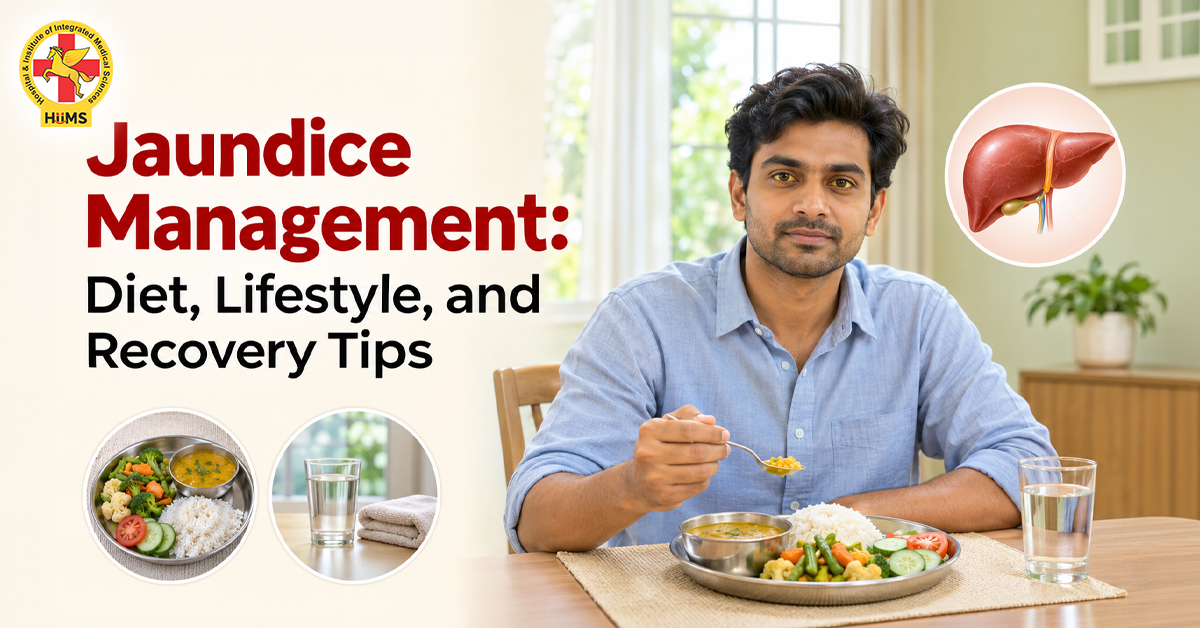

A friend mentions that your eyes look a little yellow in the morning light. Your urine has turned darker than usual, and even the smell of food makes you feel queasy. Most people wait a day or two, hoping it passes, or start with a home remedy that someone at the shop suggested. That wait is understandable, but yellow eyes and skin are a sign that something is off with the liver, the bile ducts or the blood, and the reason behind it decides every step that follows.
A few simple tests can identify the reason, whether the person at home is a child, an adult, or an older parent. Good jaundice management starts with the cause and then continues at home through diet, rest, and regular follow-up.
Jaundice Symptoms: What the Body Shows First
The yellow colour usually appears first in the whites of the eyes, then on the skin. It comes with other changes, so it helps to look at the whole picture:
- Dark, tea-coloured urine
- Pale or clay-coloured stools
- Itching all over the body
- Tiredness and weakness
- Nausea, vomiting or a poor appetite
- Mild fever or pain in the upper right side of the belly
Yellow eyes with any of these signs is reason enough for a blood test.
Dark urine for more than a day? Ask a Jeena Sikho HiiMS doctor which test to begin with.
Ask a Jeena Sikho HiiMS Doctor
Jaundice Causes: Why the Eyes and Skin Turn Yellow
Jaundice happens when a yellow pigment called bilirubin builds up in the blood. The jaundice causes fall into three groups. Before the liver, when red blood cells break down too fast, as in malaria. Inside the liver, as in viral hepatitis, fatty liver, alcohol or some medicines. After the liver, when a gallstone blocks bile from draining.
In a study of 100 patients with acute viral hepatitis in Lucknow (JEBMH, 2019), hepatitis E was the most common, then A, mostly in the rainy months. A hospital study of 107 people with fever and jaundice in Odisha (Journal of Clinical and Diagnostic Research, 2022) found scrub typhus in 23.3% and dengue in 21.4%, while no cause was found in 25 patients. Each study is from a single hospital, so read them as a sign of how varied the causes are, not as a figure for your city.
When to Meet a Jaundice Specialist
Start with your family doctor, who can order the first tests. See a jaundice specialist, such as a gastroenterologist or liver doctor, if the yellowness lasts more than a few days, the bilirubin keeps rising, or the reports show a blockage or liver damage. Usual tests are a liver function test, blood count, belly ultrasound and, by season, tests for hepatitis, malaria or dengue. When people first show us their reports, bilirubin is often the only number they have noticed, and the liver enzymes get skipped.
Please go to a hospital at once for confusion or unusual sleepiness, vomiting that does not stop, any bleeding, severe belly pain, high fever, or if you are pregnant.
Got a report you cannot make sense of? Share it with a HiiMS doctor on a video call. Book an Appointment.
Jaundice Diet: What to Eat and What to Skip
Food is a big part of jaundice management, and a good jaundice diet is simple, light and cooked at home. Small, frequent meals sit easier when you feel nauseous. Khichdi, plain dal, boiled vegetables, roti with a little ghee, curd or buttermilk, and fruits such as papaya or pomegranate are easy to digest. Coconut water and clean boiled or filtered water keep you hydrated.
Skip fried and oily food, heavy gravies, outside food and street drinks, since hepatitis A and E spread through unclean food and water. Do not drink alcohol, and do not take painkillers or herbal powders without asking your doctor.
Jaundice Management at Home: Rest, Hygiene and Follow-up
Once your doctor has found the cause, home care does a lot of the work. Rest properly, and return to your routine slowly. Wash hands with soap after the toilet and before food. Repeat the liver tests when your doctor asks, and do not stop follow-up because the eyes look clearer, since bilirubin can lag behind.
Jaundice Relief: What Helps You Feel Better While You Recover
Many people search for jaundice relief when itching and tiredness make the day hard. Comfort measures are part of jaundice management too. Wear loose cotton clothes, keep nails short, use lukewarm water for bathing and keep your room cool. Please do not use itch tablets or creams from the chemist without advice, since some are processed by the liver.
Where Ayurveda Fits In
In Ayurveda, jaundice is described as kamala. For jaundice management, at Jeena Sikho HiiMS, we see Ayurveda as support that comes after the cause is known, never in place of tests and medical care. A visit with our team, in person or by VOPD, starts with your liver reports. Under Acharya Manish Ji’s guidance, this is what we may suggest:
- Light diet plan: a gentle version of the two-plate pH-balanced diet, with Plate 1 of fruit or salad and Plate 2 of a cooked, millet-based meal with dal and vegetables, and dinner before sunset
- Herbs: such as Kutki, Guduchi, Haritaki and Neem, only after liver reports are reviewed, because some herbs can strain the liver or interact with medicines
- Virechana: a supervised Panchakarma therapy, considered only when the acute phase has passed, and you are strong enough. It does not suit people who are weak, dehydrated, vomiting or pregnant
- Follow-up: repeat liver tests so that every step is checked against your reports
Conclusion
Yellow eyes are a reason to get tested, not to guess. Learn the jaundice symptoms, find the cause, meet a jaundice specialist when needed, and keep up the diet and rest your doctor suggests.
Good jaundice management is slow and steady. When you are ready to plan your recovery meals and follow-up, our team at Jeena Sikho HiiMS can go through your reports on a VOPD with you.
Sitting at home with a report and a list of doubts? Bring both to a VOPD with Jeena Sikho HiiMS.

FAQs
1. Can jaundice go away on its own?
Mild jaundice from some infections settles with rest, but the cause still needs to be checked.
2. Is turmeric safe if I have jaundice?
Normal amounts in cooking are fine. Large amounts as powders or capsules can stress the liver, so ask your doctor first.
3. How long do yellow eyes last?
It depends on the cause. It can take days to a few weeks, and the eyes often clear later than the blood tests.
4. Can I go to work or school with jaundice?
Ask your doctor. With hepatitis A or E, rest at home and wash hands carefully until it is safe.
5. Can I drink tea or coffee?
Small amounts are usually fine, but skip them if they cause nausea.
Leave a comment