
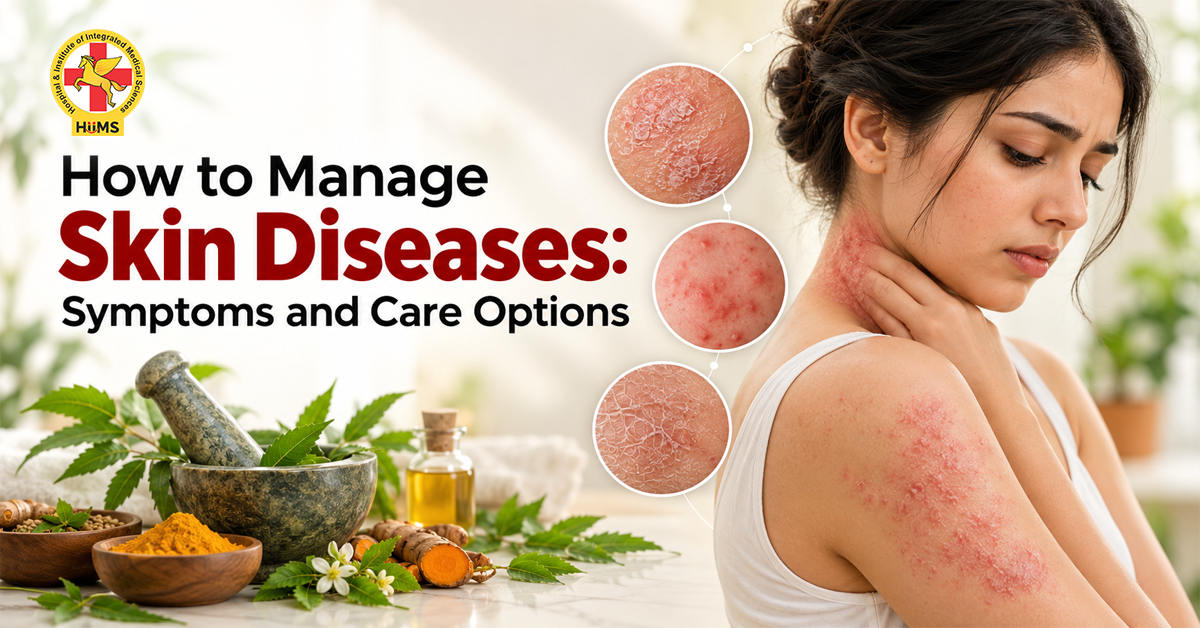

Skin problems are common, and they are hard to hide. A rash, a patch, or constant itching can affect your comfort and your confidence. Skin conditions range from mild, short-term rashes to long-term problems that need steady care. For many people the worry is not just about how their skin looks. It is also about not knowing what is causing the problem or how to manage it.
A community study in rural Central India found that 60% of the people surveyed had a skin condition. Eczema was the most common, at 22%. Fungal infection came next, at 13%. These numbers show how often skin problems affect daily life. This blog explains the symptoms of common skin diseases, the care options available and the daily habits that help.
What Are Skin Diseases and Why Do They Happen?
Skin conditions fall into a few broad groups. Some come from infections, such as fungal infections and scabies. Others come from allergies or inflammation, such as eczema and hives. A third group, including psoriasis and vitiligo, involves the immune system.
Many things can trigger a flare. Germs, allergens, hormones, and genes all play a part. Stress, heat, and humidity can also make symptoms worse. In addition, hot, humid weather helps fungi and bacteria grow, so skin infections are common in many parts of India.
Common Skin Diseases and Their Symptoms
Here are six common skin diseases with the signs and symptoms you should know.
Eczema
Eczema causes dry, itchy, red patches. The skin may crack or ooze. In the Central India study, it was the most common skin problem, and most cases were in women. Triggers include soaps, dust, and stress, so flares often come and go.
Fungal Infections
Fungal infections cause itchy, scaly, ring-shaped patches. They usually appear in warm, moist areas such as the groin, underarms and feet. In addition, they spread easily through shared towels and clothes. Because the infection thrives in sweat, tight or damp clothes worsen it.
Acne
Acne causes pimples, blackheads, and painful bumps on the face, chest, or back. It is most common in teenagers because hormones change during puberty. Oily skin and stress can add to flares. Picking the pimples often leaves marks.
Psoriasis
Psoriasis causes thick, red, scaly patches. They often appear on the elbows, knees, and scalp. It is a long-term immune condition, so it tends to flare and settle in cycles. Stress and infections often set off a flare.
Hives (Urticaria)
Hives cause raised, itchy welts that appear suddenly. The welts can move around the body. They often fade within a day, but they may keep returning. Foods, medicines, insect bites, and infections are common triggers.
Vitiligo
Vitiligo causes pale or white patches where the skin loses its colour. It is usually painless, and it often appears first on the hands, face, or around the mouth. However, the patches may spread slowly.
When to See a Skin Specialist
Many mild rashes settle on their own. However, some signs need a doctor’s attention:
- A rash that spreads fast
- A rash with fever
- Painful or pus-filled sores
- A mole that changes shape or colour
- A sore that does not heal
- A rash that does not improve in two weeks
Early care also stops a small problem from becoming a bigger one. Swelling of the face or lips with trouble breathing is an emergency. Get urgent help right away.
Skin Disease Treatment: What Conventional Care Offers
Doctors choose treatment based on the cause. Antifungal creams or tablet treat fungal infections and antibiotics treat bacterial ones. Antihistamines ease hives, while moisturisers help eczema. Steroid cream calms inflammation, and light therapy helps some conditions, such as psoriasis and vitiligo.
However chronic conditions like eczema and psoriasis are managed, not cured. Long-term steroid use can thin the skin, and symptoms often return. So the best skin treatment depends on the right diagnosis. Self-medicating with steroid creams can backfire.
Skin disease treatment also takes time. Fungal infections may need several weeks of medicine, even after the rash fades. Chronic conditions need regular follow-ups so the doctor can adjust the plan.
Because of this, many people also look for supportive care that works alongside their medicines.
An Ayurvedic View of Skin Diseases
In Ayurveda, the skin is called ‘twak’. Many skin conditions fall under a group called Kushtha. Ayurveda links them to Pitta and Kapha imbalance, impure blood (Rakta), and weak digestion. So Ayurvedic care looks at food, digestion, and routine, not only the skin. Ayurveda also advises against food combinations it considers incompatible, such as milk with fish or sour fruits. It links these to skin trouble over time.
Some research supports this focus on cleansing. A 2025 review describes Virechana, a Panchakarma cleansing therapy, as a key traditional method for Pitta related skin conditions.
Ayurvedic Supportive Skin Care at Jeena Sikho HiiMS
Jeena Sikho HiiMS brings this Ayurvedic view into a structured care plan. As an integrated hospital, it combines Ayurveda, Naturopathy, Homeopathy, Unani, and modern medicine. Its supportive skincare includes:
- Panchakarma: Cleansing therapies that support the body’s internal balance. Virechana, for example, uses herbal preparations for a guided cleansing of the gut. A doctor chooses the right therapy after an assessment.
- Herbal Support: Herbs such as neem, manjistha and turmeric are traditionally used to support skin health. A doctor gives them based on your condition and body type.
- pH-Balanced Diet: A fresh, simple plant-based meal plan that is easy to digest. It limit heavy, fried, and processed food which can aggravate some skin conditions.
- Lifestyle Changes: Guidance on sleep, stress and daily routine. Yoga and meditation help manage stress, which is a common trigger of skin issues.
Daily Care Habits That Help Manage Skin Diseases
Daily habits support whatever treatment you follow. For example:
- Clean your skin gently, and avoid harsh soaps that strip natural oils
- Moisturise every day, especially right after a bath to lock in moisture
- Wear loose cotton clothes, because they let the skin breathe
- Avoid your known triggers, such as certain soaps, foods, or fabrics
- Eat a balanced diet and sleep well, since both support skin repair
- Manage stress with breathing exercises or short walks
- Wash towels and clothes often, and do not share them, to stop infections from spreading
Conclusion
Skin conditions range from mild to long-term. The right diagnosis shapes the right treatment, because each condition needs its care. Daily habits then support those results. Because skin condition often return, steady habits matter as much as any single treatment. Medical care, supportive Ayurvedic care, and small routine changes can work together over time.
Take the next step for your lasting health today. Book a consultation with Jeena Sikho HiiMS. Or connect with a skin specialist from home through VOPD (video consultation). Get personalised guidance tailored just for you.

FAQs
- Can skin problems go away on their own?
Some mild rashes settle in a few days. However fungal infections usually need medicine, and long-term conditions like eczema and psoriasis need ongoing care. - Are steroid creams safe to use?
Doctors prescribe them safely for short periods. Long-term use without advice can thin the skin, so use them only as your doctor directs. - Which skin problems are contagious?
Fungal infections and scabies spread through touch and shared towels. Eczema, psoriasis, vitiligo, hives, and acne do not spread from person to person. - Can stress make skin problems worse?
Yes. Stress often triggers flares in eczema, psoriasis, acne, and hives. Good sleep, deep breathing and short walks can help manage stress. - Does Jeena Sikho HiiMS offer care for skin problems?
Yes. HiiMS offers supportive Ayurvedic care, including Panchkarma, herbal support, diet guidance, and lifestyle advice.

Leave a comment