

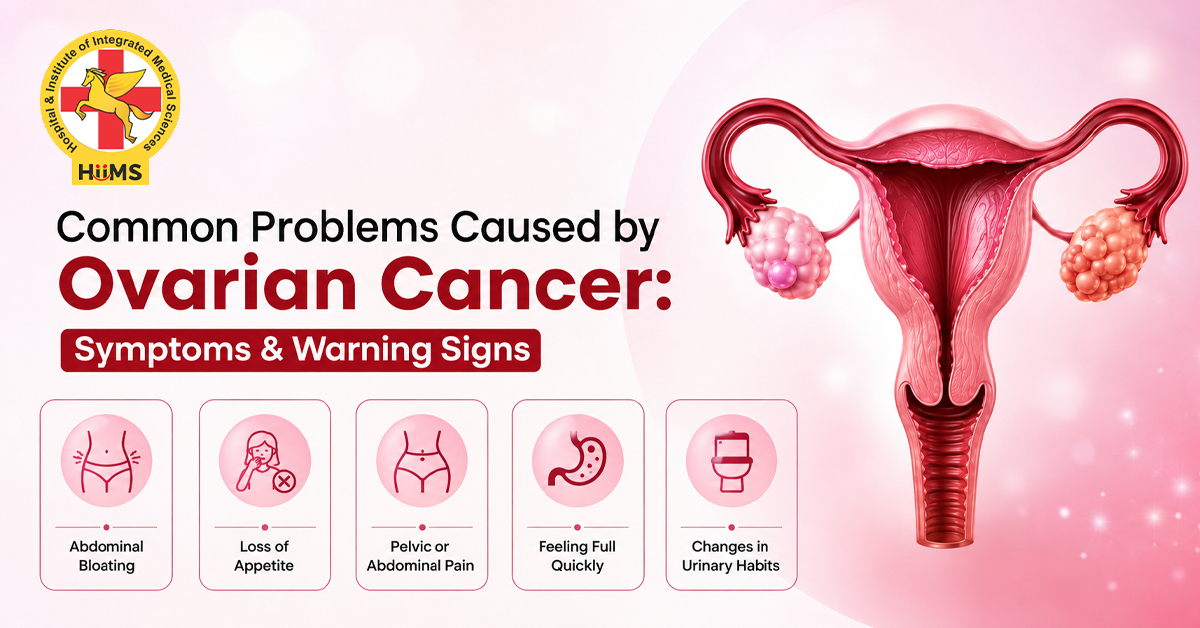
Women often put up with small body changes, a bit of bloating after dinner, feeling unusually full, or frequently going to bathroom at night. It is easy to blame a heavy meal, stress or simply getting older. However, when these small discomforts refuse to go away, they might be pointing toward something deeper in the body.
Ovarian cancer usually begins in the ovaries, fallopian tubes or the surrounding tissue known as the peritoneum. It is often referred to as a silent disease because its early warning signs are quiet, vague and easily confused with everyday digestive or urinary issues. Because there is no simple routine screening test for this condition, raising awareness about key ovarian cancer symptoms is one of the most effective ways to catch it early and get timely medical help.
Common Physical Problems Caused by Ovarian Cancer
As tumours develop in the pelvic cavity, they begin to press on nearby organs and disrupt how the body functions day-to-day. This creates a cluster of persistent physical symptoms
- Pelvic and Abdominal Discomfort: Many women describe a persistent, dull ache or feeling of heavy pressure in the lower belly or pelvic area. Unlike menstrual cramps that come and go this discomfort stays around
- Gastrointestinal Disruptions: As ovarian cancer grows, it directly affects the digestive system. This can lead to constant bloating, chronic indigestion, feeling full after eating just a few bites and unexplained changes in bowel habits, such as new constipation or diarrhea
- Fluid Accumulation (Ascites): A common complication of advanced ovarian cancer is ascites a buildup of fluid in the abdominal cavity. This causes noticeable abdominal swelling, weight gain around the waist, and a tight, stretched feeling in the belly
- Urinary Changes: The bladder sits right next to the ovaries. When a mass grows or fluid builds up in the pelvis, it presses against the bladder, creating a sudden urge to urinate or forcing more frequent trips to the bathroom throughout the day and night
- Systemic Issues: Beyond the abdomen, women often experience deep, unexplainable fatigue, unexplained weight loss or gain, pain during intimacy, and ongoing lower back pain
Early vs Advanced Ovarian Cancer Symptoms
Recognising how the disease progresses can help you distinguish between routine stomach troubles and something that requires medical attention.
Early-Stage Indicators
In the early stages, you might experience mild pelvic heaviness, occasional gas or subtle changes in your appetite. Because these symptoms mirror common issues like Irritable Bowel Syndrome (IBS) or urinary tract infections (UTIs) they are frequently overlooked.
Advanced-Stage Indicators
As the condition advances, symptoms become harder to ignore. Women may experience severe abdominal distension, difficulty breathing due to fluid pushing up against the diaphragm, leg swelling caused by deep vein issues and sharp, continuous pelvic pain.
The B.E.A.T. Framework
To make these warning signs easy to remember, health advocates use the simple B.E.A.T. framework
- B – Bloating that is persistent and does not come and go with your diet.
- E – Eating difficulty or feeling full very quickly.
- A – Abdominal or pelvic pain that feels constant.
- T – Tell a doctor, if these symptoms happen repeatedly for more than two to three weeks.
The key to differentiating routine digestive troubles from persistent ovarian cancer symptoms is consistency. Normal indigestion fades after a few days, these warning signs stay and gradually worsen.
When to See a Doctor & Diagnostic Steps
If you experience any of these physical changes more than 12 to 15 times a month, it is time to schedule a visit with a doctor or gynaecologist. Do not wait for symptoms to become painful before seeking advice.
When evaluating a patient for ovarian cancer, doctors typically use a combination of diagnostic tools
- Pelvic Examination: The doctor manually checks the uterus, ovaries, and surrounding organs for unusual masses, tenderness or enlargement
- Transvaginal Ultrasound: A harmless imaging test where a small wand is inserted into the vagina to get clear, detailed pictures of the ovaries and check for cysts or solid tumors
- CT or MRI Scans: Detailed body scans help doctors look at the entire abdominal area to see if a mass has spread or if fluid has collected
- CA-125 Blood-Test: This test measures the level of CA-125 protein in the blood. Elevated levels can indicate ovarian tumour activity, it is used alongside imaging.
Risk Factors and Preventive Measures
While the exact cause of ovarian tissue changes is not fully known certain factors can increase a woman’s overall risk
Genetic Mutations: Inherited gene changes, particularly BRCA1 and BRCA2, as well as Lynch syndrome, significantly increase risk.
Family History: Having a mother, sister or daughter who had ovarian, breast, or colorectal cancer.
Age: The likelihood increases with age with most cases diagnosed in women over 50 or after menopause
Reproductive History: Women who started menstruating early, went through menopause late or never carried a pregnancy to term have a slightly higher risk
If Ovarian Cancer runs in your family, speaking with a specialist about genetic counselling or routine monitoring can give you peace of mind and help you stay proactive about your health.
Ayurvedic Treatment For Ovarian Cancer At Jeena Sikho HiiMS
Jeena Sikho HiiMS offers holistic and integrative Ayurvedic care to promote reproductive wellness and to manage the health of the body. It focuses on identifying internal imbalances, detoxifying toxins and strengthening immunity through Ayurvedic principles.
Through Panchakarma therapies, herbs (such as Kanchnar Guggulu, Ashwagandha and Shatavari) and personalised dietary & lifestyle plans, it aims to lower systemic inflammation, boost cellular health, and improve overall vitality. Under expert medical guidance, Jeena Sikho HiiMS provides natural, non invasive supportive protocols tailored to a patient’s unique body constitution (Prakriti), helping restore physical stamina, balance Doshas, and enhance quality of life.
Conclusion
Living attentively means listening to what your body tells you every day. While persistent bloating or pelvic discomfort is often tied to harmless conditions, increasing your awareness of early warning signs is vital for the effective management of ovarian cancer.
Never ignore persistent changes in your body as just a normal part of ageing or stress. By tracking ovarian cancer symptoms and seeking professional medical guidance you can take control of your health. Consult Jeena Sikho HiiMS experts by booking an online consultation through HiiMS VOPD today.

FAQs
- Can Ovarian Cancer be detected during a routine Pap smear?
No. A Pap smear tests for cervical cancer not ovarian issues. Ovarian changes require a pelvic exam, ultrasound, or blood tests to be properly evaluated.
- What is the difference between ovarian cysts and ovarian tumours?
Ovarian cysts are fluid-filled sacs that are very common and usually harmless. Ovarian tumours are solid masses of abnormal cells that can be non cancerous or cancerous.
- Why does ovarian cancer cause digestive problems like bloating and indigestion?
As fluid builds up or tumours grow in the pelvis they place direct physical pressure on the stomach and intestines, slowing down digestion and causing persistent gas and bloating.
- How long should symptoms last before I consult a doctor?
If you experience persistent bloating, pelvic pain or difficulty eating almost every day for more than two to three weeks, you should schedule a medical evaluation.
- Are young women also at risk of ovarian cancer?
While it is most common in post-menopausal women over 50, ovarian cancer can occur at any age especially if there is a strong family history of ovarian or breast cancer. Anyone experiencing persistent, unexplained symptoms should get evaluated regardless of their age.