


Breast cancer is a health condition in which some cells in the breast begin to grow abnormally. It can affect women of different ages, although the risk generally increases with age. In the early stages, a woman may not notice any unusual change. Therefore, knowing how the breasts normally look and feel is an important part of personal health care.
The breast cancer symptoms may include a new lump, a change in breast size, changes around the nipple, or unusual skin changes. However, these signs do not always mean cancer. Hormonal changes, cysts, and other common conditions may also cause changes in the breasts. The important thing is to notice any new or unusual change and seek expert advice without delay.
A simple breast self-check helps women become familiar with their bodies. It does not confirm or rule out cancer, but it may help them notice changes that need a doctor’s advice. According to the World Health Organisation (WHO), early diagnosis and timely assessment by a healthcare professional are important parts of breast cancer care.
Breast Cancer Symptoms You Should Never Ignore
Every woman’s body is different. Still, some changes need attention. These are the common breast cancer symptoms that doctors ask you to watch for:
- A new lump or thick area in the breast or underarm
- A change in the size or shape of one breast
- Dimpled skin, redness, or skin that looks like an orange peel
- A nipple that turns inward
- Fluid from the nipple, especially if it has blood
- Scaly, itchy, or peeling skin near the nipple
- Pain in one spot that does not go away
Any one of these breast cancer warning signs, even a small one, is reason enough to see a doctor without delay.
Noticed a change in your breast? Do not wait. Book your appointment today and speak to a doctor about your concern.

How to Do a Breast Self-Check at Home
A breast self-check is a simple way to become familiar with the normal appearance and feel of your breasts. You can perform it in front of a mirror and while lying down. There is no need to press hard or repeatedly examine the same area.
Step 1: Look in the mirror
Stand straight with your arms relaxed at your sides. Observe both breasts for changes in size, shape, skin colour, or nipple position.
Step 2: Raise your arms
Lift both arms above your head and look for dimples, swelling, unusual skin changes, or changes in the way your breasts move.
Step 3: Feel each breast gently
Use the flat pads of your fingers to examine the breast in small, overlapping movements. Cover the whole breast, from the collarbone to the lower breast and from the chest to the armpit.
Step 4: Repeat while lying down
Place one arm behind your head and gently examine that breast with the opposite hand. Repeat on the other side and notice any new thick areas or lumps.
Step 5: Check the nipple and armpit
Look for the unusual nipple discharge, changes in nipple position, or a new lump near the armpit. Avoid squeezing the nipple to force discharge.
The National Institute of Cancer Prevention and Research and the American Cancer Society provide further information about breast awareness and the early signs of breast cancer that need expert attention. Self-examination should not replace recommended screening or a clinical breast examination.
Breast Cancer Statistics: A Global Overview
The World Health Organization reports that about 2.3 million women received a breast cancer diagnosis in 2022. Around 670,000 women died of the disease that year. About 1 in 20 women worldwide will face it in their lifetime.
The National Cancer Institute also notes that many signs of breast cancer lumps stay hidden deep in the tissue. A lump can be present long before you feel it. Regular checks matter for this reason.
The Indian Council of Medical Research reports that breast cancer cases are rising in India, with the highest burden in cities such as Delhi, Bengaluru, Chennai, and Hyderabad.
What Does Ayurveda Say About Breast Cancer?
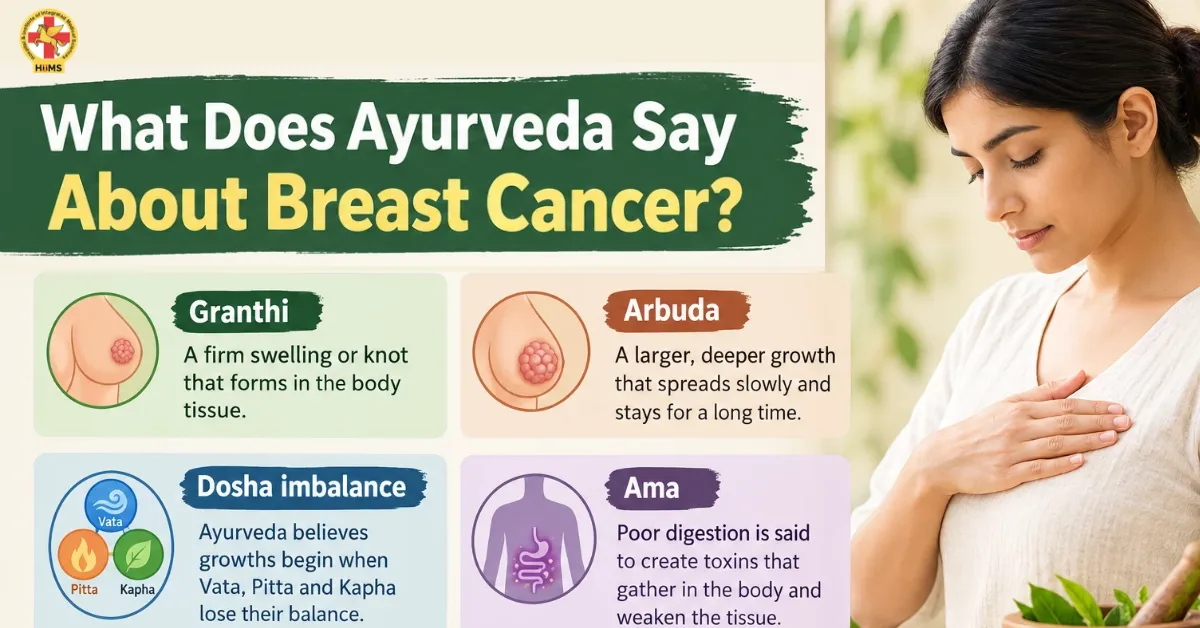
Ayurveda does not use the word cancer as modern medicine does. Its old texts describe abnormal body growths under two terms, and many scholars link them with lumps and tumours of the breast.
- Granthi: A firm swelling or knot that forms in the body tissue.
- Arbuda: A larger, deeper growth that spreads slowly and stays for a long time.
- Dosha imbalance: Ayurveda believes growths begin when Vata, Pitta and Kapha lose their balance.
- Ama: Poor digestion is said to create toxins that gather in the body and weaken the tissue.
In short, Ayurveda sees such growths as a sign of deep imbalance in the whole body, not just a problem of one part.
Can Ayurveda Help During Breast Cancer Care?
Ayurveda places importance on daily habits, food choices, rest and individual health needs. A balanced diet, gentle activity when suitable, good sleep and emotional support may help a person keep general well-being during a difficult period.
At Jeena Sikho HiiMS, doctors first review your medical history, current condition, and ongoing care. They then guide you on supportive options such as these:
- Cancer detox juice: An herbal drink taken as daily support for the body.
- Panchakarma: Gentle cleansing therapies that aim to refresh the body.
- Golden therapy: An herbal paste is pressed with the soles of the feet to cleanse the body.
With its gentle, natural and whole-body approach, Ayurveda offers a caring way to support strength, comfort, and peace of mind during a hard time.
When Should You Consult a Doctor?
Do not wait for several changes to appear. Even one new or unusual change, including common breast cancer symptoms in women, is reason enough to book an appointment. If you are looking for expert evaluation, consider consulting a breast cancer hospital in Haridwar, where doctors can assess your symptoms and recommend the appropriate tests to identify the cause. A self-check helps you notice changes, but it cannot detect every cancer. Always follow the advice of a qualified doctor based on your age, medical history, and overall health.
Conclusion
Knowing the breast cancer symptoms and learning how to check your breasts may help you notice unusual changes in time. Look for new lumps, skin dimpling, nipple changes, or unusual discharge. Don’t panic if you notice something different, but don’t ignore it either. Timely healthcare assessment is important.
At Jeena Sikho HiiMS, you may seek guidance about your health concerns and suitable supportive wellness practices. Book a consultation to discuss your concerns and understand the next steps.

FAQs
Q1. Does every breast lump mean cancer?
No, hormonal changes and cysts can also cause lumps, but a doctor must check each one.
Q2. What do signs of breast cancer lumps feel like?
They are often hard and uneven, and they may not move easily under the skin.
Q3. How do I do a breast self-check at home?
Look in a mirror, raise your arms, and gently feel each breast with the flat pads of your fingers.
Q4. Can a self-check confirm or rule out cancer?
No, it only helps you notice changes that need a doctor’s advice.
Q5. What does dimpled breast skin mean?
It can be a warning sign, so a doctor should check it without delay.
Leave a comment