

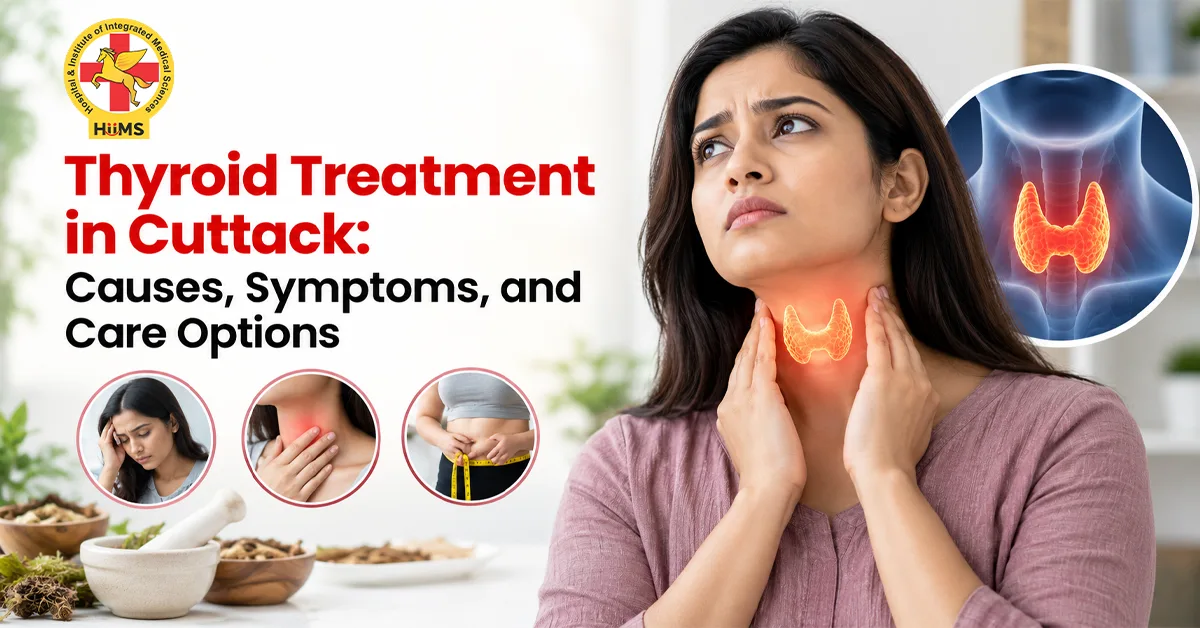

If you have been tired for weeks, or your weight keeps changing without a clear reason, a thyroid test is worth doing. Many people in Odisha first look for thyroid treatment in Cuttack after a TSH report comes back out of range.
In this blog, we explain the common symptoms of low and high thyroid, what Indian studies say, and what researchers have found about Ayurveda for thyroid care.
How Common Are Thyroid Problems in India?
A study in the Indian Journal of Endocrinology and Metabolism tested about 5,360 adults in eight Indian cities and found hypothyroidism in roughly 11% of them. As BioSpectrum reported, Bangalore’s figure was 9.23%. A DT Next report adds that nearly one-third of people with hypothyroidism have not been diagnosed.
For eastern India, a CXOTV report on SRL Diagnostics data found abnormal TSH in 27% of samples from the East, the highest among regions. The report notes this is lab data, not population prevalence. A 2026 study in the Journal of Clinical and Diagnostic Research from a hospital in Puri, coastal Odisha, found abnormal thyroid function in 34.7% of the patients it tested. We could not find city-level data for Cuttack itself.
Recognizing thyroid symptoms early can help you seek timely medical advice. Explore the common signs, available treatment options, and what current research says about thyroid management.
Signs of Thyroid Problems You Can Watch For
The thyroid is a small gland in the neck that controls how your body uses energy. When it runs slow or fast, the thyroid imbalance symptoms can look like ordinary tiredness or stress, which is why many people miss them. The NIDDK notes that these symptoms build up slowly and can go unnoticed for months or years.
Hypothyroidism Symptoms and Treatment
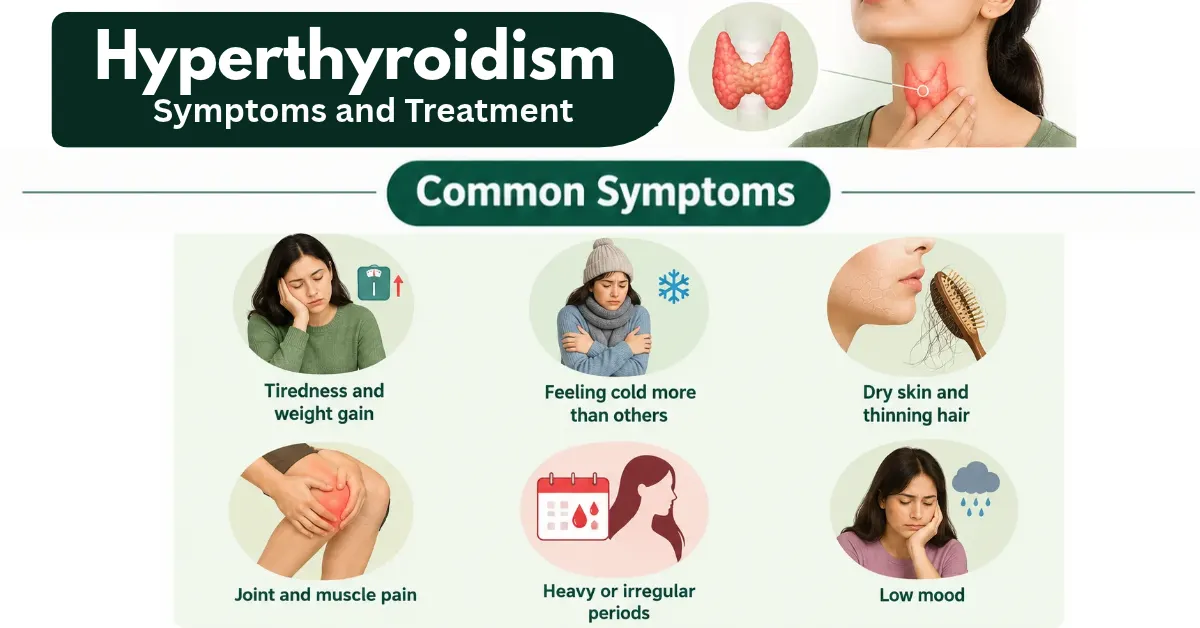
Hypothyroidism means the gland makes too little hormone. Common signs listed by NIDDK:
- Tiredness and weight gain
- Feeling cold more than others
- Dry skin and thinning hair
- Joint and muscle pain
- Heavy or irregular periods
- Low mood
The most common cause is Hashimoto’s disease, an autoimmune condition. Standard treatment is a daily levothyroxine tablet, with a blood test after 6 to 8 weeks and repeat tests later. Please do not stop it without asking your doctor, whichever route you take for thyroid treatment in Cuttack.
Hyperthyroidism Symptoms and Treatment
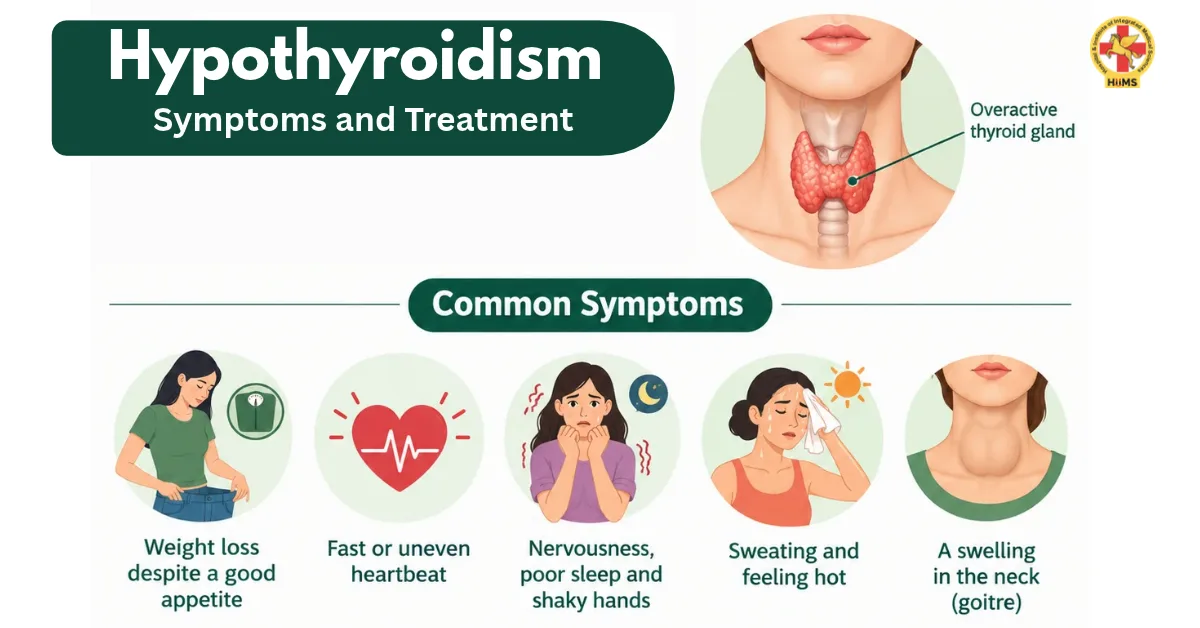
Hyperthyroidism is the opposite: too much hormone. Look out for:
- Weight loss despite a good appetite
- Fast or uneven heartbeat
- Nervousness, poor sleep and shaky hands
- Sweating and feeling hot
- A swelling in the neck (goitre)
These thyroid imbalance symptoms can overlap with anxiety. The NIDDK hyperthyroidism page lists Graves’ disease as the most common cause. Treatment options include beta-blockers for symptoms, antithyroid medicines, radioiodine and, less often, surgery.
What Do Studies Say About Ayurveda and the Thyroid?
Research here is early, and most trials are small. Three examples:
- A 2018 double-blind trial of 50 adults with subclinical hypothyroidism found that Ashwagandha root extract (600 mg daily for 8 weeks) improved TSH, T3 and T4 compared with placebo. The authors call it a pilot study.
- A study in the journal Ayu on 15 patients used Triphaladya Guggulu with Punarnavadi Kashaya. Symptoms like fatigue and puffiness improved, but the TSH change was not statistically significant.
- A case report on one woman reported a TSH fall from 21.25 to 4.88 after four months of Trikatu. One case cannot prove anything on its own.
So for thyroid treatment in Cuttack, Ayurveda can be discussed as support next to regular care, not as a replacement for tests or medicine.
Choosing a Thyroid Specialist in Cuttack
Whether you pick an endocrinologist or a physician, ask for TSH, free T3, and free T4. Anti-TPO is worth asking about too. A good thyroid doctor Cuttack patients trust will explain your numbers and how often to repeat them.
One thing we hear often from patients is that they were never told what their TSH value meant. Ask the question, tell the doctor about every one of the signs of thyroid problems you have noticed, and keep a copy of every report.
Not sure where to begin? Speak to the team at Jeena Sikho HiiMS Cuttack about your reports.

Where Jeena Sikho HiiMS Fits In
Jeena Sikho describes its care around herbs, Panchkarma and lifestyle.
- On hiims.in, the herbal side names Ashwagandha, Guduchi and Turmeric. The lifestyle side covers yoga, meditation, sunlight and daily routine.
- The GRAD system described by The Tribune combines hot water immersion, head-down tilt therapy, and Acharya Manish Ji’s pH-balanced diet is a plant-based plan.
For thyroid treatment in Cuttack, the doctors usually look at your reports first and then suggest a plan, so please carry your latest TSH, T3 and T4.
This applies to hypothyroidism symptoms and treatment as well as hyperthyroidism symptoms and treatment. Anyone looking for a thyroid specialist in Cuttack can ask them how this fits with their current medicines.
Conclusion
Thyroid problems are common and easy to miss, and a simple blood test gives a clear answer. Whether you are comparing options for thyroid treatment in Cuttack or looking for a thyroid doctor Cuttack families recommend, keep your medicines going and share all reports with your doctor.
For a consultation on diet, herbs, and daily routine alongside your treatment, book a VOPD consultation at Jeena Sikho HiiMS Cuttack.

FAQs
Q1. Which test shows a thyroid problem?
A TSH blood test is the first step. Doctors often add T3, T4, and anti-TPO.
Q2. Can thyroid symptoms be mistaken for stress?
Yes. Tiredness, mood changes and weight changes are common to both, so a blood test is the way to confirm.
Q3. Is Ashwagandha safe for everyone with thyroid problems?
Not always. It affects thyroid hormones, so check with your doctor first, especially if you have hyperthyroidism.
Q4. How often should TSH be checked?
After starting or changing a dose, usually at 6 to 8 weeks. Once stable, every 6 to 12 months.
Q5. Can I stop levothyroxine if I feel better?
No. Feeling better usually means the dose is working. Stop only if your doctor advises it.

Leave a comment