

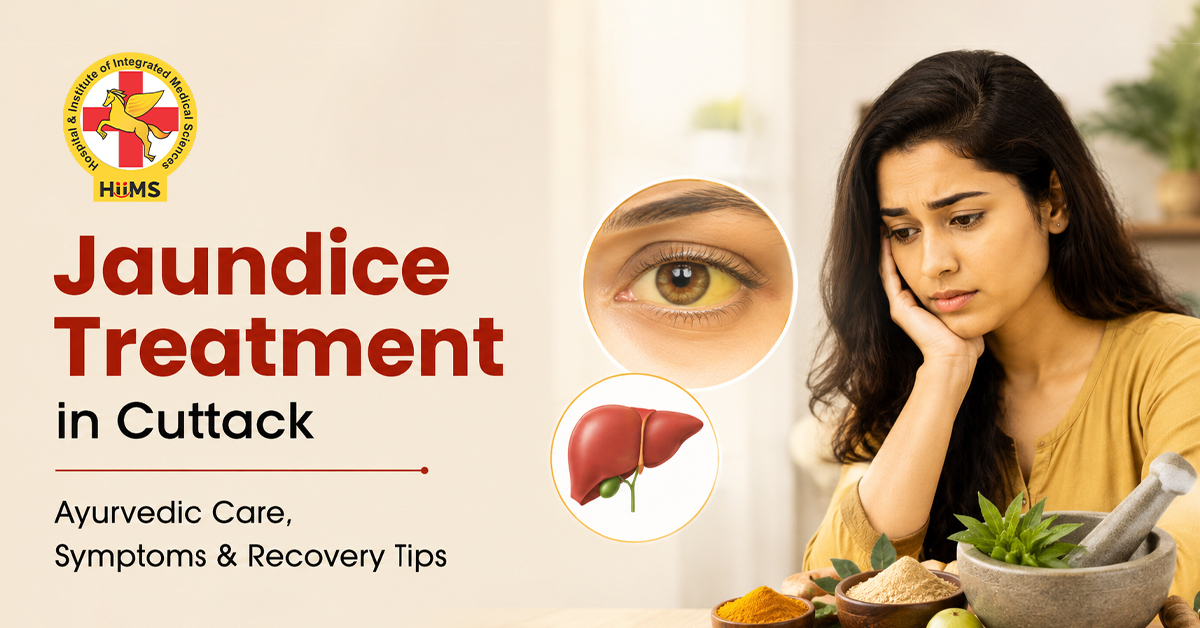
You saw yellow eyes in the mirror. Tiredness that does not go away even after a full night’s sleep. Urine that looks darker than usual. Food that suddenly feels like too much work to eat. These small changes often get ignored as normal tiredness, but they are usually the body’s way of saying the liver is under pressure.
When bilirubin builds up in the blood faster than the liver can clear it, the skin and eyes start turning yellow, and that is what we call jaundice. Ayurveda does not just look at this yellow colour and stop there. It asks why the liver lost its balance in the first place, and that is the real starting point of jaundice treatment in HiiMS Clinic, Cuttack.
This blog explains what jaundice really means, the symptoms you should not ignore, and how Ayurvedic care helps the body heal in a natural way.
What Is Jaundice?
Jaundice is not really a disease by itself. It is a sign that the liver is weak. Bilirubin is a yellow pigment made when old red blood cells break down in the body. A healthy liver removes this pigment easily through bile. But when the liver slows down, or something blocks the bile ducts, bilirubin stays in the blood instead of leaving the body, and that is what turns the skin and eyes yellow.
There can be many reasons behind this, like a viral infection, swelling in the liver, a blockage in the bile duct, or simply a liver that has been under strain for a long time. This is exactly why good Ayurvedic liver care is so important right from the start.
How Does Ayurveda Understand Jaundice?
In Ayurveda, jaundice is known as Kamala. It happens mainly because of an increase in Pitta dosha in the body. Pitta controls heat and digestion, and when it goes above its normal level, it starts affecting how the liver processes bile.
Along with Pitta, agni or the digestive fire also plays a big role. If Agni becomes weak, the body cannot digest and process waste properly, and that extra load falls on the liver. This is why Ayurvedic jaundice treatment in Cuttack does not stop at decreasing the yellow colour.
Jaundice Symptoms You Should Never Ignore
Knowing the early jaundice symptoms can really help. Keep an eye out for:
- Yellow colour in the eyes and skin
- Urine that looks darker than normal
- Pale or clay coloured stools
- Loss of appetite
- Feeling nauseous
- Weakness that does not go away
- Mild fever that keeps coming back
- Pain or heaviness on the right side of the stomach
None of these signs alone should cause panic. But if you notice a few of them together, it is a clear signal that the liver needs help. Catching these jaundice symptoms early can save you from a much longer recovery later.
How Ayurvedic Jaundice Treatment in Cuttack Supports Liver Healing
Herbal Care for Better Liver Function
Ayurveda has used certain herbs for liver support for hundreds of years. Some common ones are Bhumyamalaki, Kutki, Kalmegh, Giloy, and Punarnava. These herbs are traditionally believed to help clear toxins and support the liver’s natural working, but they should always be taken under proper Ayurvedic supervision. This herbal support is usually the first step in jaundice treatment at HiiMS clinic Cuttack, and it is adjusted based on how each patient’s body responds.
Panchakarma and Natural Detoxification
Panchakarma is a set of traditional cleansing therapies in Ayurveda. Based on how a patient is doing, certain therapies from Panchakarma may be suggested to help clear out toxins from the body. This process supports the liver and reduces the extra load on it, and it forms an important part of long-term Ayurvedic liver care.
Personalised Dietary Guidance
In Ayurveda, food is treated as part of the treatment. Light and easy-to-digest meals reduce the pressure on a liver that is already trying to heal. That is why dietary advice is given based on the person, and not as one fixed diet chart for everyone.
Simple Jaundice Recovery Tips to Follow During Healing
Along with proper treatment, a few daily habits can really speed up healing. Keep these jaundice recovery tips in mind:
- Drink enough water and fluids through the day
- Eat light, home-cooked food instead of eating out
- Stay away from oily, fried, and packaged food
- Get proper rest and avoid overworking your body
- Avoid alcohol and any medicine that is not prescribed
- Stick to the diet your doctor recommends
- Do not skip your follow-up visits
Why Choose Jaundice Treatment in HiiMS Clinic Cuttack?
Picking the right Ayurvedic jaundice treatment in Cuttack is important just as much as noticing the symptoms early. Jaundice treatment in HiiMS Clinic Cuttack is planned around each patient, not a predetermined pattern for everyone.
The focus stays on finding the root cause, along with herbal support, guidance on daily habits, diet counselling, and Panchakarma when it suits the patient. The goal is not just to remove the yellow color but to build a stronger, healthier liver for the long run.
Conclusion
Jaundice is the liver’s way of asking for help, and it should never be taken lightly. Early attention, a simple and disciplined diet, and proper Ayurvedic guidance together give the body what it needs to heal well.
If you or a family member or someone you know is going through these symptoms, getting jaundice treatment in HiiMS Clinic Cuttack from an experienced Ayurvedic doctor can help you plan a recovery that actually suits your body. You can also book a VOPD consultation with expert doctors at Jeena Sikho HiiMS and get guidance for your health from home.

FAQs
- What are the early signs of jaundice?
Yellow eyes and skin, darker urine, low appetite, and constant tiredness are usually the first signs people notice. - How does Ayurveda manage jaundice?
Ayurveda works on balancing Pitta dosha through herbs, cleansing therapies, and food choices suited to the person’s body. - Which foods should be eaten during jaundice recovery?
Simple food like moong dal, boiled rice, and fresh fluids are usually recommended to give the liver less work. - How long can jaundice recovery take?
Recovery time depends on the person, how bad the condition is, and how well the guidance given is followed. - When should I consult a doctor for jaundice?
It’s best to see a doctor as soon as yellowing, tiredness, or loss of appetite shows up, so care can start early.
