


Daily habits shape our health more than we often notice. Acharya Manish Ji teaches that most health problems begin with weak digestion and an unbalanced routine. So Ayurveda looks at the root and not only at the symptom. Busy days, quick meals and late nights make this harder for many people. Jeena Sikho HiiMS Clinic in Agartala follows the root-cause approach. It works as an Ayurvedic clinic in Agartala that guides people on diet and wellness.
Many people across India now choose Ayurveda for their care. The NSS Survey on AYUSH 2022-23 reports that 48.1% of Indians used an AYUSH system in the past year. Ayurveda was the most used among them.
This blog explains what such a clinic offers, the Ayurvedic view of the body and the diet and daily routine at Jeena Sikho HiiMS.
What Does an Ayurvedic Clinic in Agartala Offer?
People seek an Ayurveda hospital in Agartala or an Ayurvedic doctor in Agartala when they want care that addresses the root cause. A good clinic does not stop at the symptom. Instead, it studies the whole body, the daily routine, and the diet.
The first visit is a simple conversation. The doctor listens to your concerns and asks about your digestion, sleep, stress and food habits. At Jeena Sikho HiiMS Agartala, you get these services:
- A consultation and a whole-body assessment
- A plan that covers diet, routine, and herbs
- Ayurvedic medicines
- VOPD, or video consultation
- Follow-ups to review your progress
The doctor prescribes Ayurvedic medicines after the assessment. In addition, VOPD helps when you cannot visit in person. Therefore, care continues even after the first visit. This steady support matters because habits change slowly. Next, let us see why so many people now seek such care.
Get expert Ayurvedic guidance at Jeena Sikho HiiMS Agartala. Book your consultation today.

Why More People in Agartala Look for Ayurvedic Care
Health data from Tripura show the need. Reports on NFHS-6 (2023-24) say Tripura has a higher burden of diabetes and hypertension than the national average. Among men, high blood pressure rose from 22.7% to 24.5%. The national figure is 22.1%.
Public health experts link this rise to changing diets, less activity, and more processed food. As a result, many people want care that goes beyond a quick fix. So they turn to Ayurvedic care in Agartala for guidance on food and daily habits. Awareness also plays a part. The same NSS survey found that more than nine in ten people aged 15 and above know at least one AYUSH system.
These numbers do not mean that every person faces the same risk. However, they show why early attention to lifestyle matters. Besides, care that targets only the symptom often leaves the cause untouched. Therefore, understanding how Ayurveda views the root is helpful.
The Ayurvedic View: Root Cause, Doshas and Agni
Ayurveda says that three doshas run the body. They are Vata, Pitta and Kapha. When they stay in balance, the body works well. However, when they go out of balance, health can suffer.
Agni, the digestive fire, plays a key part in this balance. When Agni is weak, the body does not digest food well. This leads to the accumulation of a sticky toxin known as Ama. Ama blocks the body’s channels and disturbs the doshas.
Vata relates to movement, Pitta to heat and digestion and Kapha to structure and steadiness. Each person has a different mix of these doshas. This mix is called Prakriti. So two people with the same complaint may need different care.
Acharya Manish Ji teaches the same idea. He places weak digestion at the start of most health problems. Hence, Ayurveda first looks at what you eat, how you sleep, and how you handle stress. Besides, it sees the body as one whole, so no single part is treated alone.
In daily life, weak Agni can show up as heaviness after meals, gas, or low appetite. Ayurveda takes such signs seriously because they point to an early imbalance. Thus, small signs matter as much as big ones.
Diet in Ayurveda: What Expert Guidance Looks Like
Ayurveda calls food one of the main pillars of life. Therefore, diet is at the centre of every plan. Expert guidance makes this diet personal and simple to follow. It also helps you choose food that suits your digestion, your work, and your season.
Eating by Prakriti and Season
A review in the Journal of Ayurveda and Integrated Medical Sciences explains that Ayurveda bases diet on Prakriti, imbalance, age, and season. So a diet that suits one person may not suit another. Season also matters. Light meals suit some months, while other months call for warm and nourishing food. For this reason, a doctor first assesses you and then suggests food.
Meal Habits That Support Digestion
The same review points to regular meal times and eating until about three-quarters full. This habit avoids overloading digestion. In addition, Ayurveda warns about wrong food mixes, called Viruddha Ahara. For example, milk with fish, or milk with sour fruit, is seen as a wrong mix. Besides, fresh and light meals are easier to digest. The review also stresses mindful eating. So meals need time and calm attention.
Daily Routine and Wellness Habits
Diet is only one part of wellness. Routine is the other part. A review on Ayurveda and lifestyle diseases lists diet, daily routine, seasonal routine, and Panchakarma among the Ayurvedic measures for prevention. The expert guidance at Jeena Sikho HiiMS Clinic in Agartala emphasises these routine changes:
Dinacharya and Ritucharya
Dinacharya means the daily routine. It includes regular meals, regular sleep and time for movement. Ritucharya means changing habits with the season. Together, these two keep Agni steady through the year. Thus, a simple routine supports digestion and energy. Moreover, a fixed time for sleep and waking helps the body keep a steady rhythm.
Sleep, Stress and Movement
Poor sleep and long stress disturb digestion and mood. Moreover, long hours of sitting add to the problem. Gentle movement, yoga, and breathing exercises help the body and mind relax. Ayurveda also says that a calm mind supports good digestion. So stress care is part of the plan and not an extra. Thus, small habits, followed daily, support overall well-being. In addition, they make any diet plan easier to follow.
Jeena Sikho HiiMS Agartala: Care Based on the Root Cause
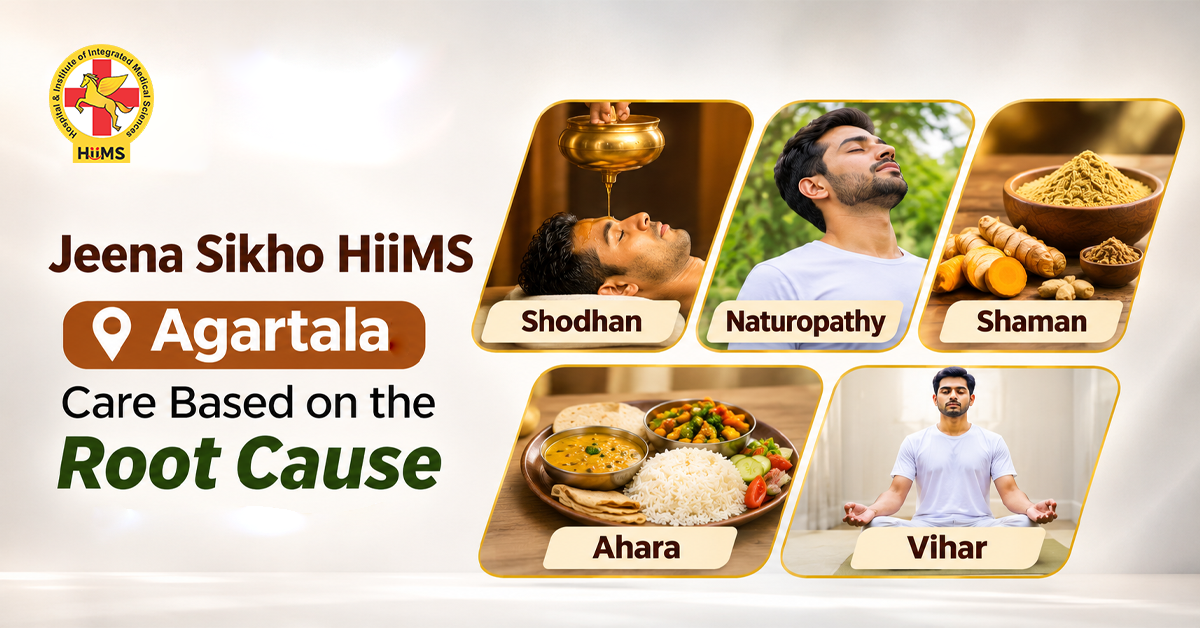
Jeena Sikho HiiMS follows Acharya Manish Ji’s root-cause approach in all its care. Each patient first meets an Ayurvedic doctor in Agartala for an individual assessment. The doctor studies your digestion, your routine, and your health history. Then, the plan is built from the supportive therapies below. This is how the clinic works as an Ayurvedic clinic in Agartala for personal care.
Shodhan
Shodhan is the cleansing part of Ayurveda, and it includes Panchakarma. Therapies such as Vamana, Virechana, Basti, Nasya, and Raktamokshana are chosen as per the patient’s health status. Thus, the plan stays personal.
Naturopathy
Naturopathy supports the body through natural methods. It includes hot water immersion therapy and head-down tilt therapy. These therapies mainly support the kidneys, and they are chosen as per the patient’s needs. Besides, they work alongside the other parts of the plan.
Shaman
Shaman means herbal support. Herbal formulations, such as Ashwagandha, Giloy, and Triphala, are chosen for each person under expert supervision. They support digestion and overall well-being. Moreover, the doctor reviews them at each follow-up.
Ahara
Ahara means diet. It is a personal, pH-balanced and nutrition-focused diet of fresh fruits, vegetables and light meals. It supports digestion and immunity. Also, it is planned around the patient’s routine.
Vihar
Vihar means lifestyle. It includes yoga, breathing exercises, meditation, sunlight, and healthy sleep. Together, these support both emotional and physical well-being. So Vihar helps the other therapies work better as a whole.
Every plan is personal, and the doctor sets it after an assessment.
Conclusion
Good Ayurvedic care looks at the whole person and not only at the symptom. It works on digestion, diet, and daily routine together. This view explains why a trusted Ayurvedic clinic in Agartala begins with an assessment and builds a personal plan. Besides, follow-ups and video consultations keep this care steady over time. Thus, steady habits and root-cause care are the core of Ayurvedic wellness.
Get expert Ayurvedic guidance from the comfort of your home. Book a video consultation (VOPD) with Jeena Sikho HiiMS Clinic in Agartala today.

FAQs
1. What does an Ayurvedic clinic in Agartala like Jeena Sikho HiiMS offer?
It offers a consultation and whole-body assessment, a plan for diet, routine and herbs, Ayurvedic medicines, VOPD and follow-ups.
2. What happens in the first consultation?
The doctor listens to your concerns and asks about your digestion, sleep, stress and food habits. Then, the plan is set for you after the assessment.
3. Can I consult an Ayurvedic doctor online?
Yes. VOPD, or video consultation, helps when you cannot visit in person. Follow-ups also support your progress over time.
4. What is Prakriti and why does it matter for diet?
Prakriti is your body type, based on your mix of doshas. A diet that suits one person may not suit another, so food advice follows your Prakriti.
5. What is naturopathy at Jeena Sikh o HiiMS?
It uses natural methods, such as hot water immersion therapy and head-down tilt therapy. These therapies are chosen as per your needs.
Leave a comment