

Bladder cancer is one of those conditions people don’t think about until something feels off. Maybe it starts with a small change, like unusual urine colour or discomfort, and suddenly, questions begin to pop up. What’s happening inside the body? And more importantly, what are the real bladder cancer causes?
In other words, there are several reasons why this happens. Talking about bladder cancer causes, we mean certain habits, environmental triggers, and physiological changes. Some factors are obvious, like smoking. Others are quieter and develop slowly without clear warning.
That’s why understanding bladder cancer causes early matters. It keeps you informed, detects any abnormalities quickly, and helps make healthier decisions regarding your lifestyle before complications occur.
What Are The Causes of Bladder Cancer?
To put it briefly, your bladder holds urine that contains harmful substances extracted from your body. Now, think of this process happening daily – your bladder is constantly in contact with chemicals.
This is where bladder cancer causes begin to take shape. At a deeper level, what causes bladder cancer is a change in how cells behave. In this regard, bladder cancer causes emerge in a way that affects cellular behaviour.
But when something disrupts this system, cells start growing faster than they should. They don’t stop when they’re supposed to. And slowly, this turns into a tumour.
So when we talk about bladder cancer reasons, we are really talking about long-term damage that builds quietly rather than a sudden event.
Major Bladder Cancer Causes You Should Be Aware Of
Not every risk factor is under your control, but knowing them helps you stay alert.
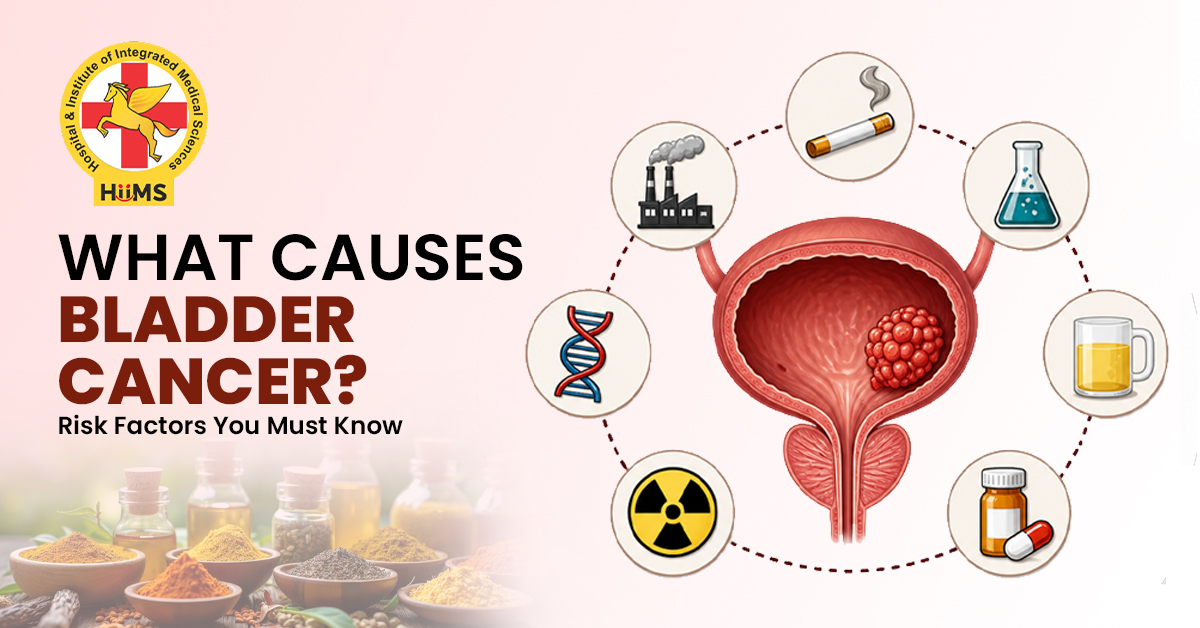
Smoking and Chemical Exposure
This is one of the strongest bladder cancer causes. Harmful substances from smoke enter your bloodstream and eventually pass through urine. That means your bladder lining is directly exposed. People working with industrial chemicals also face higher risk factors especially if safety precautions are not followed.
Age and Gender
Risk increases as you grow older. Most cases are seen after 50. Also, men are more commonly affected, although women are not completely safe from it.
Chronic Irritation
Long-term infections or repeated inflammation can damage the bladder lining. Over time, this becomes one of the less obvious bladder cancer reasons.
Previous Medical Treatments
Some cancer treatments in the past, especially certain drugs or radiation near the pelvic area, can increase future risk.
Lesser Known Bladder Cancer Risk Factors
Some risks don’t get much attention, but they still matter.
- Family history of cancer
- Genetic conditions like Lynch syndrome
- Poor hydration habits over the years
- Exposure to contaminated water sources
These bladder cancer risk factors may not show immediate effects, but they quietly contribute to overall risk.
Can Gall Bladder Stone Cause Cancer?
Let’s clear it up. Gall bladder stones and bladder cancer are not directly connected. They affect different organs and develop for different reasons.
So if you’re wondering, can gall bladder stones cause cancer, the answer is no in terms of bladder cancer. However, ignoring any chronic condition in the body is never a good idea, as long-term inflammation anywhere can lead to complications.
Signs That May Be Linked to Bladder Cancer Causes
Certain symptoms can give early hints. They don’t confirm cancer, but they shouldn’t be ignored either.
- Bloody urine (even if it occurred only once)
- Burning sensation when passing urine
- Frequent urge to urinate
- Pain in the lower back area
If you notice these, it’s better to consult a bladder cancer specialist instead of waiting.
How We Approach Bladder Cancer Causes at Jeena Sikho HiiMS
At Jeena Sikho HiiMS, we consider understanding bladder cancer causes from different angles. Namely, we don’t limit ourselves to discussing risk factors; instead, we see your body as an organism.
Instead of looking at the condition in isolation, we focus on overall balance. When the body is supported properly, it becomes better equipped to handle abnormal changes.
This approach becomes important, especially when dealing with complex bladder cancer reasons that don’t have a single clear cause.
When Should You See a Bladder Cancer Specialist?
If symptoms persist or you already have multiple bladder cancer risk factors, it’s wise to consult a bladder cancer specialist. Early clarity is always better than late confusion. Even if nothing serious is found, you gain peace of mind.
Conclusion
Understanding bladder cancer causes is less about panic and more about staying aware of what your body is trying to tell you. Most of the time, it’s not one single reason behind it. In most cases, it’s a combination of multiple aspects that develop slowly over time.
When you start paying attention to what causes bladder cancer, things become clearer. You begin to notice patterns, small signs, and risks that earlier didn’t seem important. And honestly, that awareness itself is a big step.
At Jeena Sikho HiiMS, we don’t believe in rushing decisions. Every person’s condition is different, and so is the way it should be handled. If something feels off or you’re just unsure about your risk, it’s better to talk to someone who understands it well. You can reach out to our doctors to schedule a VOPD consultation and gain a comprehensive picture of what approach will suit your specific case.

FAQs
1. What are the most common bladder cancer causes?
In most cases, it’s linked to things like smoking, chemical exposure, or long-term irritation in the bladder.
2. I don’t smoke, so what causes bladder cancer in my case?
That’s actually more common than people think. Even if you don’t smoke, factors like genetics, past infections, or other risk factors can still play a role. It’s not always lifestyle alone.
3. Can lifestyle really reduce bladder cancer risk factors?
Yes to some extent. While you cannot prevent all risk factors, you can eliminate those related to your lifestyle.
4. I’ve heard this before, but seriously, can gall bladder stones cause cancer?
No, they’re not directly connected. The confusion is common, but can gall bladder stone cause cancer in the bladder isn’t something medical science supports.
5. When should I actually see a bladder cancer specialist?
If you notice blood in urine, pain while passing urine, or anything that feels unusual for a few days, don’t overthink it. Just get it checked by a bladder cancer specialist. It’s always better to be sure than to ignore it.
Disclaimer: The information provided on this blog is for general educational and informational purposes only. It is not intended to replace professional medical advice, diagnosis, or treatment. Always consult a qualified healthcare professional before making any changes to your diet, lifestyle, or treatment plan. Individual results may vary.