

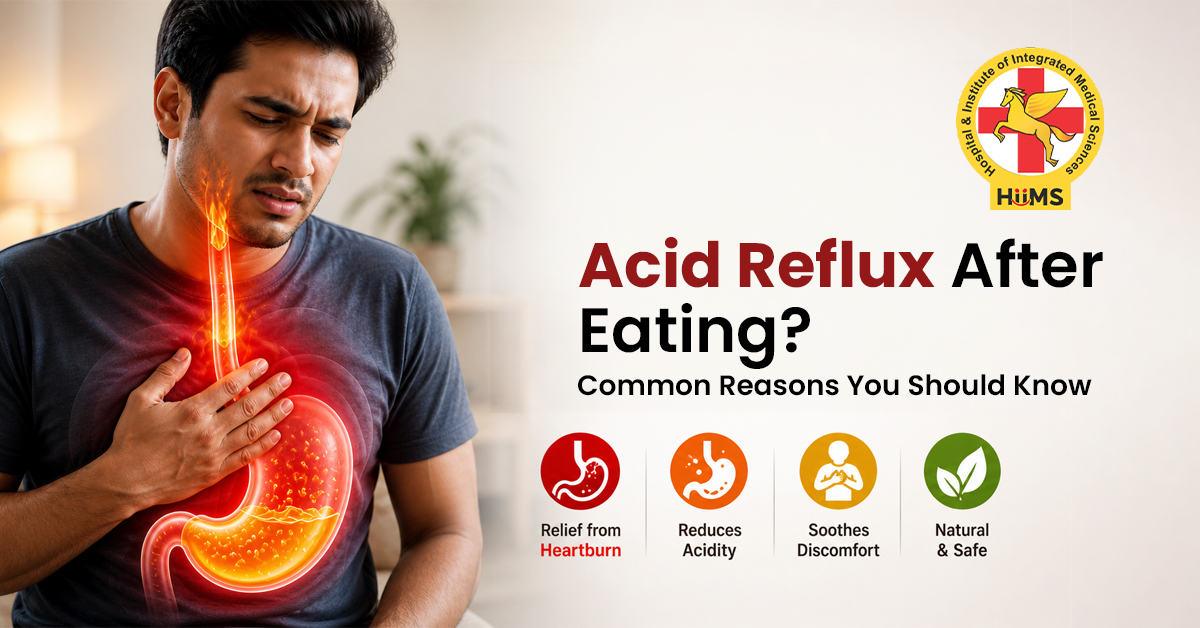
That uncomfortable burning feeling after a meal doesn’t always show up immediately. Sometimes it creeps in slowly. You finish eating, feel fine for a while, and then suddenly there it is. That familiar irritation in the chest.
For many people, acid reflux after eating becomes a pattern. Not every day, but often enough to notice. At first, it feels like a minor thing. Later, it starts affecting how you eat, when you eat, and even how you sit after meals.
We usually see one common thing. It’s not just about food. It’s more about how the body is handling that food. Once that improves, acid reflux after eating often becomes less frequent.
What is acid reflux, and why does acid reflux happen after eating?
Acid reflux is something most people have felt at some point. That uncomfortable burning, that weird sour feeling, usually shows up after eating and then just sits there. There’s a small valve that normally keeps things in place. But when it relaxes too much or doesn’t close properly, acid slips back. That’s when acid reflux after eating shows up.
It doesn’t always mean something serious. Occasional reflux happens to almost everyone. But if it starts repeating, it needs attention. Some common acid reflux symptoms people notice:
- a burning feeling in the chest
- sour taste in the mouth
- heaviness after meals
- slight irritation in the throat
- bloating that doesn’t settle quickly
These signs don’t always feel serious. That’s why many people ignore them for a long time.

Acid reflux causes and reasons for acid reflux after eating
There’s rarely just one reason behind acid reflux after eating. It’s usually a mix of habits. Some common acid reflux causes include:
- eating too fast without realising
- Overeating even when full
- lying down soon after meals
- spicy or oily food
- Stress affecting digestion
These things seem normal in daily life. But they slowly affect digestion. One of the main reasons for acid reflux is pressure inside the stomach. When food doesn’t digest properly, it stays in the digestive system longer. That creates pressure, and acid starts moving upward. That’s basically why acid reflux happens more after meals than at other times.
Why does acid reflux happen more after certain habits?
Not every meal causes the same reaction. Heavy food takes longer to digest. Fatty meals increase acid production. Late dinners don’t give the body enough time to process food before lying down.
So when you lie down soon after eating, gravity is no longer helping. That’s when acid reflux after eating becomes more noticeable. Smoking, alcohol, even too much tea or coffee, can make it worse. Not always instantly, but over time. It’s usually not one thing. It’s a combination that builds slowly.
Ayurvedic view on acid reflux and natural balance
At Jeena Sikho HiiMS, we don’t look at reflux as just excess acid. It’s more about digestion. When digestion weakens, food is not processed properly. That leads to internal imbalance, and eventually, symptoms like acid reflux after eating start showing up.
Ayurveda looks at this a bit differently. Instead of trying to shut down the acid again and again, it focuses on fixing digestion first. Because once digestion settles, reflux usually doesn’t show up as often. That’s why we often say Ayurveda works better in the long run. It supports the body instead of forcing quick changes.
When does acid reflux after eating need attention?
Occasional reflux is common. Most people ignore it, and that’s understandable. But when acid reflux after eating starts repeating again and again, it’s not something to brush aside. That’s usually the point where the body is trying to tell you something. You might notice things like:
- It’s happening multiple times a week
- Discomfort even after light meals
- That constant throat irritation that just won’t go
- Disturbed sleep because of a burning feeling
At that stage, relying only on quick fixes doesn’t really solve much. It becomes more about understanding why it’s happening in the first place.

Conclusion
Acid reflux doesn’t always feel serious at first. But when acid reflux after eating becomes frequent, it starts affecting everyday comfort in a way that’s bigger than expected.
Understanding the reason behind it makes a difference. Not everything needs a strong solution. Sometimes, improving digestion itself changes how the body responds. But when acid reflux after eating becomes frequent, it slowly starts interfering with everyday life. Meals don’t feel the same. Sleep gets disturbed. Even small things start feeling uncomfortable.
At Jeena Sikho HiiMS Mumbai, we focus on that root cause first. If you’re still unsure about what might actually help, it’s okay to take a step back and understand your condition properly. You can connect with our doctors via a VOPD consultation to figure out which approach feels right for you.
Also Read: Best Eye Doctor in Mumbai
FAQs
Q1) Why does acid reflux after eating keep happening?
In many cases, it’s linked to digestion not working smoothly. Reflux is likely to occur when the stomach is full.
Q2) What are common acid reflux causes?
The cause is typically multifaceted. Overeating, consumption of spicy foods, stress or even lying down soon after a meal could bring it on.
Q3) What are the symptoms of acid reflux?
Typical symptoms include heartburn, sour mouth, and post-meal discomfort.
Q4) What makes acid reflux more common during the night?
The tendency to lie down facilitates the upward movement of acid, particularly after dinner.
Q5) Under what circumstances should acid reflux be taken seriously after eating?
If it keeps happening regularly or feels worse than usual, it’s better to get proper guidance.
Disclaimer: The information provided on this blog is for general educational and informational purposes only. It is not intended to replace professional medical advice, diagnosis, or treatment. Always consult a qualified healthcare professional before making any changes to your diet, lifestyle, or treatment plan. Individual results may vary.