
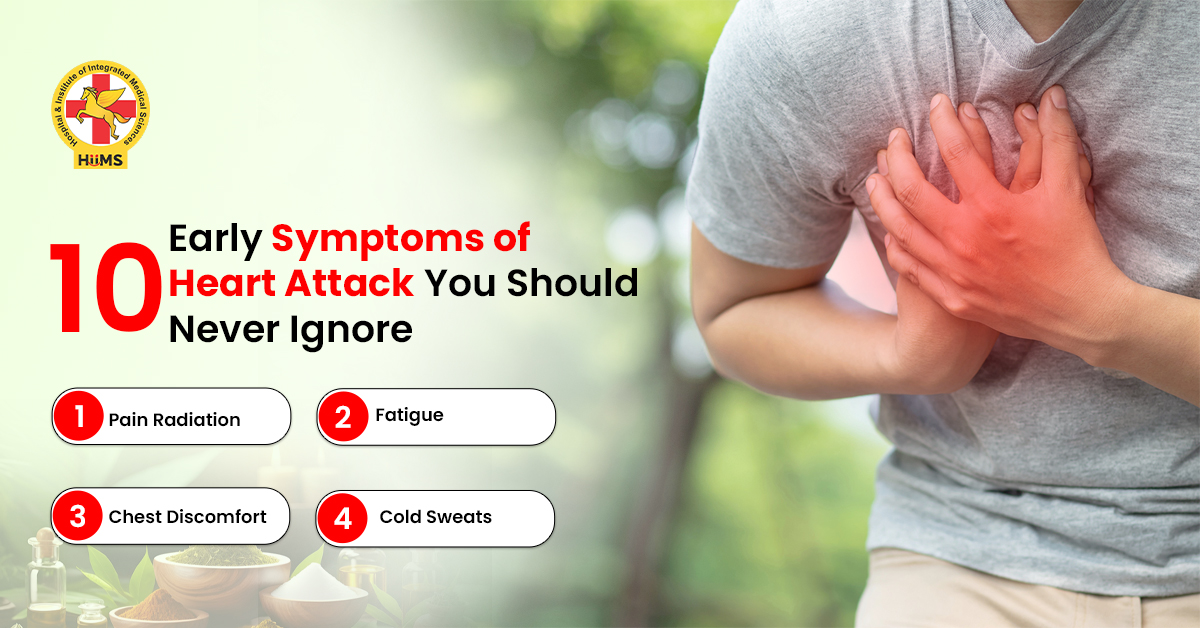
Every day, our body gives small indications about how it is functioning, and the heart often speaks first through any minor changes that many ignore as tiredness or stress. Learning the difference between normal fatigue and important warning signs can change outcomes because responding early makes a real difference.
This blog explains common heart attack symptoms in very simple and easy language, so you can notice them and act. We will describe what a heart problem can feel like, why these signals happen, and which moments should prompt a visit to a heart hospital.
The aim of this blog is simple and that is to give clear, usable information that a person can read quickly and remember later. You will get 10 early warning signs, a short list of likely heart attack causes and guidance on when to seek care.
What Is a Heart Attack?
A heart attack happens when blood flow to a part of the heart becomes blocked, causing the muscle there to lose oxygen and begin to suffer damage. This can result from long-standing plaque build-up inside coronary arteries or from a sudden clot on top of a narrowed area. People often ask about heart attack causes, and the usual culprits include high cholesterol, high blood pressure, smoking, and a sedentary lifestyle. Stress and poor sleep add to the pressure, and together these factors can weaken the heart over the years before symptoms appear. Knowing what brings about trouble makes it easier to notice early problems and seek timely help.
10 Early Warning Signals to Watch
1. Chest Tightness Or Pressure
Chest tightness, pressure, or a heavy feeling in the centre that lasts several minutes or comes back should be treated seriously as an early indicator of a heart attack now.
2. Pain Spreading To Jaw, Neck, Or Shoulder
Pain or discomfort moving to the jaw, neck, shoulder, or arms generally gets mistaken for tooth or muscle problems, yet this also remains one of the early signs of heart attack that requires attention.
3. Shortness Of Breath With Little Effort
Sudden breathlessness or struggling to breathe during light activity can be a sign that your heart is under stress and may indicate an impending heart attack sometimes.
4. Unusual, Unexplained Fatigue
When simple tasks become suddenly exhausting and energy goes away without reason, this unexplained tiredness ranks among the quieter but important early signs of heart attack in many people, often unnoticed.
5. Cold Sweats Or Clammy Skin
A sudden cold, clammy sweat with no clear trigger, especially if it appears with chest discomfort or breathlessness, is a strong physical cue that needs fast evaluation and immediate action.
6. Nausea, Indigestion, Or Upper Abdominal Discomfort
Nausea, indigestion, or uncomfortable fullness in the upper belly may be dismissed as stomach trouble but can reflect underlying heart attack causes and should prompt a check when persistent enough.
7. Dizziness Or Feeling Faint
Lightheadedness or fainting spells that happen suddenly or repeatedly, may mean the brain is getting less blood, and this symptom should not be ignored alongside other warning signs right away.
8. New, Frequent Palpitations Or Irregular Beats
Strong fluttering, racing, or skipped beats that come on frequently and are new can point to a rhythm problem; mention this at a heart hospital visit; testing can find the cause.
9. Swelling In Feet, Ankles, Or Legs
Noticeable swelling in the feet, ankles, or legs that appears with breathlessness or tiredness may show fluid build-up and reduced heart function, especially when it develops over days and sometimes slowly.
10. Sudden, Unexplained Anxiety Or Sense Of Doom
An intense, unexplained sense of fear, pressure, or an odd feeling of hopelessness that arrives suddenly can be an early emotional symptom before physical signs appear; treat it seriously.
Common Heart Triggers Worth Knowing
Common factors that raise heart risk include long-term high blood pressure, raised cholesterol, smoking, and a sedentary lifestyle. Added to these are repeated stress, poor sleep patterns, and a diet high in processed foods. Family history and uncontrolled diabetes also increase risk, so regular testing and small habit shifts can reduce risk over time. Check-ups help guide proper action quickly.
When To Visit A Heart Hospital Immediately
If you experience chest pressure, sudden breathlessness, fainting, or new intense sweating, arrange urgent care. Do not drive yourself if possible; call emergency services or contact the nearest heart hospital for immediate guidance. Early arrival increases treatment options and lowers the risk of long-term damage, so act promptly and explain symptoms clearly when you call.
Conclusion
Paying attention to small changes in your body can make a real difference to heart health. When you notice the early signs of heart attack in time, you give yourself a better chance to seek medical care quickly and avoid serious damage. Try to stay aware of new breathlessness, sudden tiredness, chest discomfort, or ongoing digestive uneasiness, and do not ignore these signs if they continue. Speaking to a medical professional at the right time helps identify the cause and prevents complications. Regular check-ups, balanced daily habits, and timely medical advice support a healthier heart and reduce the risk of future problems.
For timely advice and personalised assessment, contact Jeena Sikho HiiMS at +91 82704-82704 or email care@jeenasikho.com. Prompt action supports better recovery and peace of mind.
FAQs
1. What are the first things to watch for that could mean heart trouble?
Look for new chest pressure, shortness of breath, sudden extreme fatigue, cold sweats, or persistent nausea and look for advice quickly.
2. Can digestive upset be linked to heart issues?
Persistent upper abdominal fullness or indigestion that won’t settle can sometimes be related to the heart rather than simple stomach trouble.
3. How quickly should I act if symptoms start suddenly?
When symptoms escalate rapidly like heavy chest pressure, fainting, or severe breathlessness, arrange emergency care, the Heart Attack Protocol of Jeena Sikho HiiMS right away rather than waiting.
4. Which lifestyle changes lower long-term heart risk?
Gradual steps such as quitting smoking, improving diet, regular gentle exercise, better sleep, and stress control all reduce risk over time.
5. Is a routine heart check useful for people without symptoms?
Regular time-to-time assessment helps spot risk factors early and gives a baseline that doctors can use to prevent problems before they develop.
Disclaimer: The information provided on this blog is for general educational and informational purposes only. It is not intended to replace professional medical advice, diagnosis, or treatment. Always consult a qualified healthcare professional before making any changes to your diet, lifestyle, or treatment plan. Individual results may vary.