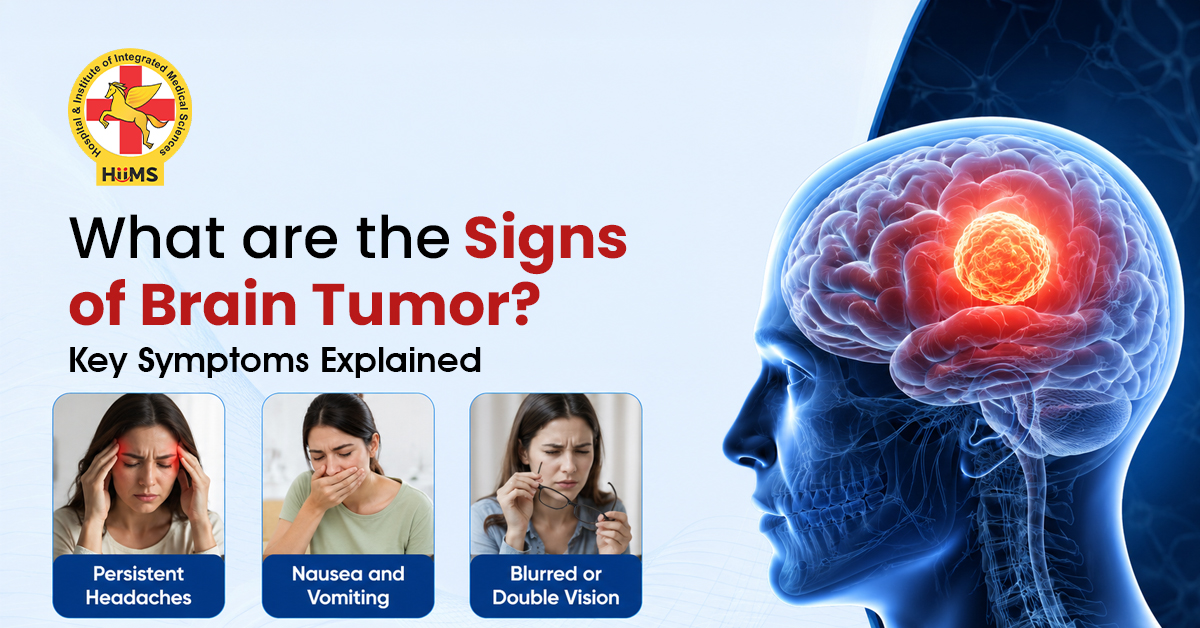

Think about how much your brain does in a single day. It helps you walk, talk, remember names, feel emotions and many other things. So when a tumor grows inside it, the body does not stay calm.
A brain tumor is basically a group of cells growing where they should not be. Some stay small for years, while some grow fast and cause problems within months. The signs of brain tumor depend on where it sits and how big it gets, which is why no two patients have the same symptoms. One person may only get headaches. Another may struggle to hold a spoon properly.
This blog summarises these warning signs in simple words, along with the types of tumors, how doctors check for it, and how Ayurveda looks at brain health.
What Is a Brain Tumor?
A brain tumor happens when cells inside or near the brain start growing abnormally. Some are non-cancerous, growing slowly and mostly staying in one place. Others are cancerous and spread quickly to nearby parts.
Here is something people often get wrong: not every brain tumor is brain cancer. Both kinds can still create problems, simply because they fight against healthy brain tissue.
What Are the Common Signs of Brain Tumor?
Frequent or Unusual Headaches
Everyone gets a headache once in a while, but if yours are coming more often or hurting differently, pay attention to that. A headache that feels worse in the morning, or sharper when you bend or cough, is one of the brain tumor symptoms doctors take seriously.
Changes in Vision
Blurry sight, seeing double, or not noticing things on the side can happen when a tumor presses close to the nerves connected to your eyes.
Seizures Without a Previous History
A first-time seizure is not something to ignore. Doctors count it among the early signs of brain tumor.
Nausea and Vomiting Without a Stomach Problem
Throwing up again and again, with no real stomach issue behind it, can be linked to a tumor, especially with headaches.
Weakness or Numbness in One Side of the Body
Struggling to hold a cup properly, dragging one foot, or numbness on one side of the face are worth telling a doctor about, even if they seem minor.
Problems with Balance and Coordination
Feeling wobbly on your feet, falling more than usual, or finding it hard to walk straight can happen when a tumor presses on the part of the brain that controls movement.
Changes in Memory, Thinking, or Behaviour
Forgetting things you would normally remember. Losing track mid-conversation. A sudden change in personality. These are some subtle but real brain cancer symptoms, and family members usually notice them first.
Difficulty Speaking or Understanding Words
Slurred speech. Struggling to find the right word. Losing the thread of what someone is saying. All point towards a problem in the brain’s language area.
Early Signs of Brain Tumor That Should Not Be Ignored
Most early symptoms feel too small to worry about. A chronic headache gets blamed on stress. Forgetfulness gets blamed on being busy. But when these keep happening or worsen over weeks, get checked instead of waiting.
Understanding the Types of Brain Tumors
Primary Brain Tumors
Start right there, inside the brain itself.
Secondary Brain Tumors
Begin elsewhere in the body, like the lungs, and travel to the brain later.
Doctors also group types of brain tumors as benign or malignant. Benign ones grow slowly, malignant ones grow fast, and either type can cause symptoms purely from pressure building inside the skull.
Ayurvedic Perspective on Brain Health at Jeena Sikho HiiMS
Ayurveda does not just stop at the symptom. It looks at the person as a whole, their body type, daily habits, and overall balance. An imbalance among Vata, Pitta, and Kapha is seen as something that disturbs how the body functions.
At Jeena Sikho HiiMS, this means a personal consultation, guidance on diet, correction of daily habits, and Ayurvedic therapies suited to what the individual needs.
When Should You Consult a Doctor?
Go see a doctor if any symptom lasts for several days. A sudden seizure needs immediate attention, and so does a headache that refuses to go away, vision changes, weakness, numbness, or trouble with speech and walking.
Conclusion
Catching the signs of brain tumor early can genuinely change how someone’s treatment will turn out. A headache that will not stop, sudden vision trouble, an unexpected seizure, or weakness appearing out of nowhere should never be ignored as tiredness.

If you or a family member notices any of these changes, please do not wait around hoping it passes. You can also opt for a VOPD consultation for your health concern with the expert doctors at Jeena Sikho HiiMS, who can guide you towards a personalised path to better health.
FAQs
Q1: What are the first signs of brain tumor?
Early changes often include repeated headaches, blurry vision, and weakness on one side of the body.
Q2: Can headaches always mean a brain tumor?
Not usually. Most headaches come from stress or poor sleep, but ones that keep worsening need a check-up.
Q3: Are all brain tumors cancerous?
Quite a few are non-cancerous and grow slowly, while some others do spread quickly.
Q4: How is brain tumor diagnosis performed?
Doctors usually rely on scans such as an MRI, along with a check of nerve response and reflexes.
Q5: Can Ayurveda be used alongside conventional care for brain tumors?
Ayurveda mainly supports through diet and lifestyle guidance while healthcare treatment stays the main focus.

Disclaimer: The information provided on this blog is for general educational and informational purposes only. It is not intended to replace professional medical advice, diagnosis, or treatment. Always consult a qualified healthcare professional before making any changes to your diet, lifestyle, or treatment plan. Individual results may vary.