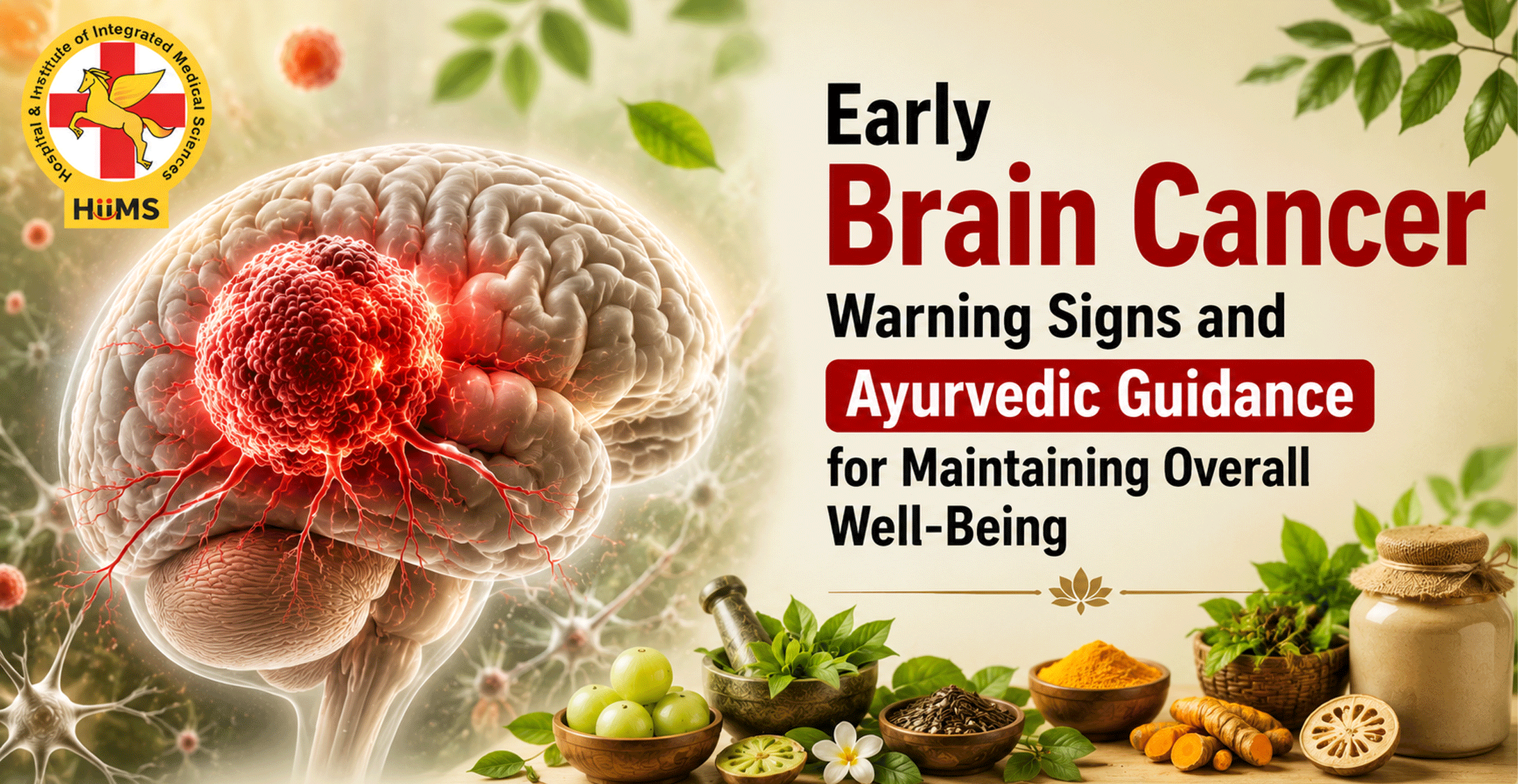

Most of us ignore headaches that won’t go away, a word that slips your mind mid-sentence, a bit of blurry vision after staring at a screen too long. We tell ourselves it’s tiredness, or too much tea or coffee, or just getting older. And honestly, most of the time, that’s exactly what it is. But sometimes the body is trying to say something more, and the brain in particular has a way of sending small warnings long before anything turns serious.
Knowing the real brain cancer symptoms isn’t about immediately jumping to conclusions every time you get a headache. It’s about noticing when something feels different enough that it’s worth getting checked, instead of waiting it out for weeks. Catching things early gives doctors more time to act, and that timing can make a real difference.
This blog walks through the warning signs worth paying attention to, what brain cancer actually means, and how an Ayurvedic lifestyle fits in alongside proper medical care.
What Is Brain Cancer?
Cells in the body are supposed to grow, do their job, and eventually die off in an organised way. That’s normal. Cancer happens when this process breaks down and cells start multiplying without any real control, eventually forming a lump or mass. In the brain, this is called a tumour. Some tumours stay put and grow slowly, these are benign. Others grow faster and push into nearby brain tissue, which is what doctors call malignant, and this is where serious brain tumor symptoms tend to show up.
Early Brain Cancer Symptoms You Should Not Ignore
Persistent Headaches That Feel Different
A headache itself is nothing unusual. But one that’s worse in the morning, one that keeps showing up more often than before, or one paired with nausea you can’t put aside, that’s the kind worth raising a concern to a doctor.
Changes in Vision, Speech, or Hearing
Sudden blurry or double vision. Trouble finding the right words even though you know exactly what you mean to say. A change in hearing, like ringing or muffled sound on one side, out of nowhere.
Problems with Balance, Memory, or Daily Activities
Stumbling more than usual. Feeling weak on one side without an injury to explain it. Forgetting things that you’d normally remember easily, or family noticing you seem “off” lately, more irritable, more confused during simple tasks.
Seizures, Nausea, and Other Unexplained Symptoms
A seizure with no past history of one is serious, even if it only happens once. Unexplained vomiting, sudden confusion, or sudden weakness that comes out of nowhere.
How Ayurveda Looks at Overall Brain Wellness
Ayurveda isn’t standing in to replace a diagnosis here, and it shouldn’t be treated that way. What it offers is a different perspective, one built around balance. Ayurvedic thought talks about three energies in the body, Vata, Pitta, and Kapha, and when they’re balanced, the body tends to run smoothly. Digestion, or Agni, sits at the center of this.
Weak digestion is believed to let toxins, called Ama, build up slowly, and that buildup can drag down energy and mental clarity over time.
Ayurvedic Lifestyle for Wellness That Supports Everyday Brain Health
Eat Fresh and Balanced Foods
Plant-based meals, seasonal fruit, fresh vegetables, and enough water through the day. Simple food keeps the body steady without overloading digestion, which is important.
Daily Routine That Supports Overall Well-Being
Sleeping and waking around the same time each day. Eating meals on a schedule instead of whenever. A little morning sunlight. A short walk on green grass barefoot. None of it sounds extreme to do, but consistency adds up.
Manage Stress Through Yoga and Breathing Practices
Stress doesn’t just sit in your head, it shows up in the body too. Basic yoga stretches, a few minutes of meditation, slow breathing through pranayama, these calm the nervous system down in a way that’s easy to feel almost immediately.
Traditional Ayurvedic Herbs Used for General Wellness
Brahmi, Ashwagandha, turmeric, and Giloy have been used for ages to support general wellness and everyday energy. They’re meant to support a healthy routine, not treat any diagnosed condition, and they work best when used with guidance suited to your own body.
How Jeena Sikho HiiMS Encourages a Holistic Wellness Approach
Instead of handing everyone the same plan, Jeena Sikho HiiMS starts with an individual assessment, looking at a person’s constitution and lifestyle before suggesting anything. From there, it’s lifestyle counselling, nutrition guidance, and Ayurvedic therapies built around what that person actually needs, with Panchakarma used only where it actually fits. What stands out most is that they pair this with timely medical diagnosis instead of replacing it, which is really how this kind of care should work.
Conclusion
If you notice anything unusual with your headaches, vision, balance, or memory that doesn’t improve, look for the right medical help. Early health consultation gives you real answers instead of speculation. Alongside proper diagnosis and treatment, building steady daily habits and following an Ayurvedic lifestyle for wellness practices can genuinely support how you feel day to day.

If any of these symptoms or signs sound familiar, you can also opt for an online video consultation (VOPD) video consultation with expert doctors at Jeena Sikho HiiMS to get guidance built around your own health.
FAQs
- What’s usually the first thing people notice before a brain tumour diagnosis?
A change in their usual headache pattern is common, often worse in the morning or paired with nausea that has no clear cause. - Can stress cause symptoms that look like brain cancer?
Yes, ongoing stress can cause headaches and mild memory lapses, which is why anything that lingers or worsens still needs a proper checkup. - Does one seizure always mean a brain tumour?
Not necessarily, seizures have several possible causes, but a first-time seizure should always be checked by a doctor right away. - How does Ayurveda fit in alongside cancer treatment?
It works best as support, focusing on diet, stress, and daily routine, while medical treatment continues to lead the actual care plan. - Are herbs like Brahmi and Ashwagandha safe to take regularly?
They’re generally used for everyday wellness, but the right amount depends on your own health, so guidance from an Ayurvedic practitioner is worth getting started with.
Ayurvedic Cancer Care Products
100% natural, certified Ayurvedic formulations crafted for targeted cancer wellness.



Disclaimer: The information provided on this blog is for general educational and informational purposes only. It is not intended to replace professional medical advice, diagnosis, or treatment. Always consult a qualified healthcare professional before making any changes to your diet, lifestyle, or treatment plan. Individual results may vary.