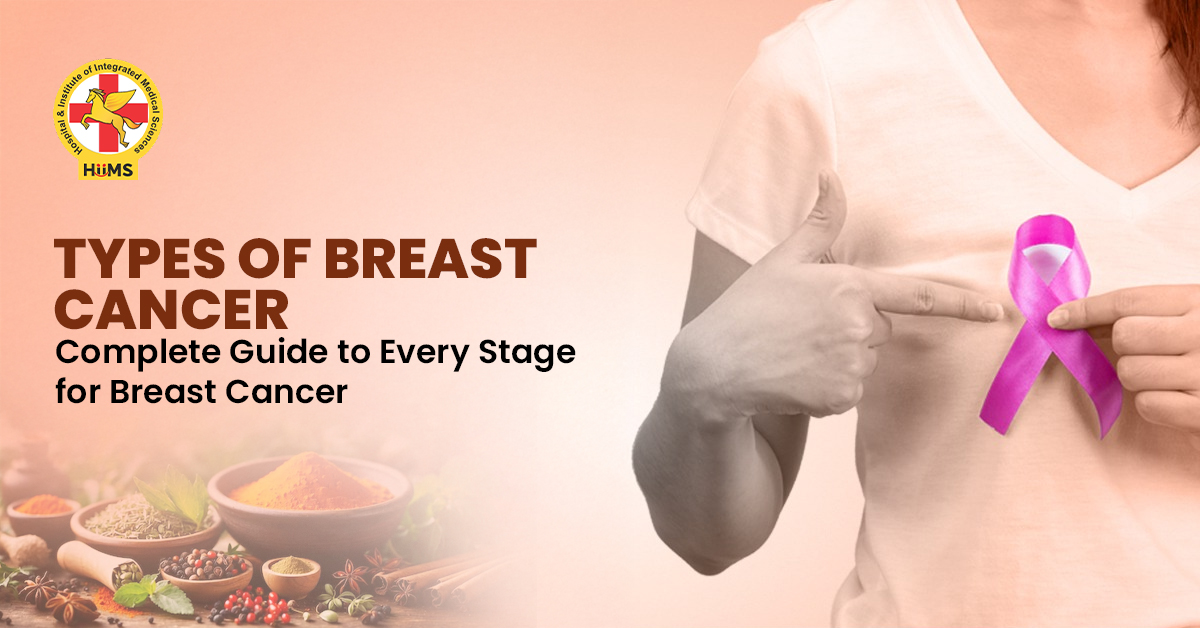
Sometimes it starts with something very small – a slight change, a lump, or even just a feeling that something is different. Most people don’t immediately think about cancer, but understanding the types of breast cancer early can make a big difference.
What often confuses people is that breast cancer is not just one condition. There are different types of breast cancer, and each one behaves differently. Some grow slowly, some spread faster, and some stay limited for a long time.
Hence, having knowledge of the various types of breast cancer and their stage transitions will equip you better in terms of awareness. In this article, we simplify breast cancer to enable you to have an understanding of its various types, symptoms, stages, and treatment options.
What is Breast Cancer and Why Understanding Types Matters?
Let’s make this easy to understand. Breast cancer begins when cells in the breast start growing in a way they shouldn’t. Instead of following a normal pattern, they multiply and form a lump or tumour.
Now here’s where it becomes important to understand the types of breast cancer. Not every case is the same. Some forms remain confined to a particular location, while others spread into surrounding tissue. Having information on the form enables healthcare practitioners to take appropriate measures.
Most Common Types of Breast Cancer You Should Know
When we talk about the most common types of breast cancer, we are referring to the types seen most often.
Invasive ductal carcinoma (IDC)
Starts in the milk ducts and can move into nearby tissues. This is the most common type.
Lobular carcinoma
Begins in the milk-producing glands and may spread slowly over time.
Ductal carcinoma in situ (DCIS)
An early-stage type where cancer cells are still within the ducts and haven’t spread.
There are also some types of breast cancer you should know about that are less common but important:
- Triple-negative breast cancer, which is more aggressive
- Inflammatory breast cancer, which may look like skin irritation
- Paget’s disease, which affects the nipple area
Understanding these common breast cancer types helps you see how different each case can be.
Breast Cancer Signs and Types of Breast Cancer Symptoms
Not every symptom feels serious in the beginning, and that’s what makes it tricky. Some common breast cancer signs include:
- A lump in the breast or underarm
- Changes in size or shape
- Skin changes like dimpling or redness
- Fluid discharge from the nipple
- A hardened or thickened area
These types of breast cancer symptoms may look small at first, but noticing them early can help you act on time.
Breast Cancer Stages Explained in a Simple Way
This is the part most people want clarity on. Breast cancer stages explain how far the condition has progressed inside the body. Let’s understand this step by step.
Stage I
In this stage, the tumour would be quite small and would begin affecting tissues adjacent to it.
Stage II
It progresses to become slightly larger or start involving nearby lymph nodes in this stage. It means the tumour is growing but remains confined to an enclosed space.
Stage III
It is regarded as an advanced stage, wherein cancer may have spread to other tissues and multiple lymph nodes. It means the situation will become serious, and hence its management will also become difficult.
Stage IV
It is considered to be the most advanced form wherein cancer may have spread into other body parts, such as bones, lungs, or even the liver.
Understanding these breast cancer stages helps you see how important early detection is. The earlier it is found, the more manageable it becomes.
Treatment Options for Breast Cancer (Modern and Supportive Approaches)
When it comes to types of breast cancer treatment, the approach usually depends on the stage and type.
In many cases, surgery is used to remove the tumour. Chemotherapy and radiation treatment will follow to eliminate any other cancer cells present. Other options like hormone therapy, targeted therapy, and immunotherapy are also used depending on how the cancer behaves.
Apart from these treatments, there are several other techniques that one uses to strengthen for treatment. Simple things like diet, routine, and stress control can make a difference in how the body responds.
The goal is not just to treat the condition but also to support the body during the process.
Ayurveda Treatment Options for Breast Cancer
Simple things like diet, routine, and stress control can make a difference in how the body responds. At Jeena Sikho HiiMS, we also focus on an Ayurvedic approach that supports the body alongside treatment. The idea is simple. Help the body stay strong during this phase.
One of the key parts is Cancer Detox Juice. It is prepared using fresh leaves like banyan, peepal, and guava, along with mint, coriander, curry leaves, and green vegetables. Ingredients like raw turmeric, ginger, beetroot, and amla are also added. This natural blend helps cleanse the blood, support digestion, and improve overall energy levels.
Another therapy used is Golden Therapy. It involves applying a herbal paste made from natural ingredients like neem, turmeric, and other plant-based extracts. It works gradually and supports detox and internal balance.
In addition, Panchakarma therapies are used for deeper cleansing. These include:
- Vamana – helps clear toxins from the upper digestive system
- Virechana – supports cleansing of the liver and intestines
- Basti – focuses on gut health and internal balance
- Nasya – helps clear toxins through nasal pathways
- Raktmokshana – supports blood purification
These therapies are planned carefully based on the patient’s condition. The goal is not just to treat the condition but also to support the body during the process.
Conclusion
Understanding the types of breast cancer gives you clarity that most people don’t have in the beginning. It helps you recognise signs early, understand stages, and feel more confident about what steps to take next.
Initially, everything might seem very complicated to understand and plan. However, things become clearer once you analyse all the information about your condition.
Alternatively, you can opt for VOPD at Jeena Sikho HiiMS, where we will give you advice depending on your case, helping you to decide the way forward.

FAQs
1) What are the types of breast cancer?
The most common are invasive ductal carcinoma and lobular carcinoma.
2) What are the symptoms of breast cancer?
Symptoms include a lump, a change in the skin, or nipple discharge.
3) How many stages of breast cancer are there?
Breast cancer is divided into five stages from 0 to 4.
4) What are breast cancer treatments?
Treatments include surgery, chemotherapy, radiation, and others.
5) Is breast cancer curable in its early stage?
Indeed it is! Early diagnosis makes successful treatment easier.